Tomi Adeyemi Is Ready to Move On
'The Children of Blood and Bone' made the author an icon. With 'The Siren,' she's writing a new chapter.


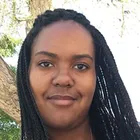
Tomi Adeyemi is in her defiant era. While her fans have sent each release of her Orisha trilogy to the top of bestseller lists, the author went viral like never before when she posted a TikTok in July, publicly severing ties with the forthcoming Children of Blood and Bone adaptation. Months earlier, she also challenged book industry conventions when she revealed the divisive cover for her new novel, The Siren, featuring a photo of her face. Adeyemi sees the choice as a way of looking directly at the reader with a message: "I dare you not to see me this time."
"It’s fitting,” Adeyemi tells Marie Claire over Zoom, ahead of The Siren’s September 29th release. “My first work started with me wanting to see myself in the story. Now I’m literally right there. We're not even illustrated at this point.”

The author sees the choice less as main-character energy and more as an act of reclamation. Since 2018, Adeyemi’s Orisha trilogy has sold over 3 million copies worldwide and created a cultural phenomenon that opened the door for other Black female writers to find success in YA fantasy. But the author explains that becoming a near-overnight literary success at 23 also left her wrestling with fame, public scrutiny, and how depersonalizing it can be to feel like little more than a symbol after breaking the concrete ceiling.
It’s not just the cover of The Siren that makes a statement. The campus-set thriller—Adeyemi’s first contemporary novel and first standalone—puts a feral woman of color in the typically white genre of dark academia. It centers on Emery, a Black girl from Detroit hoping to reinvent herself during her freshman year at Dartmouth. Emery struggles to see herself thriving in a world of keggers and bids until she encounters the Sirens, a magnetic self-made sorority that promises true transformation, if you can survive the sacrifice.
“I put almost everything I used to be in this work,” says Adeyemi, who grew up in the Chicago suburbs before graduating from Harvard. While the book’s moonlit, psychedelic rituals are pure fiction, she likens crafting Emery's journey to her own—rejecting the box she’s been placed in and embracing her boundless self.
“You cannot erase me this time,” she declares. “ You cannot expand this to represent the plight of all people. If [Orisha] was for all, this was for one.”

The author says she hopes "the next Tomi Adeyemi...doesn't feel the need to carry the weight of her people. She just carries the weight of who she is."
Below, Adeyemi chats with Marie Claire about taking inspiration from the “rich teen” subgenre, the importance of autonomy, and whether we can expect to see The Siren on the big screen.
Marie Claire: What inspired you to pivot to dark academia? Are there any books from that genre that you thought of while writing The Siren?
Tomi Adeyemi: It's funny because if I think of dark academia, I don't really think of anything that's come out in the last 10 to 15 years. I think about more of that Gossip Girl, Private era of books: A new girl goes to a boarding school, and suddenly she's brought into this new world. I do like to go back to the stories that I loved when I was younger. I find there's something untouched about it [that’s lost] once you become a part of the world. When you go from reading 19 Minutes borrowed from your seventh-grade best friend's bookshelf to sitting with Jodi Picoult at BookCon and being like, Whoa, how did this happen? So it's really freeing for me to go back to those works, and I find they still really hit. I love joining someone as they step into a new world and decide that they might want a part in it. Because they come from a different grit, there's something underestimated and raw, and quite beautiful.
MC: Do you hope that this book will maybe help bring back that vein of dark academia YA, versus what it has become?
TA: Jean Feiwel is the head publisher at my imprint. She worked on The Babysitters Club and Goosebumps. She is a titan in this industry. Something she helped me understand is, when I did my first work, I actually changed things. When I go into a Barnes & Noble, the dream used to be to see someone like me. Now there's a whole shelf.
If I was going to hope for anything [with The Siren], it would be for us to no longer be asking for seats at tables or asking to be on screens, but just asking for authentic, raw, full, complex individuation. To me, true progress would be the next time someone's called “the next Tomi Adeyemi,” she doesn't feel the need to carry the weight of her people. She just carries the weight of who she is. It's meaningful to me that both my fiction and my reality can allow us and those who look like us to be free to be us in a world that taught us we weren't allowed to.
MC: The Siren touches on serious topics regarding mental health and abuse. How did you prepare yourself to write about those issues?
TA: I don't think it was about preparation as something external. It was more about how deeply I feel. [My preparation] was about taking a screenshot of the pain, and how it’s carved in the crevices. It's almost like it becomes a geological formation, and then that's what you bring to the page. I think I have evolved as a creator and evolved in my craft. The compass with which I navigate a new story has always been what I'm feeling. So—as opposed to painting while I'm in the midst of feeling all these things—it's like a snapshot, and now we're going to bring that up.
I know it's very simple for people to be like, ‘Yes, this is a book that touches on mental health.’ I think it touches on pain. We all know pain so intrinsically, and so specifically. Anyone who was going to paint a picture of their pain, it would not look like anything else, because none of us process the same way. It was more like an excavation of what it feels like to be in that deep of sorrow. That's traveled across all the characters, when we learn the backstories of even the ones we thought were just glamorous and perfect, and you're like, Oh, you've been through that? Because that's always what it is when you learn what someone's been through. You're always like, ‘What? But you seem so fine.’ And they're like, ‘Well, am I supposed to seem something different? I still have to get up the next day.’ I think there's something beautiful about rediscovering who you can be after pain.
MC: How would you describe Emory’s journey throughout the book?
TA: We're all born into a really rigid sense of who we're meant to be, and it almost doesn't leave room for you to actually [explore]. What does it feel like when my lungs actually expand and contract? Who am I? Those big questions. I think the story is about taking an active role, because we all know what it is to go through something internally or externally and then change because you're forced to. I think it's something else to be like, Actually, I want to start spinning some of this thread. I want to be a part of my own fate, and what's possible if I start touching the loom?
If you think about what someone can take away from that story, it’s the idea that, Okay, I might not want to be a siren, but do I want to be a mystic? Do I want to make room for my intuition? Do I want to embrace my ambition? Do I want to create who I am, not just be who I thought I was supposed to be?

Adeyemi has publicly distanced herself from the upcoming Children of Blood and Bone film and has no plans to adapt her future books.
MC: Are you open to The Siren, or any other of your future works, being adapted into a show or movie?
TA: No. I think it's really valuable to do things. Something I am routinely brought to is the fact that, Whoa, you made it. You're 33-years-old. You had 2,012 dreams, and you actually achieved all of them. I am so grateful to have experienced everything I have ever dreamed of. My childhood energy was like the Tasmanian Devil of Dreams, and I followed it. Once you have those experiences, whether they're the best things ever or you're like, Wow, this was awful, you still have yourself at the end of it, but you also don't have these dreams and what-ifs. I don't think I would've felt okay to not see what I embarked on to its conclusion. That would've made it difficult to carry forth and feel like every new day has exciting, infinite possibilities. So I'm proud of it—but in terms of doing it again, I don't really care. That's not where the joy is for me. The joy is in that beautiful internal space where only you know about this world. It's not all the logistics and the coordination. When you bring it all to fruition, and suddenly you're on sets with 400 people, I find that overwhelming. So I asked myself, If you're not doing this for you, why would you do it? And if you don't enjoy the process, what would be the point?
When I started writing years ago, I was so obsessed with the fantastical. Now that I'm at some form of a conclusion, I don't understand what happens next, but I don't need to understand. I can feel peace that has come from going through the journey with all four of my books, from having this insane vision and seeing it through to the end. I'm in awe of myself. It doesn't really matter if I loved it, if it went well, if it didn't. I did what I dreamed of doing. The most mystical thing to me now isn't that you could have a big celebrity embody a character. It's more that I can ask life for what I want, and I can undergo the trials, hardship, and triumph to actually manifest it into the three-dimensional reality.

MC: The book does seem like a declaration of agency in a way.
TA: I don't know why anyone would work this hard if not to leave the journey with agency. I think the process of becoming who you actually are is something that you need years to grow into. Some of us are blessed to know that really early. Shout out to my Capricorn suns. I meet 16-year-olds who are like, 'Well, here's my book, and yes, I accept Venmo, PayPal.' And I'm like, 'Girl, you got it. I love that.' For others of us, if we're given the time and space, and if we're courageous enough to consistently be like, What do you need? What do you want? What do you desire? What do you want a morning to look like and feel like?
I think after you’ve done all the things, you've also earned the right to be who you want to be and live how you want to live. As someone who has worked insanely hard for 14 years on everything, I'm enjoying the stillness. It's really satisfying to finally feel like you can chill and you're not carrying a huge mission or a goal. There's a gentleness that I'm finally being able to experience, and I'm obsessed with it, and I'm excited that it will grow exponentially. If I do decide, Hey, maybe you do want to write a series like Private, that's beautiful, but it can come from a really still, gentle place. It doesn't have to come from the Tasmanian Devil of Dreams. She did a lot. I'm proud of her, but I'm more excited to be who I am after all of that.
This interview has been edited and condensed for clarity.