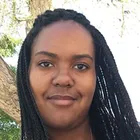
The Lessons Maleah Joi Moon Learned From 'A Different World'
The Tony winner is bringing the HBCU series' "healing" legacy to a new generation.


A Different World is more than a TV show. Since its 1987 debut, the HBCU-set comedy has expanded countless viewers' minds by depicting a Black student body that isn't a monolith.
It was even part of reboot star Maleah Joi Moon’s origin story—unbeknownst to her until she auditioned for the sequel series. She learned that her mother grew up watching the show from her home in Belize; A Different World and other hits from the golden age of ‘80s and ‘90s Black sitcoms inspired her to move to N.Y.C. for college—where she would eventually meet Moon’s father.
“It was inspiring for her to see these young, Black, successful Americans on such a well-represented campus becoming and finding themselves,” Moon tells Marie Claire. “It's so amazing to me that she was miles away and she had the same experience that a lot of Black Americans did, and that I also had growing up, once I started having access to the show.”

"It is such a gift when you're given a role where you can be self-indulgent and mix a lot of your own experiences with your character," Moon says of the parallels between herself and Deborah.
The New Jersey native has spent the past three years jumping between two whirlwind moments. As a teen, she briefly attended Pace University before leaving to originate a character based on Alicia Keys in the singer’s semi-autobiographical jukebox musical Hell’s Kitchen. The role netted Moon a Tony and a Grammy by the time she turned 23. Her breakout performance also caught the attention of A Different World mastermind Debbie Allen. She and the sequel series’ creator, Felicia Pride, tapped Moon to play Deborah, the daughter of the original ensemble’s iconic lead couple, Whitley Gilbert (Jasmine Guy) and Dwayne Wayne (Kadeem Hardison).
Despite her rapid ascension, the 24-year-old appears centered while speaking with Marie Claire over Zoom—joking that fan expectations and the social media frenzy around the show’s premiere are “not [her] business.” She says that she’s been following a kernel of wisdom passed down from one generation of Waynes to the next: “Hold yourself”—or do what you need to do to keep your mind right as you embark on an industry (and a world) that is not always kind to Black artists.
Moon recalls that Hardison and Guy have offered different suggestions for how to do so. Her TV dad encourages her to fill her cup outside of the series. Meanwhile, Guy advised her to have boundaries on when to engage with social media. “She was like, ‘You deserve your own joy and safety within your space.’”

In Netflix's A Different World, Maleah Joi Moon plays Deborah, the daughter of the original series' leads, Whitley Gilbert (Jasmine Guy) and Dwayne Wayne (Kadeem Hardison). (Also pictured: Alijah Kai as Rashida and Kennedi Reece as Hazel)
“I care so much about this show,” says Moon, who believes it’s important for her and the contemporary cast to carry on the franchise’s legacy of “creating a safe place for conversation about stigmatized topics.”
So as fans wait with bated breath for news of a possible season 2, the star is right there with them, cherishing its magic and this moment. “It's my responsibility to put my health first so that I can be there for the people who really end up loving it, and I can experience the joy just like they do,” she adds.
Below, Moon chats with Marie Claire about living out an HBCU experience on set, imbuing her own life experiences into Deborah Wayne, and combating the Black community’s stigma against neurodivergence.

Throughout the sequel series, original stars make guest appearances, passing the torch to the next generation. (From left: Jordan Aaron Hall as Amir, Alijah Kai as Rashida, Kennedi Reece as Hazel, Cornell Young IV as Shaquille, Moon as Deborah, Chibuikem Uche as Kojo, and Dawnn Lewis as Jaleesa Vinson-Taylor.)
MC: The series hired HBCU students as on-set consultants. Did you have any thoughts during filming of What would life have been like if I went to an HBCU?
MJM: I'm a very spiritual person, not even just in the biblical sense, but in the energetic sense. So when I was on set at Atlanta University Center, I was breathing in the campus and getting acquainted with my surroundings. There's a historical energy about walking around that place and the Morehouse MLK statue. Almost 60 percent of the extras were HBCU students and alumni. I was already being embraced by the culture in that way from my job, but then also just being in the atmosphere of it, after not having that experience at Pace. It didn't make me want to change my college experience because, had I went to any other university, I would not have ended up here in this dream. So that part of it is like, Man, I get to do this now. That is my gift.
It's crazy how Deborah and I are very similar, and I think that is why Debbie Allen saw me and thought, Come here for this dream. Deborah has a line in the first episode where she's talking to Dr. Hawthorne, and she's like, 'I was supposed to go to Tisch.' It was a really deep moment for me when I got to share that experience with Deborah as a young Black artist in musical theater. That feeling of, Yeah, there might be college experiences that will make me feel more seen, and still feeling like I had to choose to go to a predominantly white university in order to be successful. I grew up in Franklin Township, New Jersey. It was a very urban, multicultural, hood-adjacent suburban community. When I looked up and I was in the hallways, I saw mainly Black people. Getting to relive my college experience through this show is just so healing for that high school person in me that wanted that type of representation once I got to my PWI.

Deborah has a rough transition from her elite N.Y.C. high school to Hillman College. "She has to come into herself and really learn who she is beyond what people have told her who she's supposed to be," Moon says. (Also pictured: Alijah Kai as Rashida.)
MC: How much of Deborah’s backstory and traits were on the page when you were auditioning? How much inspiration did writers take from your own real-life experiences?
MJM: They were trying to keep everything as under wraps as possible. I did not have a lot to work with, not because there wasn't good stuff on the page, but because they kept it so small to see what you would do with it. I think that was intentional because of the chemistry that we ended up having once they pulled us all together. The six of us just absolutely fell in love with each other at the chemistry read. Cree Summers calls it “lightning in a bottle.”
It is such a gift when you're given a role where you can be self-indulgent and mix a lot of your own experiences with your character. [Showrunner Felicia Pride] and the writers' room invited me to L.A. in December 2025, as they did with all six of us in the contemporary cast. I got to go in by myself and rap about a lot of my own experiences that I thought would be helpful in creating the character. We talked about my childhood, my experience at high school versus college, authenticity, all the things. I definitely felt a lot of myself in what was on the page, and then it was my job to take it further and use my truth to create hers.

"It's so wonderful and healing for me that I'll get to be part of that safe example for young Black women of This is hard, but you deserve support," Moon says of Deborah and Ellington's (Vincent Jamal Hooper) tutoring arc.
MC: Deborah’s journey with ADHD was a highlight of the series for me. It felt rare to see her work through the cultural stigma and accept that she’s neurodivergent. What was it like performing that arc over the season?
MJM: I have my own relationship with psychiatry. As I started navigating the industry, it became more and more important for me to have resources. As my job needs more from me, I need more of myself, and I'm still kind of in that moment. It's a scary word for the Black community, because there is so much sociopolitical, economic pressure on us to be 10 steps ahead of everything just so we can be given opportunities that everybody deserves in this country. We always have to be ahead of it just to be where we're supposed to be. So when it comes to things like diagnoses about health, mental health, or anything that we feel in a stigmatized view could hold us back, it is very hard, from my own experience, to come into acceptance with that.
I'm so, so, so happy that this show has given me a chance to bring up that conversation, using my own experience and put it into Deborah. In a world where we deal with Black disembodiment, disenfranchisement, the stripping of our rights and our safeties, even on HBCU campuses—this place that, in a utopic view, is supposed to be the wealth of Black safety and cultivation—we're still not safe. If any marginalized culture or race or anything needs and deserves more support there, it would be us. But there are a lot of different nuances that go into how we process that. I get to play a character whose privilege is kind of being stripped away in an authentic environment, and she has to come into herself and really learn who she is beyond what people have told her who she's supposed to be.

Moon describes her chemistry with the show's contemporary lead cast as "lightning in a bottle." (From left: Kennedi Reece as Hazel, Jordan Aaron Hall as Amir, Moon as Deborah, Cornell Young IV as Shaquille, Alijah Kai as Rashida, and Chibuikem Uche as Kojo.)
We have that moment [in episode 4] where her tutor, Ellington, is guiding her towards, Hey, you deserve more support if these are things that you struggle with and make you feel unsteady as far as the ADHD conversation. We get a vulnerable moment of her being embarrassed, shameful, and angry that he would even bring that up because that means that she’s less than, and that's not true. It's so wonderful and healing for me that I'll get to be part of that safe example for young Black women of This is hard, but you deserve support. It means more to me than I can ever even articulate.
MC: What are your hopes for Deborah heading into a possible season 2?
MJM: I pray that she is, yes, still embarking on finding herself, but also that we see her become more secure little by little. That would be so healing. I keep using that word because it's what this show does. It would be cathartic for people to see that we endure chaos, but we get to take from our experiences and feel good about the fact that we learned.
So often, especially as a young Black artist, I constantly feel the need to push forward. What's next? What's the next audition? Am I going to go back to Broadway? Am I making an album? It even parallels my own experience with this project. It was insane, because it's so well anticipated and there's a lot of energy coming into it, but now I get to sit here and be like, I did that. I don't know what happens in season 2 yet, if we get that, but within the time from [the season 1 finale] to season 2, hopefully Deborah will have gotten to sit and be like, I was a bad bitch and I was crazy and I was chaotic and I still am, but I did that and I get to move forward knowing that that's in my bag now. That freshman year, I put that in the bag. It was crazy and it's done. Now I get to be a sophomore. I get to grow more.
This interview has been edited and condensed for clarity.