Meet the Real-Life It Girls Bringing Fierceness—And Heart—to 'Club Kid'
Jordan Firstman tapped creatives and nightlife personalities Alaska Riley, Miss Benny, and Saturn Risin9 to star in his directorial debut.


When Jordan Firstman wrote his directorial debut, Club Kid, he envisioned each character as rich and eccentric enough to lead their own movie. Set in N.Y.C.’s queer nightlife scene, the film—about a promoter named Peter (Firstman) who becomes responsible for a young son (Reggie Absolom) he never knew he had—is a revolving door of personalities, from a lovable, freeloading roommate to party fiends whose lexicons are made up of memes.
But arguably the biggest scene-stealers with more than enough main-character energy for their own star vehicles are the trio of women—Alaska Riley, Miss Benny, and Saturn Risin9—who play the downtown It girls on the list or behind the decks at Peter’s parties. They bring a natural magnetism to the screen, in part because they’re real nightlife fixtures. Riley is a writer, model, and N.Y.C. scenester; Miss Benny is a cult-loved actress and screenwriter; and Saturn Risin9 is a legendary L.A. recording artist and filmmaker.
Originally, the three were very whatever when Firstman, a longtime comedy writer (The Other Two, Search Party), tapped them for his “little movie”—now considered an awards frontrunner. “I got a DM from some gay guy in Brooklyn, like, ‘Do you want to be put up for this?’” Riley (who once went viral for throwing shade at Firstman on X) tells Marie Claire over Zoom. Several weeks later, she ran into the filmmaker at the notorious New York club Basement, and after they spent the night out together, he parted with, “Bitch, send in your tape!”
She recalls, “I was like, ‘You just watched it!’” When the casting call’s final deadline came, she actually sent it in.
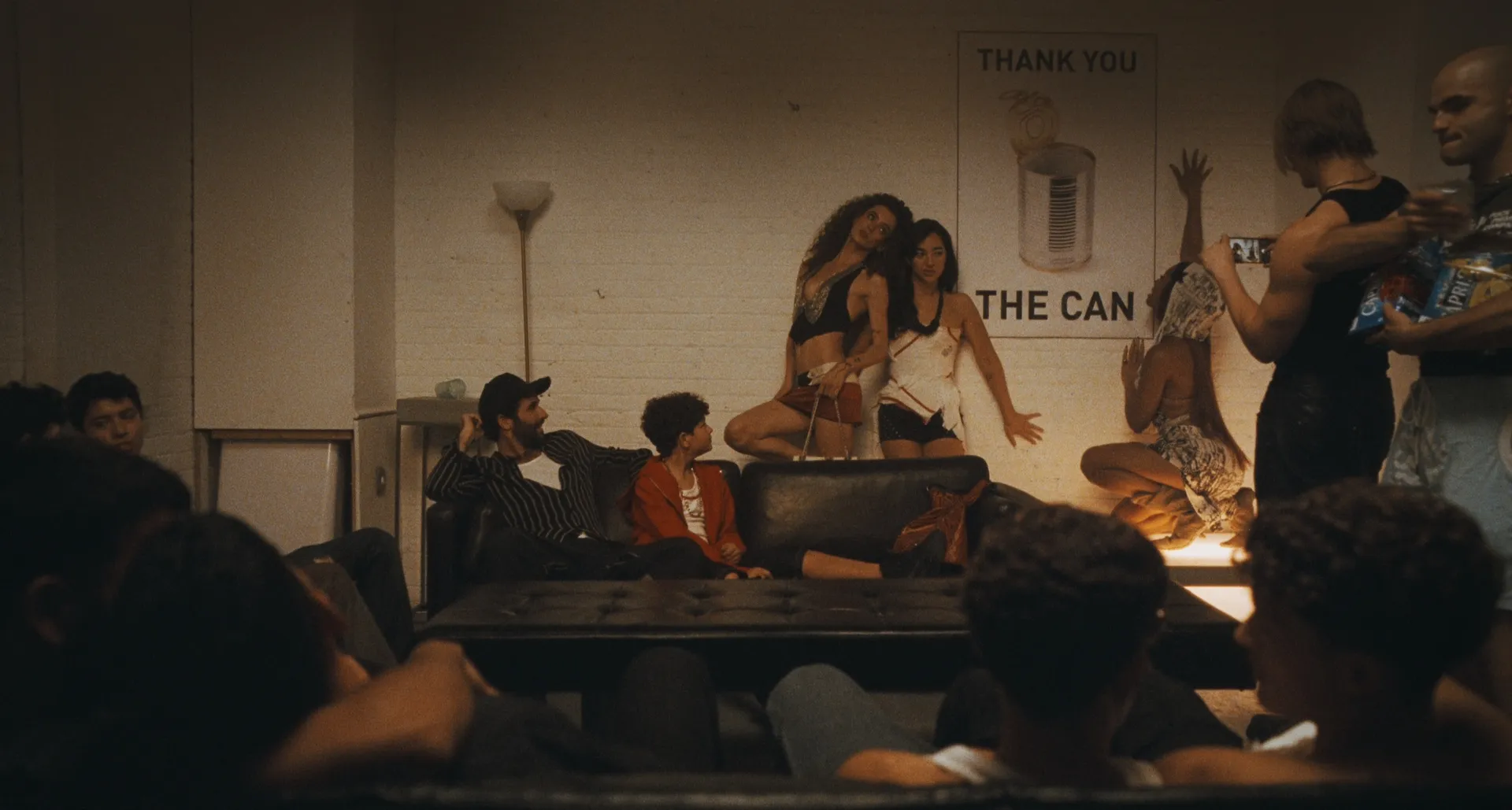
Peter (Jordan Firstman) introduces his son Arlo (Reggie Absolom) to his friends, including Hana (Alaska Riley), Almi (Miss Benny), and Saffron (Saturn Risin9).
The same goes for Saturn Risin9. The DJ explains, “It starts with me leaving a club at 5:00 a.m. and hearing Jordan saying, ‘Saturn, I wrote a role for you in my film! Will you be in it?’ I'm like, ‘Yes, girl, leave me alone. I don't know where I'm at!’” She forgot about the interaction until a year later, when—as she was recovering from facial surgery—casting and Firstman hounded her to submit an audition. She did her hair and makeup for the first time in weeks, and shot a clip with three hours to spare.
Miss Benny similarly thought, “That’s sweet! I’ll do you a favor,” when Firstman tried to tap her for a role when they sat across from each other at a dinner in L.A. “Then he sent all the material over, and I was like, Oh, this is actually amazing.”
Before summer 2025 ended, the I Love L.A. star had found his Hana, Saffron, and Alma; production was in full swing in October, and they made their Cannes debut to instant acclaim in May 2026. The lead-up to the film’s November 6 release (and the awards campaign that’s sure to follow) has been like a party that keeps peaking for the trio—but they explain what’s resonated most is the LGBTQ+ project's universality and what it means to be part of it.
Below, Riley, Miss Benny, and Saturn Risin9 tell Marie Claire why Club Kid spoke to them, how they bonded on set, and what they thought of child star Reggie Absolom’s instantly iconic “Are you dolls?” line.
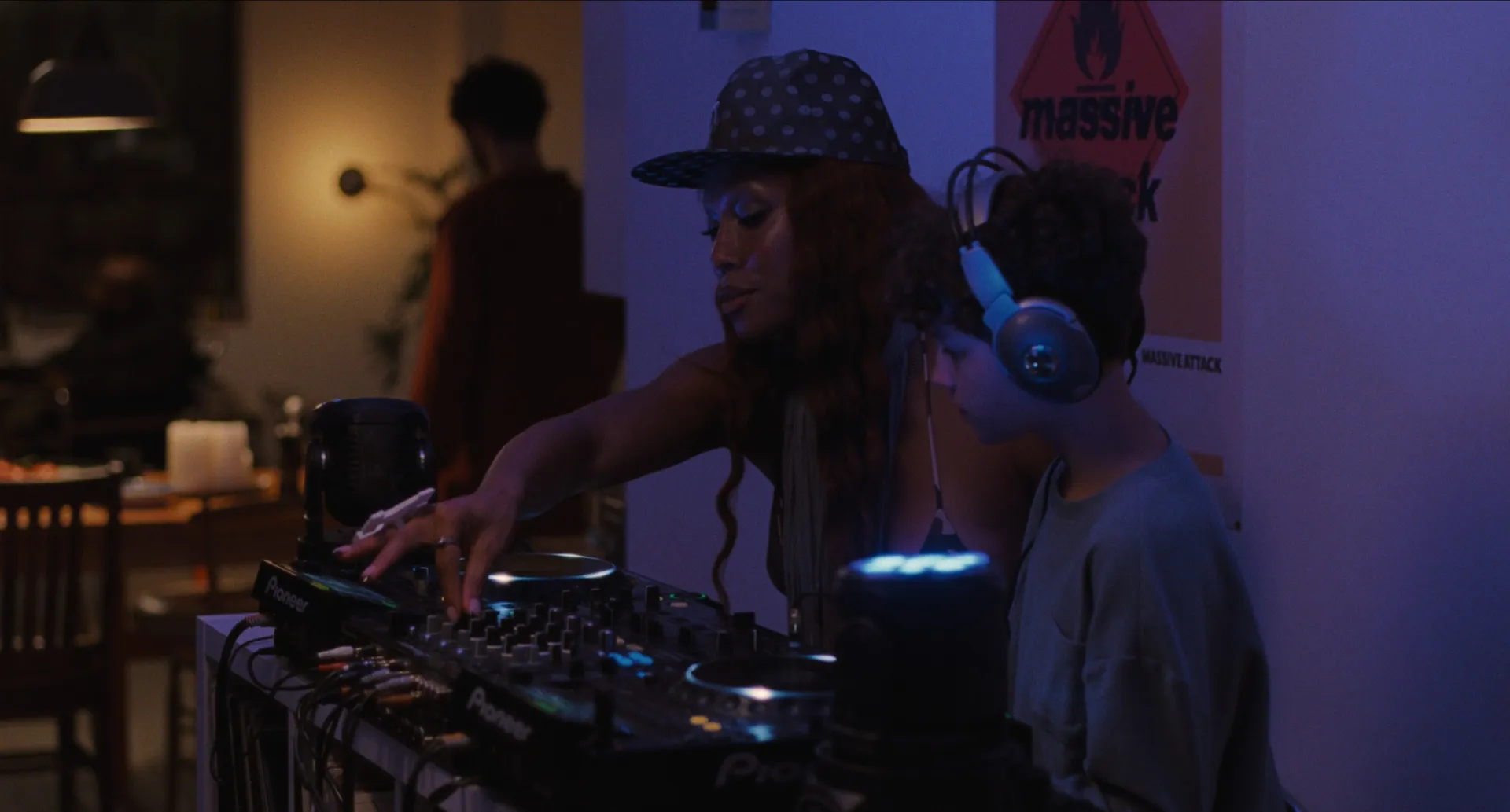
Saffron teaches Arlo how to DJ.
Marie Claire: Jordan Firstman scouted you all for the film, but did you ever have reservations about signing on or feel nervous about whether it would represent the queer nightlife scene authentically?
SaturnRising: I know Jordan from partying, so I knew that he could only tell the truth. I knew that he would because he loves to give it up like that. I didn't know if I was going to have to do a drug on camera—that was my only concern. But I did one without being asked. I was like, “Give me the Vitamin C!”
Miss Benny: When I read [the screenplay], I was like, This is going to live and die on if the parties feel right. But the thing that I knew about Jordan was that he has excellent taste. I was like, He's going to take this seriously. The first night we had a party shoot was when I felt like all my concerns had completely dissipated because I was like, I would actually show up to this party and see all these people.
Alaska Riley: I did have reservations because I didn't know Jordan. I was also hesitant about what it could mean for an L.A. gay to tell a New York nightlife story. But after I ran into Jordan [the night he asked me to audition], I took him to another party, and we ran around all night. The next week, I got sent a script revision, and I saw conversations I heard him having, or that were happening around us, written into the script, and that flipped my perspective.
MC: How familiar were you with each other before shooting? How did you foster such a tight-knit on-screen friendship?
MB: I met Saturn in L.A., and then Alaska and I had so many mutuals that I had known of [her]. So when Jordan texted me once I was attached, he was like, "Here's the rest of the gang," and sent me everyone's Instagrams. I was like, "Oh, I know these girls. These girls are fierce." That was a moment where I was like, We're going to be okay. These are really cool people. The first time we all were together, I was like, It feels like I've known everyone.
AR: I knew a lot of the extras, and then a few of the people on the production team are some of my good friends. As soon as we were all connected to the project and Benny reached out, it immediately opened up the doors of friendship because I felt like it was being handed to us on a silver platter. Our scenes were literally just us hanging out.
SR: [The scene with us] running into the house was a moment for me because I was scared shitless in general. Like, I don't know how I said yes and how I got here. So when we were running in—that's how I am with my friends.
Everyone was connected to Jordan or to each other, so one person's comfortability led to another person's comfortability. We had so much time on set to sit with each other and laugh, and somebody's doing something silly that you want to be a part of. It was like summer camp.
MB: It didn't make it into the movie, but [the three of us] had to learn a dance number. That bonded us because we were all so scared that, on our first day, we were going to have to dance for the whole crew. That was an immediate, "We're family now.”
SR: Rumors are circulating that they're threatening [to release footage of the dance]. I need to approve the angle.
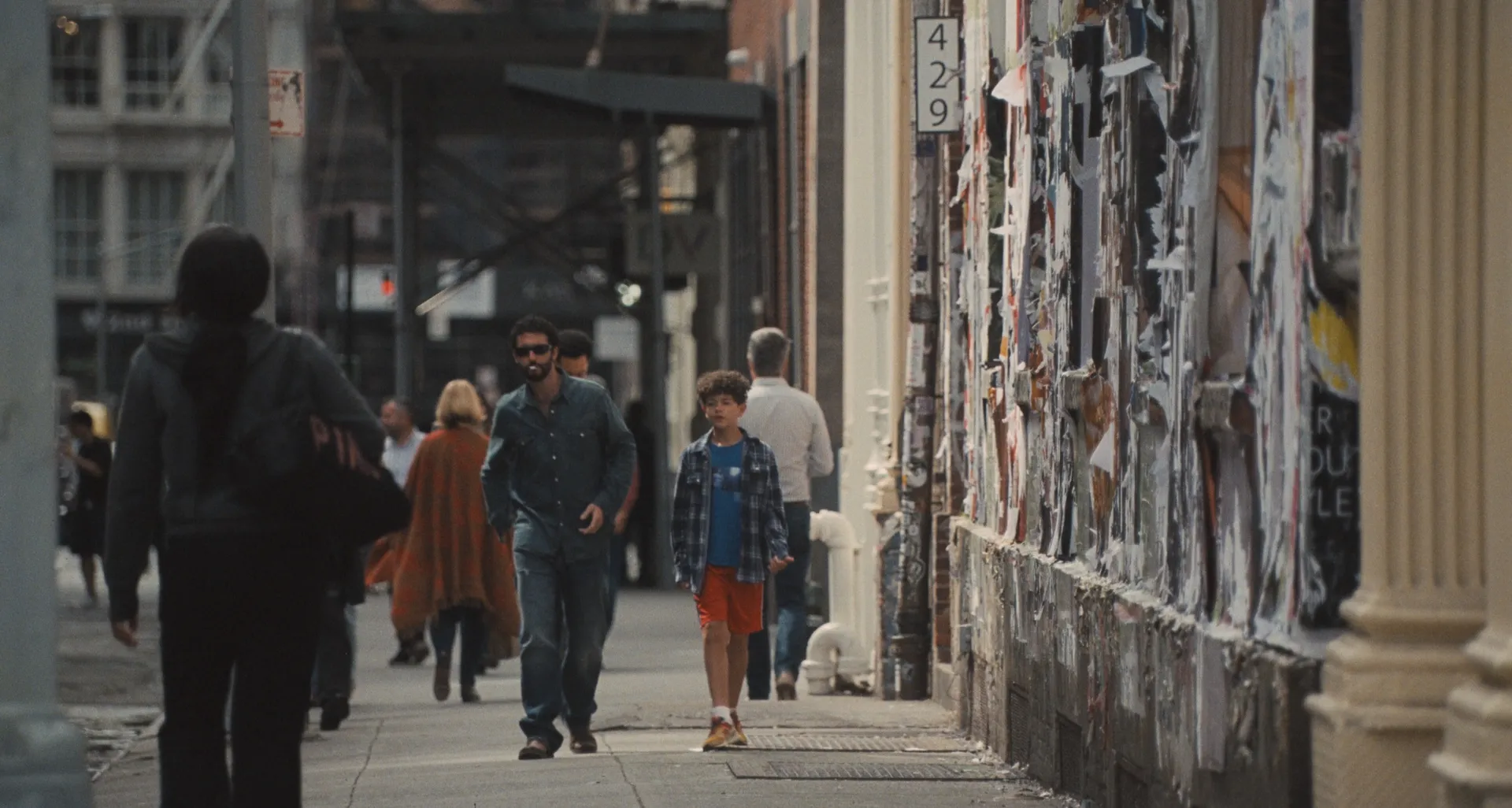
The three actresses praised their co-star Reggie Absolom and joked they can't wait to catch up with him about his experience on the set 10 years from now.
MC: Did you get to have any input on your dialogue or your character’s wardrobe?
SR: Absolutely. I got pitched makeup mood boards, fashion mood boards. They didn't really listen to me on the first look because I was like, "No, I wouldn't wear that.” Literally, I got a text [from Jordan] saying, “I love this one.” I was like, “So, they told you I hated that one? Why are you bullying me?" But then I was like, Oh, this is what these DJ girls are wearing these days. I'd prefer to show up in a gown like Naomi, but we're not me right now. That was my initial energy, but we had so much input. There are lines that I said. Jordan was writing lines on set. It was super creative.
AR: The tweet that I tweeted shading Jordan, he wrote that in.
MB: Afterwards, my friends were asking, "How much are you in the movie? What's the vibe for your character?" And I was like, "I have no idea." In one party scene, we had two pages scripted. We did none of it. He really wanted us to show up, be talkative, have input on our wardrobe. At one point, I was stressed about an outfit I was wearing because I was like, “I like to have a little bit more skin showing." I went to the costumer, who was like, "Amazing. Jordan said anything you want.” When I saw Jordan, he was like, "You look fierce." It was so freeform.
MC: What was your reaction when you read in the screenplay that Peter’s son Arlo asks you, “Are you dolls?”
S: I lived! That's when I knew it was real.
MB: When you read that there’s going to be a real kid, you're like, What are the optics of this? There are real people involved. When I read that scene, I remember laughing and being like, We're going to be fine. We're getting it out of the way that it's funny, and also that this kid is weirdly aware of nightlife.
Filming it was funny because we were working with him for the first time, and we were dressed the way we were dressed. So in the scene, I'm covering myself a bit. There's such a real moment that's happening because we are gagged hearing Reggie say that. When you read it, it's one thing, but then when you hear an actual 13-year-old kid say, "Are you dolls? My mom loves dolls." I was like, "Oh, my God!”
It can't help but normalize and remind us of the normalcy we grew up with, which was accepting each other and loving each other.
Saturn Risin9
MC: The film is special because it’s a very human story and doesn’t feel compelled to be a symbol, but it is coming out as queer rights are being encroached upon. How have you balanced that dichotomy?
SR: It couldn't be more kismet. The film is so real that it's not a sanitized fluff piece involving trans people or this controversial experience in the world. It's very much like, You've been to the club, sweetie; you've had some shit happen in your life, and these are the people around you during this time. It can't help but normalize and remind us of the normalcy we grew up with, which was accepting each other and loving each other.
Also, we have to accept Peter. That's one of my biggest things as a trans person: I have to accept you too. I'm not here to be accepted. I have a very high moral code, and you have to meet that, as well. I think the film holds a great space for people being able to show up as themselves, but also, you need to show up as yourself and come out of it as yourself, so it can only leave the audience with that energy.
MB: My biggest takeaway from the people that we've met who've seen the movie is, because of the verite way that the movie was shot, it's not making the scene seem like anything other than what it is. It’s educating people about it without being condescending. At festivals, a wide demographic has come up to us and been affected by the movie because of the human elements of it. I remember when we were shooting it, I was like, I have no idea if people are going to see this as something outside of themselves or relate to it at all. People come up to us crying about the family element. I feel like that right now is the most humanizing thing we can put out to people who maybe don't know queer people or a trans person.
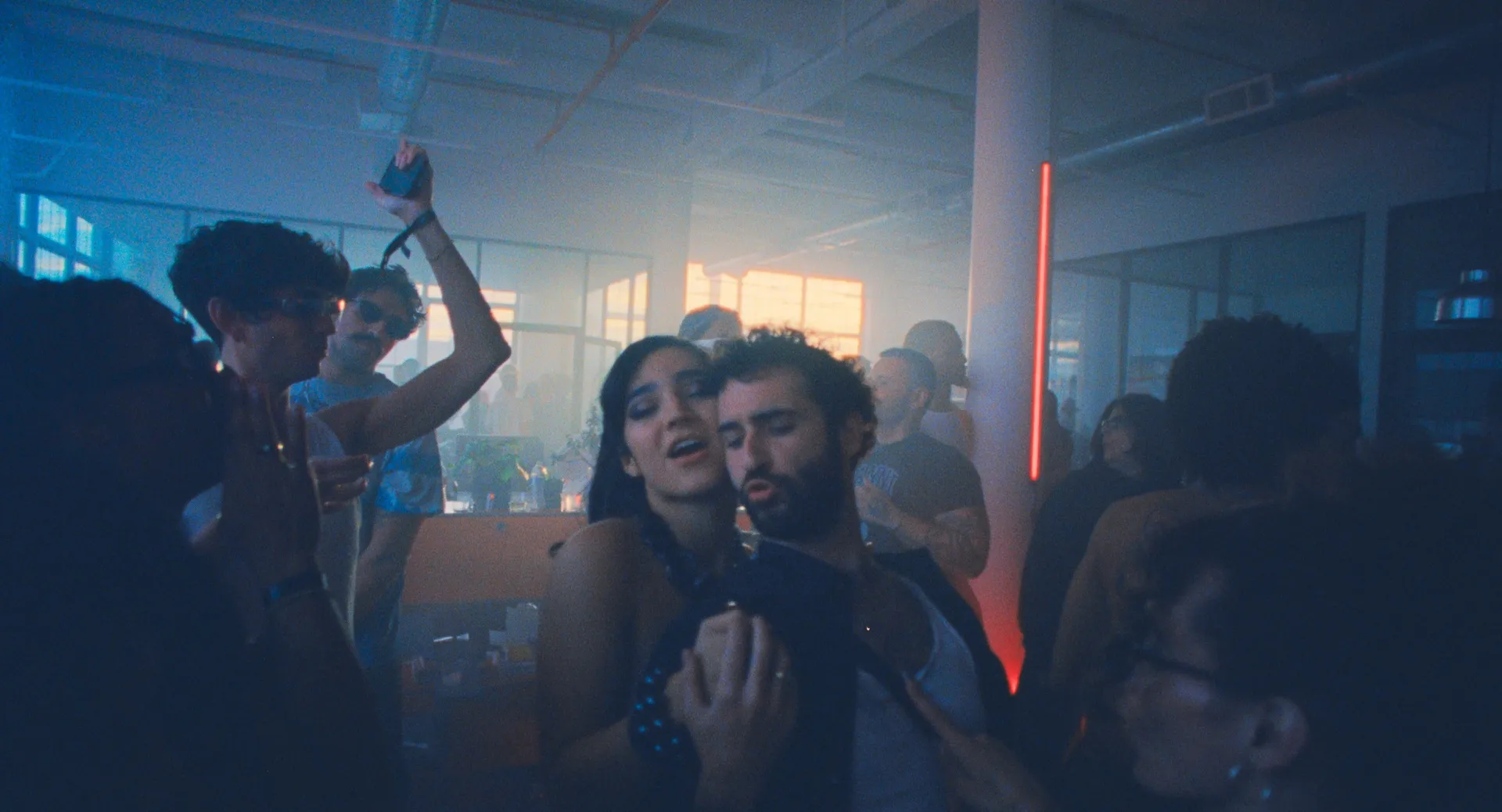
"It's not making the scene seem like anything other than what it is. It’s educating people about it without being condescending," says Miss Benny.
MC: One universal theme is how Peter’s journey ends up being about self-love and learning to like himself. How did that resonate with you?
MB: You build so many coping strategies for the pain that you have, whether it's identity or value. The question that I always come back to personally is: I know I'm capable of being praised and valued, but am I worthy of being loved? Am I worthy of caring about myself? Is that something that I'm even owed to myself? Watching Peter's evolution, I sobbed like a baby when I watched it because I identified with him so much. There's sometimes a natural resistance to queer things when you're a queer person because there's an “I don't want to see myself” thing. And yet with this, people see it, and they're like, "Yeah, I feel that way about myself." To see that it's possible and that you are worthy of all of that is really special.
AR: When I saw the film for the first time, I was so moved because the places we shot at, some of these stories, and a lot of the people in the background of the scenes—that's my real life. I was able to see myself through Peter because I live a lot of that life on my own time. The reality check felt very near and dear to my heart because I saw the stakes, and I also saw how special it is to give yourself grace for needing one thing at one time in your life and needing another thing at another.
SR: Shooting as Saffron, it was so easy for me to understand her journey with self-love because all my personal art has been about self-motivation, self-love, and finding myself. I didn't realize, though, that Peter struggled with that. When he talks about it, it hit me in such a way that I didn't realize I had been performing my own togetherness for so long. Now that I'm in this different place in my life, I'm realizing I need to relax and let myself receive because I push through as if I don't need anything, and I need everything. I need the world; I need love. I think that's a lot of survival that happens as a person in this walk of life. Like, "No, I'm good. I'm okay,” when it's okay to not be okay and to want more. It is the thing I work on most. I am so happy to be a part of this—it’s shifting my brain as well.
This interview has been edited and condensed for clarity.