Unpack Awards Season With This Insider-y YouTuber
Be Kind Rewind is proof that the Oscars aren’t just about winning trophies, but about important film history—and how America sees itself.
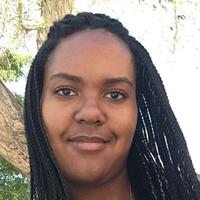

Izzy Custodio never expected her obsession with film history to become a career. Before she founded the YouTube channel Be Kind Rewind, the writer and creator’s deep dives on Old Hollywood divas were just her hobby—how she spent her free time while pursuing a degree in international relations. But for the past eight years, Custodio has become YouTube’s go-to source for in-depth video essays on film history and its reflection on society.
Be Kind Rewind episodes explore the intricacies of awards seasons past and present, from legendary Best Actress races to deep dives into Hollywood turning points. While it might seem like one could only scratch the surface of topics like #OscarsSoWhite or the Hollywood Blacklist in a 40-minute video essay, Custodio seamlessly weaves historical context and commentary into her case studies. As with all the best video essays, Custodio’s personal touch—asides highlighting performance decisions as specific as a Margot Channing hair swoop—tips BKR essays over the edge from interesting to fascinating. As the creator tells Marie Claire, her videos “describe the kind of cinephile I am. I love movies, and this is how I love them, and this is why I love them.”

Izzy Custodio—YouTuber, critic, and amateur film historian—describes herself as "sitting in the center of a couple of circles on a Venn diagram."
Beyond the thoroughly researched, nuanced analysis, Custodio’s videos stand out by focusing on the hidden influences behind the films topping the box office and what stars take home the gold. As Custodio sees it, since art reflects society, so do the awards campaigning, historic snubs, and accusations of category fraud. Her analyses of how Hollywood has changed over time and who Hollywood chooses to elevate to icon status always link back to the ways that the entertainment industry is constantly influenced by the hegemonic structures of the time. Whether you want to ignore it or not, art is intrinsically political.
Article continues below“I think you could teach an American History course just by plucking out maybe five films that can tell you what America thinks about itself,” Custodio says, “the ways that it structures its institutions in order to enforce or reinforce that belief for the American public. I'm interested in illuminating for people how the pop culture that they're consuming and the images of pop culture they're consuming are maybe influenced by those structures.”
With over 350,000 subscribers and 45 million views and counting, Be Kind Rewind is one of Film YouTube’s most esteemed channels. Custodio’s reach goes beyond the platform; she has been a mainstay of Sight & Sound’s annual Best Video Essay polls since 2023, and she was an inaugural member of Turner Classic Movies’s (TCM) New Voices of Cinema series. Though she admits that she “kind of sits in the center” of a Venn diagram of amateur historian, critic, and YouTuber, you can’t deny that Custodio has found her audience: fellow film buffs who want to celebrate the best of Hollywood year-round.

The All About Eve (1950) character Margo Channing (played by Bette Davis, left) is the inspiration for Be Kind Rewind's logo.
Below, Custodio chats with Marie Claire about the essential Be Kind Rewind videos film fans should watch, how awards shows are fighting for relevance in 2026, and the performances she’d vote for if she were an Academy member.
Marie Claire: Where did your fascination with film history and the Oscars start?
Izzy Custodio: I grew up in a household that loves movies, so Turner Classic Movies (TCM) was always on. There were a handful of movies that I saw that really ignited my personal love of film and started to shape my taste. I saw Moulin Rouge when I was probably too young to see it, but it nevertheless had a huge impact on me. That was when I started getting really into the Oscars, because I really wanted Nicole Kidman to win for that.
My taste started maturing into a more classical area when I was in high school because I was close to my grandmother. She had memories of the ‘30s and ‘40s that I liked to probe in her brain. You used to be able to get on YouTube when it didn't really have very strict copyright restrictions and type in "Katherine Hepburn full movie,” and you'd get almost her entire filmography. I would pick an actress, binge everything that she had been in, and then move on to the next one. I could find my way through cinema history through them as oddly aspirational figures, even though I think the films from that era aren't the morals and ethics that I hold myself to. But I found something in them nevertheless, which I really took to heart.

BKR's most-viewed video to date compares every iteration of A Star is Born, from the 1937 Oscar winner to the 2019 remake starring Lady Gaga and Bradley Cooper (seen above).
MC: How did Be Kind Rewind originate? Why was YouTube the right medium?
IC: I was working in Berlin at the time, and I didn't know what I wanted to do with my life, because I decided I didn't want to do politics. My way of understanding Berlin, as a new place that I'd moved to, was through film. So I was watching a lot of Marlena Dietrich and Fassbinder and all these German filmmakers or actors. I went to the German Film Museum, and it was the first time I really realized that there are people who are in charge of shepherding these stories into the present and helping people understand the history of this medium.
I had worked at Vine, so video was part of my vocabulary about communication. I was also really inspired by Karia Longworth, who does “You Must Remember This.” She had done an interview with “Fresh Air” on NPR, where she said it's simple production-wise, in the sense that it's her, a microphone, and her writing. I was like, Well, I'm not a filmmaker, but I can do that. It really was just like, I need to make this as a project for myself. When people started watching it, and it started becoming a thing that could bring an income, it became something where I was like, Oh, maybe I can actually do this. It was never my plan to be a YouTuber; it just kind of happened.
MC: What makes you want to cover a specific actress, director, or film?
IC: It's different for every video. Sometimes it's a topic that intrigues me personally from a taste perspective. When I made the Ms. Piggy video, it's not like people were talking about her. It's because I think she's fascinating and hilarious, and I wanted to talk about her. Sometimes it's things that I'm pulling from history that I think more people should be aware of, like the Eartha Kitt at the White House video. Sometimes it's a topic that I feel people would want to engage with from a current-events or current-film-culture perspective, like Megalopolis or comparing different versions of films. So I have different motivations: Sometimes it's just completely niche to me, and sometimes it's because I think there's a conversation happening and I want to add my take.

Vanessa Redgrave's 1978 Oscar win for Julia is the subject of a recent BKR video, "Why Vanessa Redgrave Gave the Most Controversial Oscars Speech Ever."
MC: How do you decide whether a story is important enough to warrant a video beyond just your personal fascination with it?
IC: If you think about it, the whole tagline of the MAGA movement—“Make America Great Again”—is based on this image of America that people have in their brains that never really existed. So looking at these films is a really good way of illustrating that. America never was like that, or the reason you think it looks like that is because there were these laws or this censorship in place that made that image available to you.
It’s shocking when you look back and understand the extent to which censorship dictated the course of our cultural history, because there's this idea of freedom of speech that we've been comfortable with for maybe the past 40 years. Something like the Hays Code is really shocking, and the way that states were able to cut up films however they wanted, just based on what they felt politically. The fact that someone in Alabama would see a different film than someone in Massachusetts is hard to fathom. It's important to understand that we all grew up in different environments that were different in a very intentional way, in order to move forward and make the cultural reparations that we need to make.
I think it's also important to go back in time and recognize the figures who pushed against those images, or maybe subverted them to empower people today to say, You're not alone. You may think that history looks a certain way, but it doesn't. People have always been pushing us to be where we are today, and it's important to stand on their shoulders and give them the recognition that they deserve as we look back at our own history.
MC: Walk me through the drafting process for a BKR video focused on a Best Actress winner.
IC: I start with my own assumptions about somebody and why I think that. What is leading me to think of this person this way? Is that true, or do I just think that? Do other people think that? For example, since I'm working on something about Barbara Stanwyck, I tried to find a lot of contemporary writing about her to see where people have landed in thinking about her legacy. Then, rewinding and getting the basic biographical facts down, and trying to square those biographical facts with the way that she was covered at the time. I try my best to not let my own assumptions take full control, and I try to be really obvious about where it is me talking, and where it is journalists or academics giving their two cents as well.

In her video on the Best Actress Race of 1950, Custodio draws parallels between the historic race and Mikey Madison's 2025 win for Anora.
MC: You often touch on the evolution of awards campaigning in your videos. What are your thoughts on the current state of the awards race?
IC: I do think it's changing, because I feel like film culture has changed so much. There's not the same dominance that awards shows used to have, in terms of power over the box office, which ultimately is the point of awards existing. I think part of it has to do with how insular the film community has become and the way that you can target campaigning so specifically. If you think about something like the Andrea Riseborough nomination that shocked everyone [in 2023], that was a case of work smarter, not harder. You’re targeting this very limited group of voters, and that's how you make things happen. So with the proliferation of all of these parties and events and screenings that all of these guilds and critics groups are going [to] together, they can be really smart about the ways that they're going about it. They don't need mainstream audiences as much as they did before.
The expansion and diversification of a lot of awards bodies has made a huge difference in terms of taste and what they're actually picking. Audiences have an idea of what “Oscar bait” looks like, but I don't think anyone would've said, “Everything Everywhere All at Once is Oscar bait,” or, “Anora is Oscar bait,” or, “Parasite is Oscar bait.” There are so many things that are being accepted as possible for awards now that wouldn't have been maybe 10 to 20 years ago.
And the Oscars are moving to YouTube. That is a whole other world in and of itself, and what the award show will look like in a different context. Everything is in flux as they're trying to figure out who the audience for the Oscars [is], and the ways in which the Oscars are actually relevant to the way people are consuming media.
People have always been pushing us to be where we are today, and it's important to stand on their shoulders and give them the recognition that they deserve as we look back at our own history.
MC: It’s somewhat of a meme that “Awards don’t matter unless my favorite wins, then they matter.” In the current age of social-media bubbles, how do you feel about the discourse around awards season?
IC: I mean, that's the game, right? I don't think award season would be quite as compelling if everybody were happy all the time. That is the fun to me: the way that people are debating it, and constantly going back and forth on why they like or don't like things. It can get messy, and it can get aggressive, unnecessarily so, and I feel like social media is certainly making that worse. But I do think that very sincere appreciation for people that you enjoy seeing on your screens is worth recognizing at the end of the day.
I've been asked before, “If you had to change the Oscars to make it more equitable or democratic, how would you do it?” I think there are many improvements that you can make to slightly change demographics or impose rules that would limit campaigning in some way. But ultimately, every democratic institution is going to have its biases, and they're going to be corrupt to some degree. So it's like, since we have this cultural understanding of awards as something you give to people that you appreciate, how do you maintain the positives of that without destroying the reputations of people or making everybody just unnecessarily angry? I don't know that there's a real answer.
One thing I have come to appreciate recently is something like the Las Culturistas Awards. The categories aren't really competitive, but you still get to say, “You know who we liked this year? Teyana Taylor. We also liked Amy Madigan, and they get different awards for different reasons.” It's just a positive way to approach visiting a year in pop culture without it feeling negative, and I've really come to appreciate that approach.
MC: I agree, especially because everyone's doing such different things. It's like, how do you compare these?
IC: It's inherently ridiculous. The idea of measuring art against each other is like, there's no real answer. It's not math. It shouldn't be treated as a competition, even though that's what this is, and that's how we talk about it. But at the end of the day, I don't remember the saying exactly, but it's like, “Take what you love and leave the rest.” That's kind of my approach. Try to stay above it a little bit and just appreciate what you like and don't get too upset because at the end of the day, these are just rich people getting awards for learning their lines.

Custodio names her deep dive on Superstar: The Karen Carpenter Story, told entirely through Barbie dolls, as her most ambitious video so far.
MC: What performances did you really like this year?
IC: [If I] had a vote somewhere, I'd be voting for Amanda Seyfried in The Testament of Ann Lee. I loved her performance in that film. I also really love Rose Byrne in If I Had Legs, I'd Kick You—just a really messy-in-a-good-way performance, expressing mess and really anchoring that whole film. And then I loved Jesse Plemons in Bugonia, thought he was great. I loved Wagner Moura in The Secret Agent. Teyana Taylor would be my Supporting. I also love Benicio del Toro in One Battle After Another. Those are my top for the year.
MC: What do you love that you want to keep from award season?
IC: Since the way I entered film was getting to know an actor through their performances, I still enjoy that. For example, thinking about everything Amanda Seyfried has made, how does that relate to The Testament of Ann Lee? What is she showing us in this that she hasn't been showing us before? Or maybe there are things that I recognize that she's bringing into it that add to the performance. Why do I like this? Why don't I like it as much as this? Or why do I like it more than this? It's like you're probing your own taste, and you're trying to understand what draws you to film in general.
I like it when things are a little weird and subversive or ugly or strange. So is that why I like Yorgos Lanthimos as a director? Or is that why I'm not liking the straightforward storytelling that I'm getting in other films as much, because it's just not clicking to my taste level? It's a way of understanding myself. It's a way of understanding what other people think, what the majority likes, as we're getting down to who's winning and who's not. That's all fascinating to me. You can learn so much about the way producers versus actors or directors are responding to films [by] the way that their guilds are nominating things. There's so much to think about and talk about when we're talking about the industry politics of it, but also just the way that people respond to something culturally. As someone who likes pop culture and is, I guess, selfishly interested in understanding my own tastes and others's, I still cling to this as something to pay attention to.
This interview has been edited and condensed for clarity.