Aleshea Harris Made 'Is God Is' For Herself
The playwright-turned-filmmaker discusses bringing her unapologetic revenge tale to the screen.

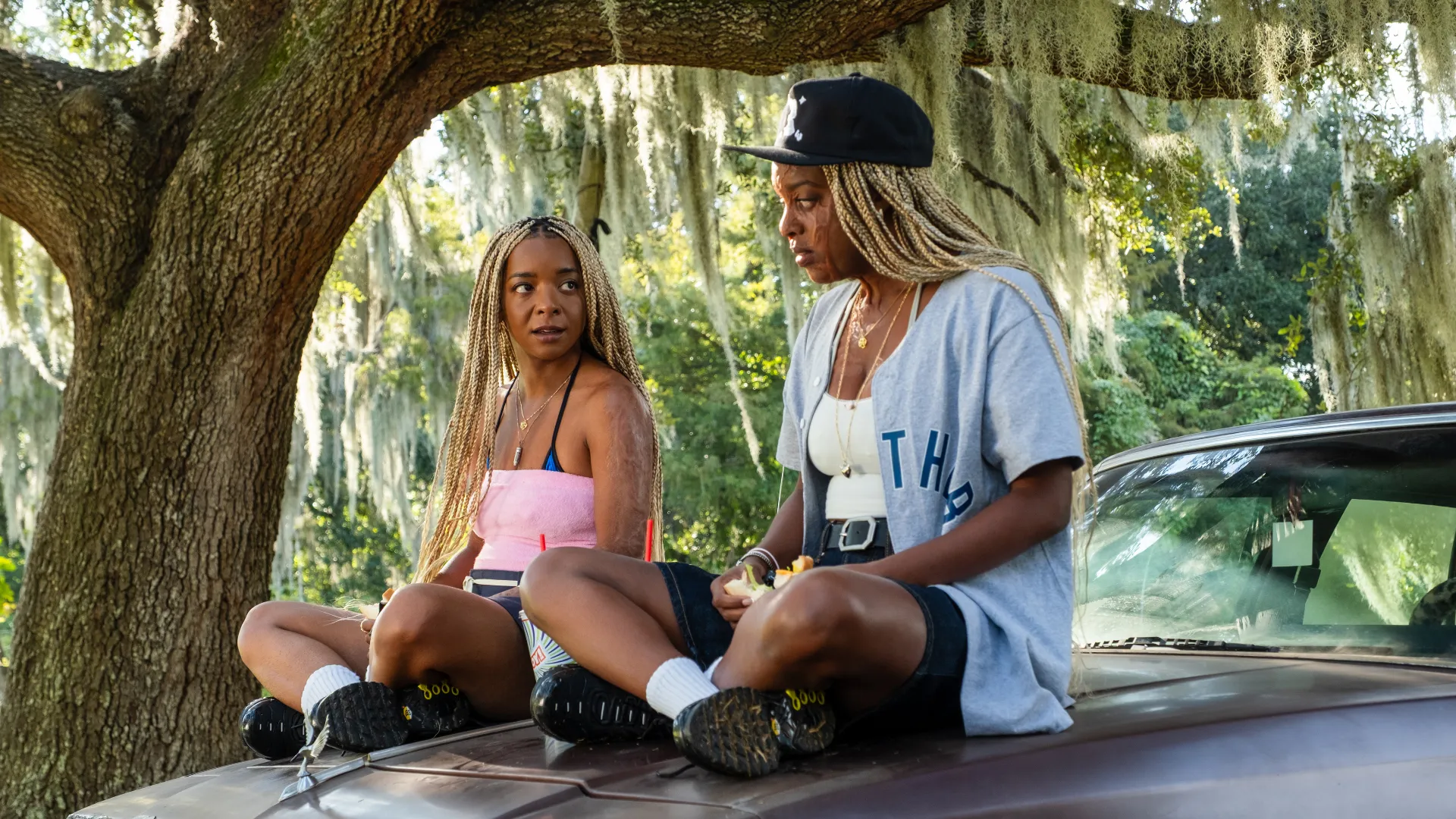
This story contains light spoilers for Is God Is. Aleshea Harris wrote Is God Is for herself. Over a decade ago, the playwright wove together inspiration from Greek tragedies, spaghetti westerns, revenge thrillers, and her own Southern upbringing to craft the story she wanted to read about Black female rage. She didn't know whether it would ever be performed—but after a buzzy 2018 Off-Broadway premiere that won her an Obie Award and drew attention from Hollywood executives, she’s now the screenwriter, producer, and director of a feature-film adaptation.
“Is God Is was a turning point for me,” Harris tells Marie Claire over Zoom. “This was the first time I was like, No, I'm just going to do what I want to do, what I think is delicious.
She says it was “soul work” to write. The result is a timeless yet contemporary folktale following discarded twins, Anaia and Racine, as their mother tasks them to find and kill their father, who burned and left them for dead 18 years ago. Every step of bringing Anaia (played by Mallori Johnson in the film) and Racine’s (Kara Young) bloodthirsty odyssey to the screen was painstakingly intentional; from casting legends like Vivica A. Fox and Sterling K. Brown to play to (and against) their celebrity personas, to recruiting collaborators, like producers Janicza Bravo and Tessa Thompson, who nurtured and built upon the first-time filmmaker’s vision. Harris’s film doesn’t pause to explain the intricacies that it explores, or diminish itself to make its audience comfortable; it’s just brash, explosive, and unapologetic as it reads on the page.
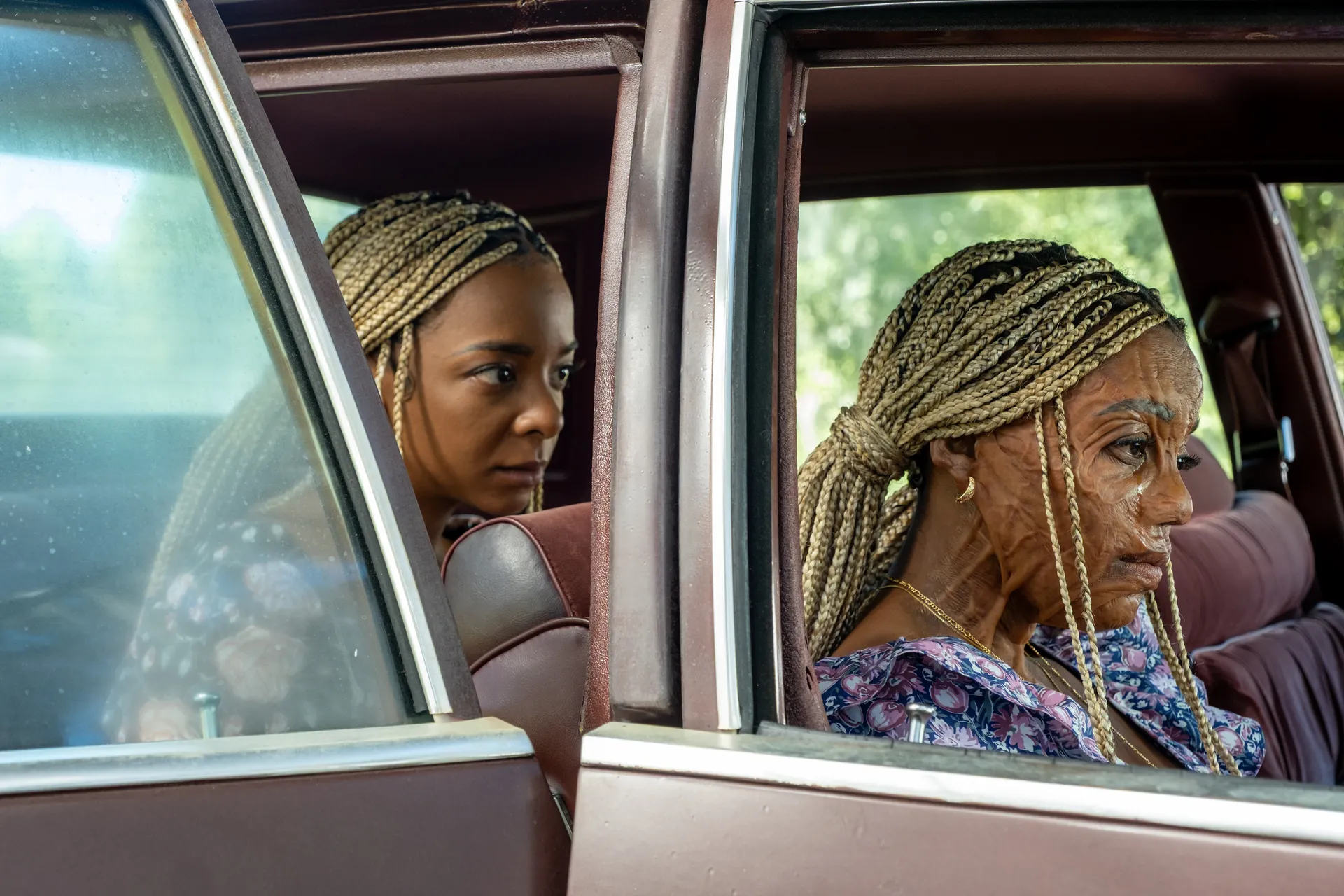
Racine (Kara Young) is known as the Rough One, while Anaia (Mallori Johnson) is the Quiet One.
Though its themes of vengeance, trauma, and lookism are universal, Is God Is is first and foremost a story about Black womanhood. The twins don box braids and waist beads, they utilize humor in the face of pain, and rap girlie bops make up the soundtrack. Beyond that, Anaia and Racine's voyage is an allegory for the many ways Black women stay resilient, even when their community fails them. That's what Harris says she hopes audiences recognize as the film's base truth: "The inherent value and power of Black women."
Below, Harris chats with Marie Claire about crafting the style of her film’s world, depicting Black violence onscreen, and exploring her own girlhood through Anaia.
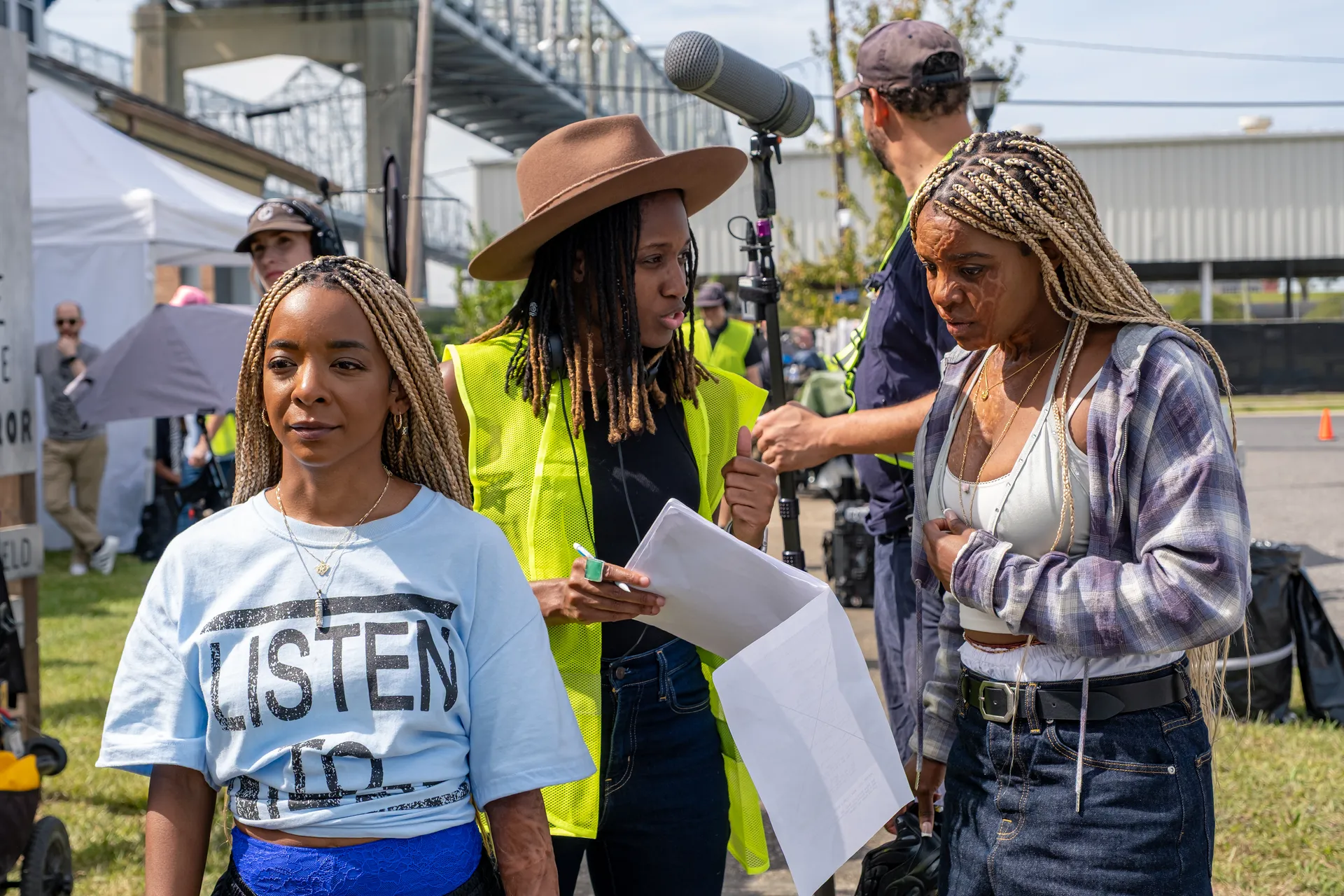
Aleshea Harris discusses a scene with actors Kara Young and Mallori Johnson on the set of Is God Is.
MC: The dialogue in the play and film is very true to Southern Black vernacular, but it also feels haunting. What were some of your inspirations?
AH: It often takes me a long time to start a play because I have to find its mother tongue. I need to know how the people speak in this universe, and then I'm trying to be inventive. This is in many ways Black Southern speech, but even that's quite general. It's really me recalling from memory and the ways that I speak—but then there's also a poetic gesture inside of it. That's the inventive part, where I'm creating a word that I know people will understand what it means, but it's not in the dictionary.
The playwright Suzan-Lori Parks says, "Words are spells in our mouths," and I think of a story as a very immense and complicated spell. Each of those ingredients has to be just right. If someone's going to say, "gonna," that's different from "gon’." "What you gon’ do" is different from "what you gonna do." The rhythm is different and can shift the sensibility of it. That's exactly what Is God Is is to me. It's got one foot in the familiar and then one foot in something else that's imaginative.
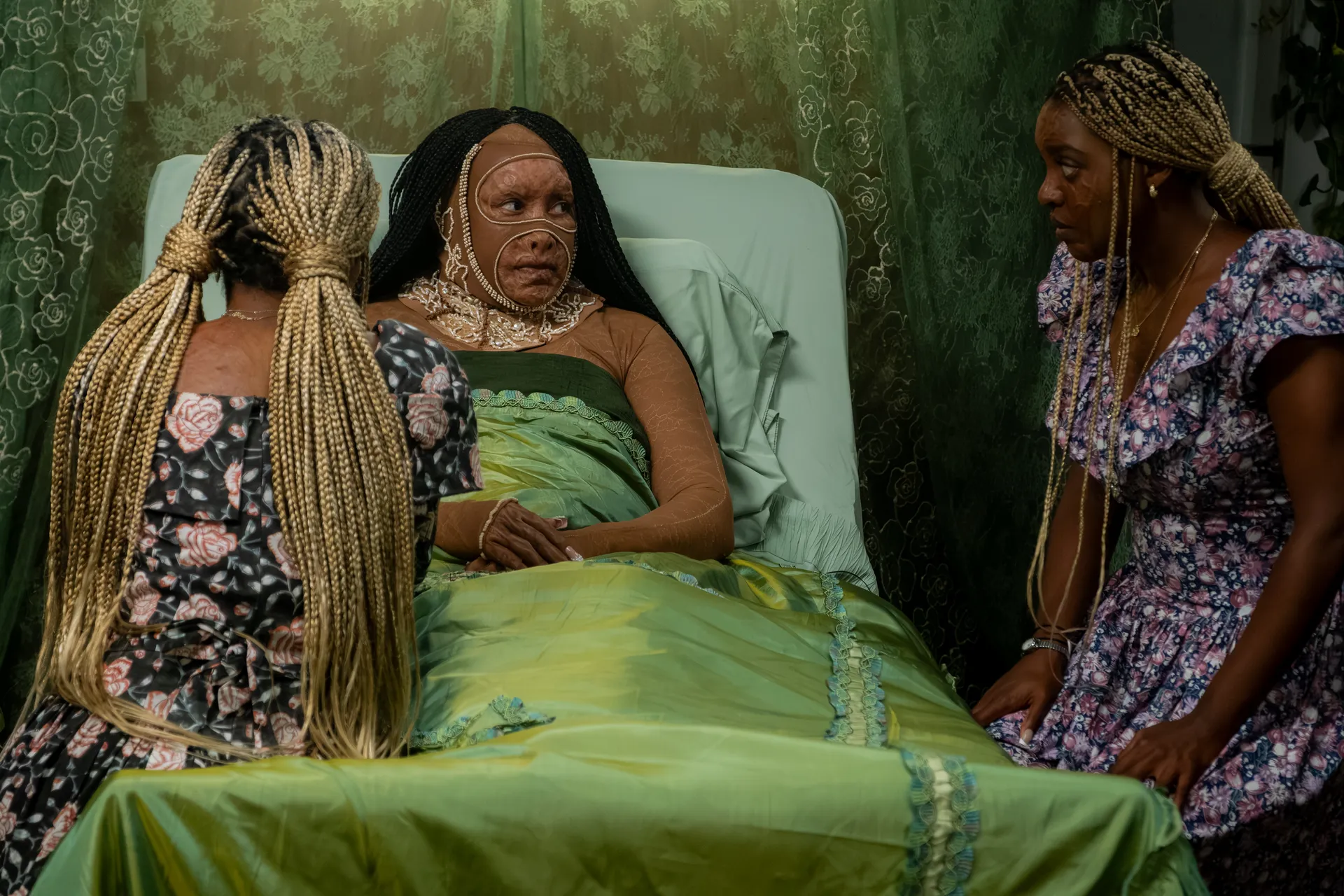
Racine and Anaia see God (Vivica A. Fox) for the first time in 18 years.
MC: The sequence introducing Vivica A. Fox’s character God/Ruby is a great example of the movie skewing reality toward the mythic. How did you approach adapting that scene visually and keeping it rooted without fully leaning into magical realism?
AH: Keeping the balance with all these genres—when I'm playing with a bit of a Greek chorus, but also there’s nods to the culture with the braiding and the nails—it's a gut thing. I feel like nothing should be there that's just ornamental. It should be supportive of the story.
When we get into the mother's space, it gives her a size and a texture to have the suggestion of a halo, to have her hair look like a veil, and to have these women [with her]. On one hand, they're attendants, which we see in the real world, but they also move in unison. They're extensions of her body, so that's the magic of it. It's like riding that line for me: We've got one foot here, one foot there, and that's the creation of a new world.
MC: How did you land on Racine and Anaia’s look, which feels very contemporary, but also fits within the film’s gothic style?
AH: I have to shout out our incredible costume designer, Angelina Vitto. Her lookbook made me more excited to tell this story. I remember saying to Angelina that I felt like Racine and Anaia's silhouette is like the punk band Bad Brains. There's something that feels a little tomboy, but there's a feminine flair. And she brought back Aaliyah and Gwen Stefani back in the day. The dresses that they wear when they meet their mother, I was [initially] like, “I don't know.” But you see what it does as part of this greater tapestry. She nailed it.
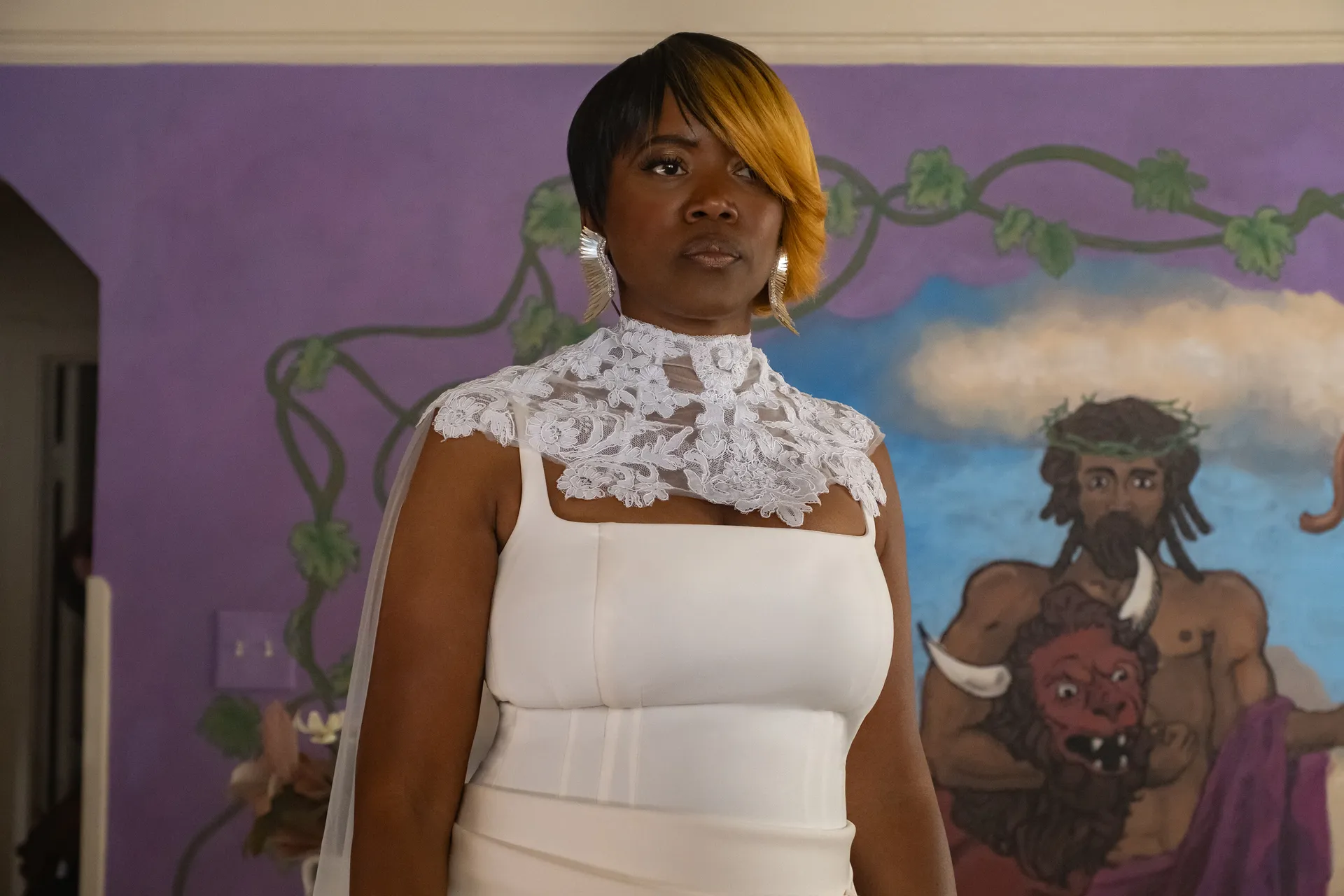
"I was also thinking about institutions...in the way that she protects this man," Harris says of the film's original character, Divine (Erika Alexander).
MC: There are some changes from the play to the film, including the introduction of Divine (played by Erica Alexander). Why did you decide to add her?
AH: I had gotten the note that we needed a little more of an obstacle for the twins as they went on their journey. So I wondered who else organically exists in this world? Who else has their father left behind? It made sense that there could have been another woman and another son.
A lot of people comment on what I'm trying to say about the Black church with this scene. When I wrote that, I was thinking that she's got a kind of cult. I was also thinking about institutions, so not only the church, in the way that she protects this man. Despite the terrible thing that he had done, he can come into the fold and be welcomed into her arms; the lack of wanting to hold him accountable, the lack of empathy for these women and their mother. We see versions of that in the culture, unfortunately, and that's what I'm trying to call out, because I think accountability is good for the entire community. I am coming for a certain reaction to harm that I think is problematic, and Divine was a great way to do that.
I hope that people can sit with those questions for themselves, if they're a Racine or an Anaia, and when, and under what circumstances.
MC: There’s an ongoing conversation about the depiction of Black pain and trauma in film. What considerations did you have about how much violence to actually show on-screen?
AH: I'm very conscious of pain that exists because we are Black and pathologized, but I hope that this movie is about so many other things. I was sitting with that, where I know that my people experienced certain things, but I want to tell this story. Inevitably, because of the nature of anti-Blackness, there's overlap between the awful things that happen in the world and some stereotypes somebody has about us. To me, it goes without saying that not all Black men are like this man. If you're making a revenge story, which I am, and you like writing about Black people, which I do, your revenge story is going to have Black people, and somebody is going to be the bad guy. Unfortunately, gender violence exists in our world, and there's something to be said about it, but I think the way that one says it is important.
I knew that I did not want to show [God/Ruby] being tortured. It's also true to ancient Greek tragedy that the violence happens inside the home, and then you see or hear about the results of the violence. So we shot it in such a way that we wouldn't be directly on the violence. We would help the audience to engage other senses through sound or obscure the act. We'd have the camera on the person who was casually standing there while the violent, horrible thing happened, which tells us a lot.
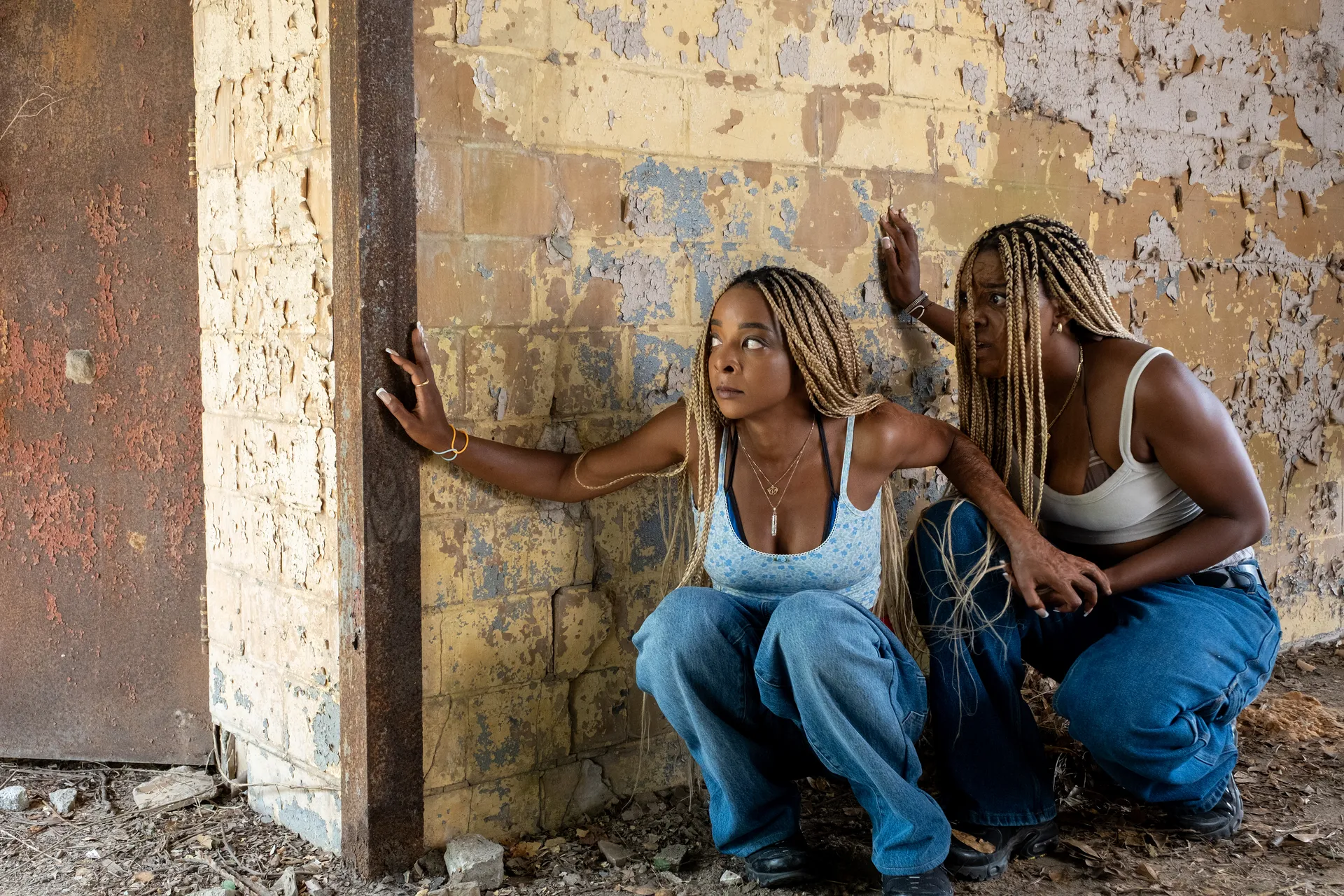
Mallori describes Rachine and Anaia's style as "a little tomboy, but there's a feminine flair."
MC: The film's themes of who is perceived as "ugly" and Anaia being dehumanized based on her appearance are so potent and really resonated with me. What conversations might you have had about that aspect of the film?
AH: People have said that it meant something to them that I had a Black woman calling herself ugly onscreen. We know the ways that beauty standards work; they're harmful to all women, and especially non-white women. That's something that I had sort of forgotten about or wasn't conscious of [at the time], but I absolutely wrote this from the inside, so I wrote from feeling ugly.
Growing up, I knew that I was [considered] ugly. I remember being about 4-years-old and talking to my mother. I named someone, and I was like, "That person is ugly." And then I was naming every Black person I knew, and saying, "She's ugly, she's ugly, I'm ugly." Because I had already processed at 4-years-old that Black people were not [seen as] pretty. The Barbie doll that they showed in the commercial was the white one. Beauty and how one is perceived in the world is a huge part of this story, to state the obvious, but I think what had kind of slipped under was that I wrote that because I spent a lot of time walking around thinking a thing about myself that I had been taught about myself.
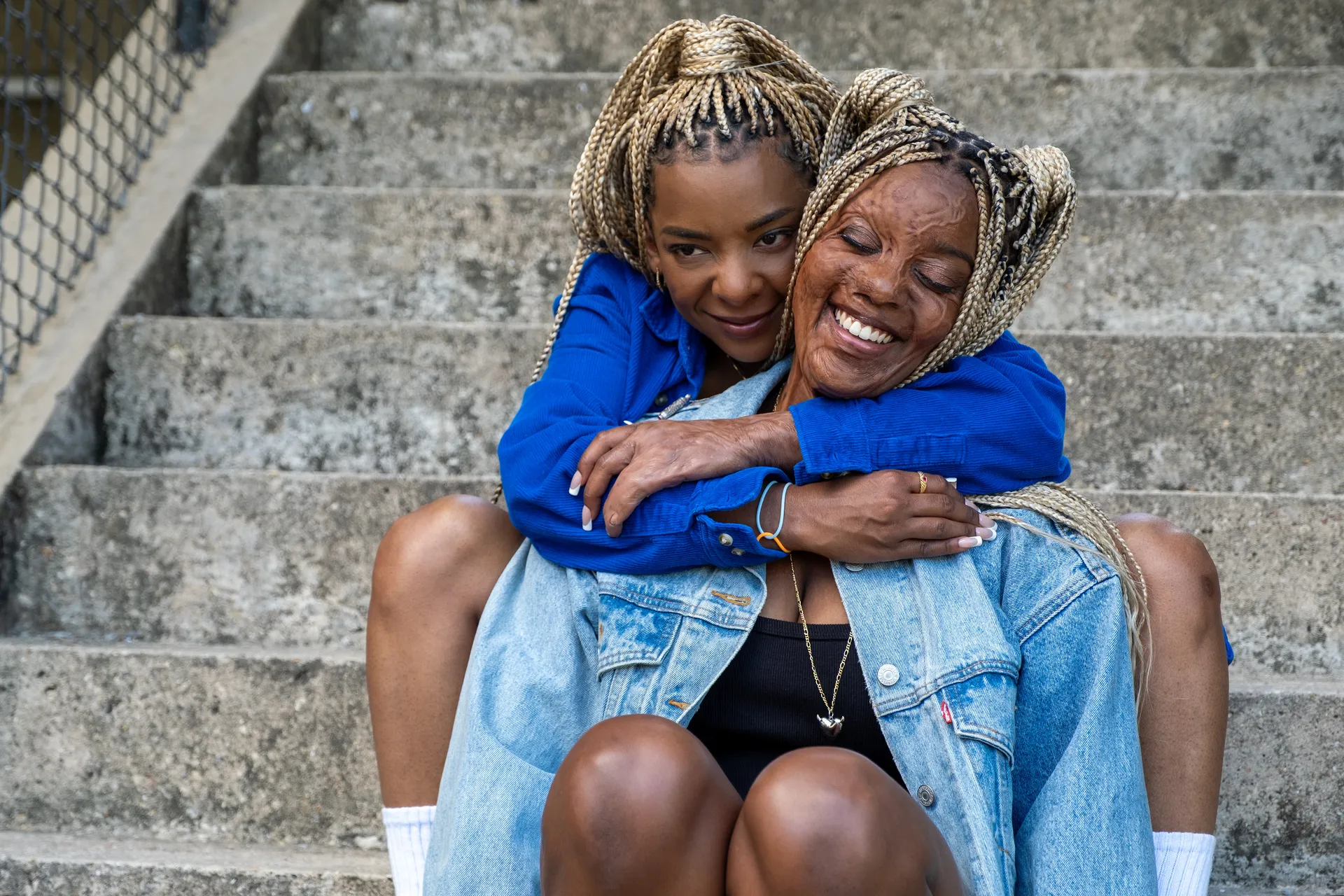
"There's an inherent drama having these two people who have different reactions, and I think that’s an important part of the movie," Harris says of Racine and Anaia's different reactions to God's order.
MC: In this new Black myth that you’ve created, how do you hope audiences will react to Anaia and Racine, who seem to represent two different manifestations of Black female rage?
AH: I’ve described them before as opposites, as different reactions to harm, and to trauma. I've also thought to myself that they're aspects of the psyche. One part of the self who's like, No, no, no, I'm going to go scorched earth, and the part that's like, Let me just take a step back. There's an inherent drama having these two people who have different reactions, and I think that’s an important part of the movie.
I hope that people can sit with those questions for themselves, if they're a Racine or an Anaia, and when, and under what circumstances. Even though Is God Is isn't a literal proposition, I do hope that it affirms both kinds of being and anything in between, for everyone, and of course for Black women. To continually suffer because of your identity is a horrible thing. I think the question of my life is, What do I do with that? How do I maintain a sense of joy and peace and stay good and keep making my art when I know it's going to happen? It's all in there.
This interview has been edited and condensed for clarity.