Yiguo Jin is not home. His wooden door is barred, his windows shuttered. Outside his weather-beaten, rural Chinese shack, a couple of chickens scratch in the dirt amid discarded beer bottles. It's all a bit forlorn. But nothing shouts "Here lives a lonely bachelor!" quite like the clothesline in Jin's yard. Its sole contents are a rumpled blue jacket and pants, an old T-shirt, and a pair of tattered briefs.
It's little comfort, says Jin later in the day when he returns from working in his fields, that there are 68 other unmarried men in his village. That just makes it worse. In the total population of only 284 in Jin's tiny hamlet in Da Xin township in China's Hunan province, the number of single women is zero. There hasn't been a wedding or a new home built here for a decade. "I'm poor and I'm no longer young," says Jin, who's 33 and still boyish-looking. "There are so many bachelors that I will never find a girl to marry me."
He's probably right. Due to China's alarming gender imbalance, there are now an estimated 10 percent more single men than women across the country. Within the next decade, the number of men unlikely ever to find brides is expected to reach 30 to 40 million — equivalent to the population of California. In rural areas, the imbalance is so acute it has led to thousands of so-called bachelor villages — remote communities like Jin's, full of single men who have never had a girlfriend, let alone found a wife.
China has always had a cultural preference for sons, but the situation has become dire over the past 30 years. Chinese traditionally believe daughters are "spilt water" — that is, a waste, because only sons carry on the ancestral line and provide for their parents. The Communist government's introduction of the one-child policy in 1980, which allows urban couples only one child and rural couples two, upped the ante for families to have a boy. Then ultrasound scans arrived, enabling sex-determination testing and prompting widespread abortions of female fetuses to ensure sons. "Chinese medics are banned from revealing an unborn baby's sex," says Mara Hvistendahl, author of Unnatural Selection, a book about global gender imbalances. "But a carton of cigarettes is enough to bribe some of them."
Today, an estimated 35 to 40 million women are "missing" from China's population. For years, demographic experts have predicted the huge surplus of young men would cause a rise in sexual violence and social instability. Now the first generation of children born since 1980 has reached marriageable age, and problems such as bride-kidnapping and forced prostitution are soaring.
The bachelors in areas like Da Xin are the least likely of all to find love. As the gap between rich and poor widens in China, uneducated rural men have little means of upward mobility. "I don't have any money to move away to look for a wife," says Jin. "I must stay here to work our land and support my elderly mother." (Jin's father died a few years ago, so his mother depends solely on him.)

Located high in Hunan's mountains in south-central China, Jin's village sits atop a perilous road with hairpin bends that takes six hours to climb on foot. The locals grow rice, potatoes, and corn. They earn around $150 a year, or less than 50 cents a day. This extreme poverty is a critical factor in the bachelors' predicament. Since the mid-1980s in this and many other villages, an average of only between 60 and 70 girls to every 100 boys has been born. The scarcity of women means they can choose to marry men from the towns, where life is much more modern and comfortable.
Evenings in the villages are bleak. The bachelors sit outside their houses, smoking and drinking cheap alcohol. In these empty hours, Jin admits he often broods about a girl who, six years ago, agreed to marry him. "Before the wedding, I was involved in a truck crash and split my head open," he says. All the money his parents had saved for his wedding went to his hospital bills, and he was left with a limp and slight facial paralysis. His fiancée left him. "She thought I was damaged goods," he says.
That, Jin believes, was his one and only shot at matrimony. In China, the man usually pays a "bride price" to the woman's family. Jin's mother, Huanxiu Luo, 61, says that in her day, a bride price was "a bag of sweet potatoes and a goat." Today, the rock-bottom rural minimum is 7,000 to 8,000 yuan ($1,100 to $1,250) — or more than seven years' worth of salary. Jin has tried to save up again for a bride price, but his hopes have dwindled with each passing year. Rural Chinese couples marry in their early 20s, and singletons of either sex beyond the age of 27 are considered "leftovers."
Some desperate bachelors resort to buying a wife from organized gangs of traffickers. The ancient practice of bride-kidnapping was largely stamped out under early communist rule. Now it's back. The gangs travel to poor provinces and either kidnap women or trick them with the promise of jobs before selling them through marriage brokers to bachelors in faraway regions.
Predictably, the outcome is rarely happy. Villager Xuncheng Lei, 38, paid a broker 3,000 yuan ($470) for a bride from the neighboring Guizhou province. The woman, a teenager named Zhongli Han, spoke a different dialect than Lei. "Even though we couldn't communicate at first, she didn't try to run away," says Lei, a man who was probably once quite handsome but now looks lined and worn-out. Han gave birth to three sons in quick succession. Family life was "harmonious and lively," Lei thought, despite the fact that laboring in the fields was grueling and mountain winters were punishingly cold.
One day in April 2009, however, seven years after she was sold to Lei, Han dropped off the three boys at their local primary school halfway down the mountain, then continued walking to the bottom. She never returned. "She just left us with no warning," says Lei. Afterward, he learned that she had applied for a replacement identity card in town, so he knew she hadn't been hurt or abducted. "The boys still cry whenever her name is mentioned," he says sadly. "So we don't talk about her anymore."

There are bought brides who don't wait seven years to flee. In the village of Yanzhuping, on another mountaintop a few miles away from Da Xin, bachelor Lou Qing, 47, spent his life savings on buying a wife and put on a lavish wedding feast. A week later, his bride vanished. Qing was the victim of a common wife-selling scam in which gangs employ a woman to pose as a bride, then orchestrate her escape as soon as payment has changed hands. Sitting inside his barren house, Qing says he resisted buying a wife for many years, but "in the end I couldn't bear another day of solitude." Now he is penniless, with no hope of recovering his savings, and says, "I have given up on marriage, on everything."
For women like Daling Huang — one of Qing's neighbors — it's impossible to have sympathy for a man who bought a bride from a criminal gang. Huang, 27, was herself sold as a wife to one of the 72 bachelors in this village six years ago. Unlike many women, she was not forcibly kidnapped. Rather, she was tricked by a female trafficker who "befriended" her while she was working as a migrant laborer in an electronics factory in the booming city of Guangzhou. The trafficker told Huang she knew a rich man who was looking for a wife, and Huang agreed to meet him. "Greed got the better of me," says Huang, who has a round face and a short bob. "I was struggling to survive in the city on my own."
Huang was driven overnight to Da Xin, a journey of more than 600 miles from Guangzhou. There the traffickers dumped her on the mountaintop at the home of her new "husband" — not the wealthy urban bachelor she was expecting but a dirt-poor farmer. "It was terrible," she says. "I wanted to run away, but I had no idea where I was. There was only wilderness around. I was very scared." The man who had bought her was "kind and fed her well," she says. Within a few weeks, she became pregnant. "I knew then there was no point trying to escape — my parents wouldn't take me back if I had an illegitimate child."
Huang gave birth to a son, and then another boy 18 months later. "I am angry about what happened to me. I fell into a big trap. But I love my sons, and their father is not a bad man," she says. "I will never leave them now." Huang admits she bribed a doctor to tell her the sex of her unborn babies, and was hugely relieved they were both boys. "My husband started treating me like a queen when I had our first son. I wanted that to continue." Huang does not see anything wrong with the preference for boys, nor does she worry about the shortage of women that put her here in the first place. She doesn't even make the connection.
According to author Hvistendahl, one of the biggest myths about China's gender imbalance is that women are regularly coerced or pressured into having sons by their husbands or in-laws. "Often women are just as keen, if not keener, to have boys than their husbands." Not only do they believe boys are more likely to take care of them in their old age, but they also realize that having sons improves their own status within the household, Hvistendahl has found.

Predictions have abounded that the scarcity of women would improve their overall status within Chinese society. But Hvistendahl disputes this, too. "While it's true that women can demand a higher bride price, putting a greater monetary value on them is not the same thing as increasing their status." In fact, in rural areas, bride price is often negotiated by fathers or brothers, she says, and men often control whom women marry based on the highest bidder.
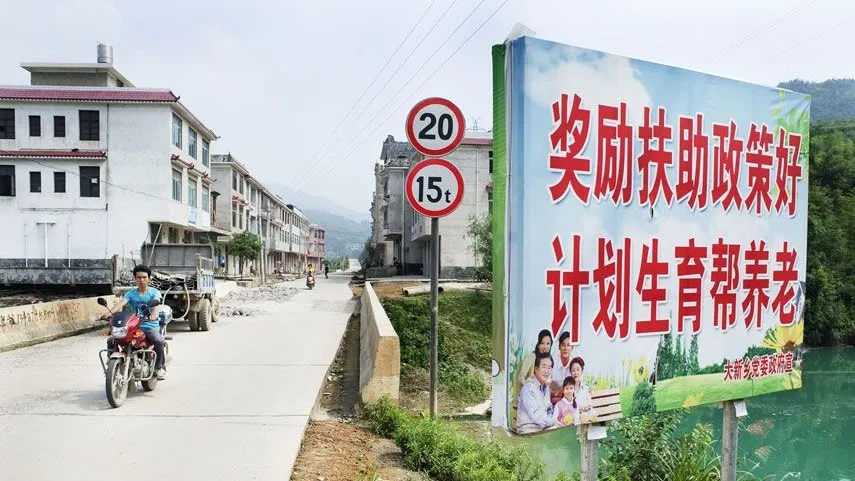
There are signs that the gender imbalance is diminishing — albeit very slightly. As a result of government education campaigns and incentives such as cash bonuses or free housing for couples who have girls, the male-female birth ratio improved in 2010 for the first time in decades. The national average of 120 boys born for every 100 girls dropped to 118 boys, and has held steady since. The shift is far too late for the millions of bachelors who already exist, but it's a small ray of light.
There are also strong women like Cuiyun Zhou, 34, a teacher at Yanzhuping primary school. Zhou has two daughters, and she passionately believes that girls are equal to boys in every way. "I will fight about this matter for my whole life if I have to. We must treasure girls." Zhou says her mother-in-law, who lives in the same house, did not speak to her for three years after she refused to abort her second daughter and try for a boy instead. "I told my mother-in-law she was wrong. I tell every woman in this village the same thing if they don't want baby girls."
In the dusty classroom where Zhou teaches, however, it's clear that her message hasn't been getting through to everyone so far. Of the 12 apple-cheeked children sitting at desks, eight are boys and four are girls. It's hard to look at their happy smiles and think that unless dramatic measures are taken to reverse the situation — and soon — these could be the faces of the next generation of lonely bachelors and trafficked brides.
Chinese traditionally believe daughters are "spilt water" — that is, a waste, because only sons carry on the ancestral line.