To Tell You About My Film, I Need to Tell You About My Mom
"People will sometimes say, 'You write so much about grief.' But grief is just love, and I am teeming with it," writes filmmaker Kelly O'Sullivan.


Filmmaking duo/partners Kelly O'Sullivan and Alex Thompson are known for making humble slice-of-life films about relationships—a nanny and a child; dysfunctional families; teenage friendships—but the sheer human resonance of their stories leaves you stunned. Their latest effort, Mouse, explores the fallout of a tragedy that tears apart two teenage BFFs (Katherine Mallen Kupferer and Chloe Coleman), as well as a mother (Sophie Okonedo) wracked by grief.
While co-directing the film—which is as much about mother-daughter relationships as it is about female friendship—O'Sullivan found herself grieving the sudden death of her mother. The sudden loss was immensely challenging, but the filmmaker has since come to recognize the indie movie's production as healing...and somewhat kismet.
With Mouse out now, O'Sullivan shares an exclusive essay with Marie Claire about that experience and how her late mother will always inspire her work.
“I want to tell you about my mom” could be the subtitle for everything I’ve ever written and probably everything I’ll ever write.
When she was living, she was too good a character not to include. Now, I feel myself trying to keep her alive through the movies I make.
My mom died very suddenly of a brain aneurysm in the fall of 2024. I was in my hometown of North Little Rock, Arkansas, for the first stretch of time since I left for college at 18. My partner Alex and I were there making the feature film Mouse, which I had written back in 2019, but had taken five years to get into production.
Mouse is a movie about mothers and daughters. It draws on a specific time in my teenagedom when anything my mom did made me want to scream. It’s a well-worn road: teenagers being wired to seek independence and autonomy while not having a fully formed prefrontal cortex and moms being wired to, annoyingly, try to keep them safe.
My mom’s name is—was Eileen O’Sullivan. Past and present tense still fuck me up.
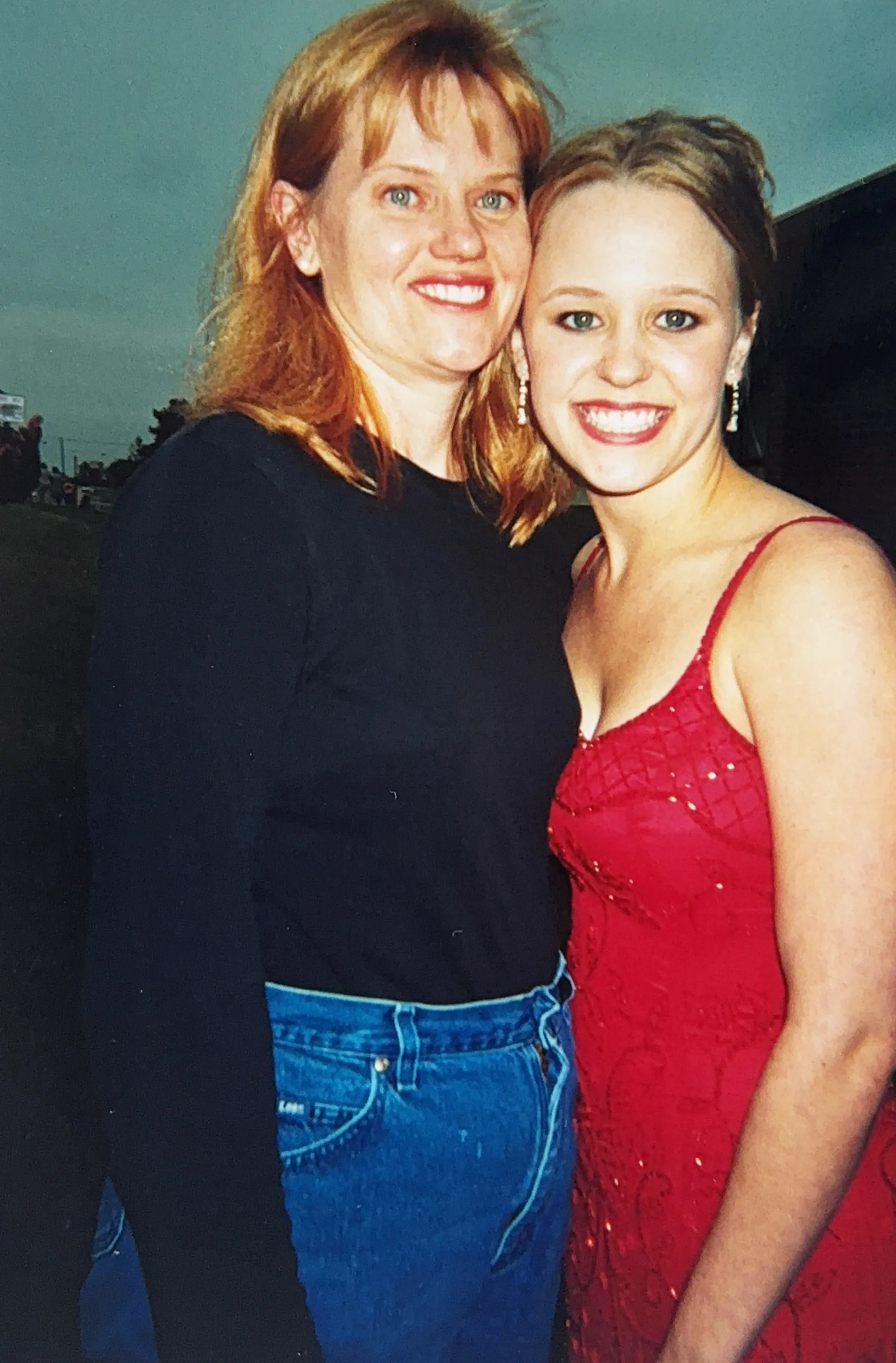
Eileen and Kelly O'Sullivan.
In my first film, Saint Frances, there is a character based entirely, exactly on her. I didn’t think the movie would ever get made, let alone seen by people, so I didn’t bother disguising her. Her character delivers one of the most quoted and, dare I say, beloved lines in the film: “When you were a baby, and you would scream and scream and there was nothing I could do to get you to stop, I’d imagine taking you by the ankles and swinging your little head into the wall over and over again until it was a bloody pulp.” Beat. “But then I’d feel so guilty from imagining it that I wouldn’t actually do it!”
That’s pure Eileen.
When my parents saw the movie, I had neglected to tell them that characters who very much resembled them were in the film. I remember my mom coming out of the theater wide-eyed. “It’s just so odd to see myself up there…”
In Mouse, the protagonist is a 17-year-old girl named Minnie, and she is deeply embarrassed by her mother, Barbara. Barbara is stretched thin, harried, uncouth. She has some lines taken directly from my mom: “What’d I say? You have to tell me so I don’t say it again!” She’s the messy heart of the film.
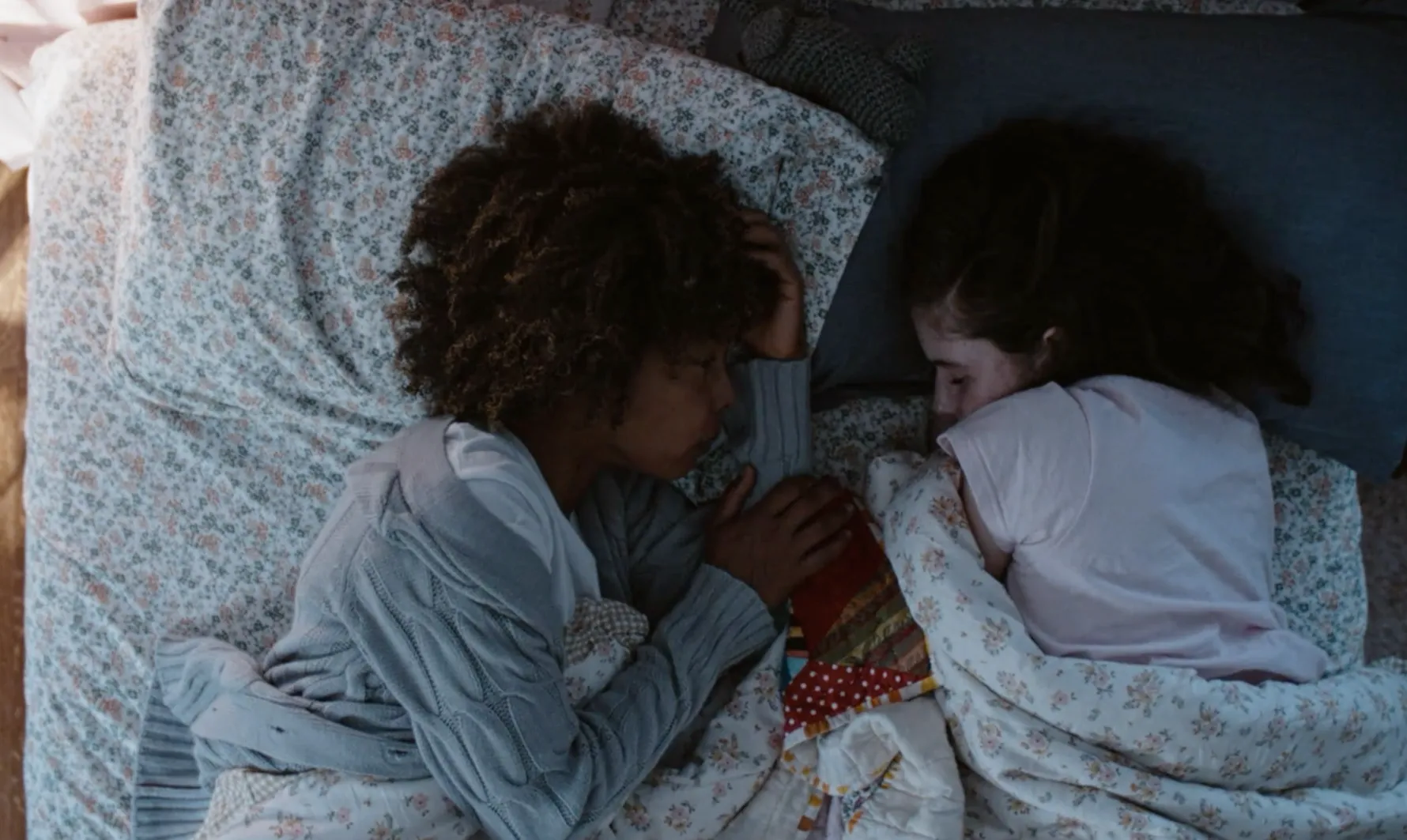
As Mouse unfolds, teenage girl Minnie (Katherine Mallen Kupferer) bonds with her best friend's mother Helen (Sophie Okonedo).
Whenever people talk about “God’s plan” or “the universe’s intentions” or some such justification of motions to everything, I get squirmy. But the making of Mouse, the timing of it, is the closest I’ve come in my life to thinking there might be some kind of synchronicity at work.
There were many different versions of the movie that came together and fell apart in the five years it took to get it into production. Each time, some stroke of bad luck—a union strike, a loss of financing—and all our hard-earned plans would crumble. It began to feel as if the movie was cursed and would never be made at all.
Throughout all of these versions, partner and co-director Alex Thompson and I wanted to shoot in North Little Rock, Arkansas, where the story is set. Many producers said no. There wasn’t a strong enough crew base there, no filming infrastructure; was there even a tax credit? On and on. We scouted New Orleans, Shreveport, even suburban Chicago to stand in for Arkansas. Eventually, when all our financing fell through (again), we decided to make the movie our own way—for as little as possible, with actors who were best for the roles even if they weren’t household names. We went to Arkansas.
My parents still lived in my childhood home there. During prep and production, Alex and I would drop off our 10-month-old son, Milo, at my parents’s house for twelve hours at a time. I saw them nearly every day for two months. My dad later told me my mom would regularly say, “I’m just so happy. It’s like Kelly is living at home again.”
With a week and a half left of shooting, we had a night shoot. Milo was staying with my parents. When we finished at 3 a.m., I went back to my parents’s house to sleep. Milo woke up at 5:30am and after a few minutes of trying to get him back down, I woke up my mom and asked for help.
Even at 5:30 a.m., she was delighted to take care of her first grandchild (she had been pressuring me to have a baby for years- see the scene in Saint Frances). I handed him over and went back to bed. At 8:15 a.m. my dad came into my room: “Something’s wrong with Mom.”
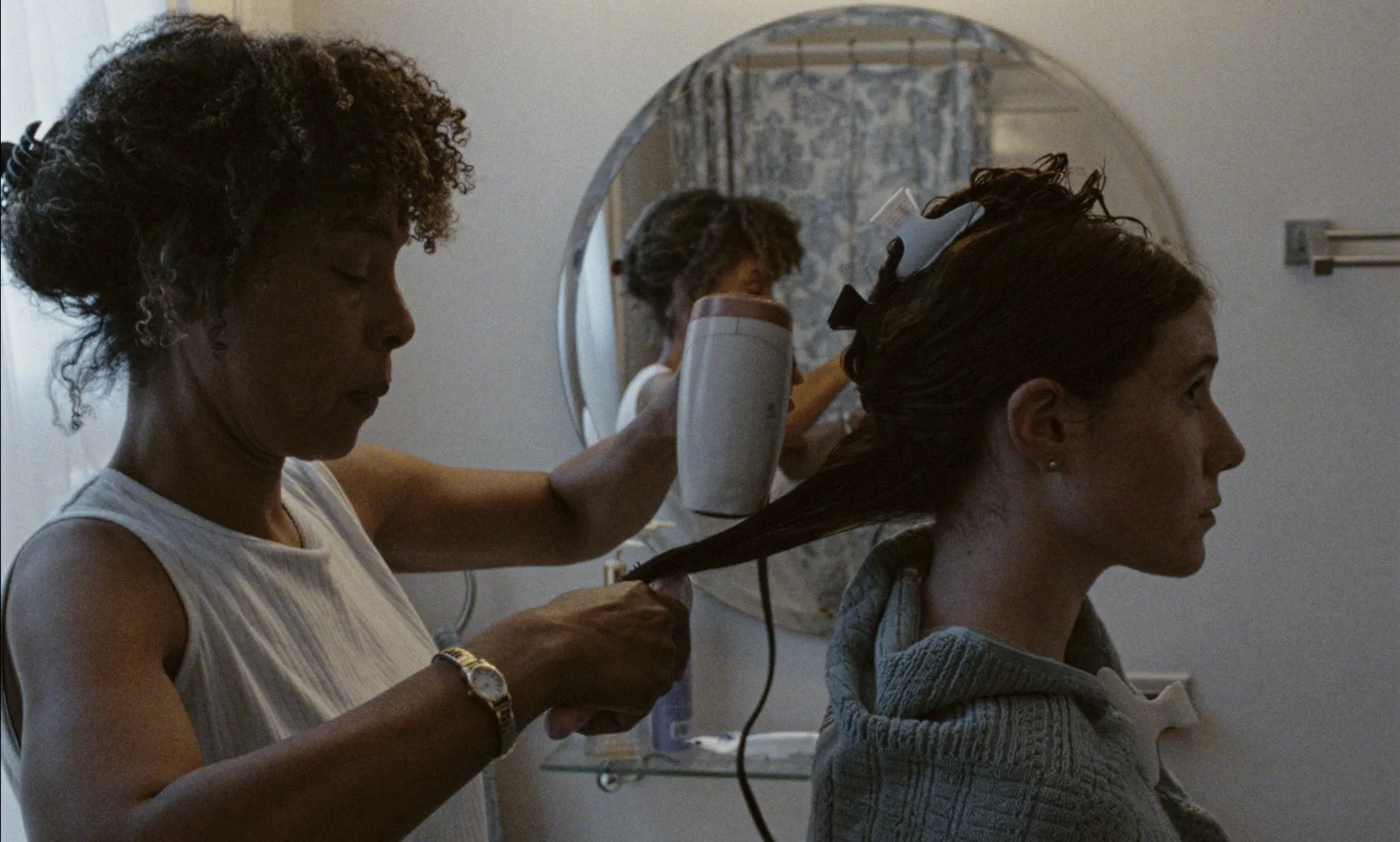
Mouse premiered to acclaim at the Berlin Film Festival and released in limited theaters on November 6.
I won’t go into the details because those last few moments of her being her are private. And sacred. And so fucking sad. She was 68 and in perfect health. Don’t tell me that was the universe’s plan.
And yet.
How do I metabolize the nearly impossible happenstance that I was there? In my hometown. In my childhood home. With my parents and my child at 8:15 a.m. on a random Saturday morning when I have not lived at home for nearly 25 years. Because of this movie, I got to spend what we didn’t know would be the last two months of my mom’s life with her. She got to spend her final three hours with her grandson. And two days later, back on set, I got to bring my dad and brother with me. We needed a place to go, together. This story could hold our sorrow and love.
Her influence is all the way through. In the heartbreak and sharp wit of the characters, the ferocity of their love, the outlandish, hilarious, heart-stoppingly honest things they say. Every idea I have for a new film begins and ends somehow with her.
At the end of Mouse, the teenage protagonist finds her way back to own mother. She realizes her imperfect, messy, deeply embarrassing mom is exactly who she needs and wants. I was lucky that, as I became an adult and a parent, I realized the same about my mom. So much is inspired by her: “No one wants to talk to you more than your mom.” I really, really wish I could talk to her. She’d be floored at how this movie is being received. She’d probably be both bashful and moved that it’s dedicated to her. In press or in Q&As, simple questions feel impossible to answer: “How was it making this movie?” “What did you learn about grief?” I never know whether to tell the whole story. Now, when I rewatch the film, I can’t help but think: My mom was alive when we shot this scene. By this scene, she had died. Before and after. All wrapped up in a movie about life before and after a sudden death. Synchronicity or something. I don’t know.
The last words written in the movie are my mom’s name. “For Eileen O’Sullivan.” I imagine her saying, “It’s just so odd to see myself up there…”
I’ve since written and co-directed another movie, and her influence is all the way through. In the heartbreak and sharp wit of the characters, the ferocity of their love, the outlandish, hilarious, heart-stoppingly honest things they say. Every idea I have for a new film begins and ends somehow with her. I worry I’m repeating myself, that people will tire of these stories, these characters. People will sometimes say, “You write so much about grief.” But grief is just love, and I am teeming with it. For her. I want to tell you about my mom.
