Patients Are Being Duped With Fake Before-and-After Plastic Surgery Photos
A dark web of stolen, altered, or AI images makes it harder to trust what you see.

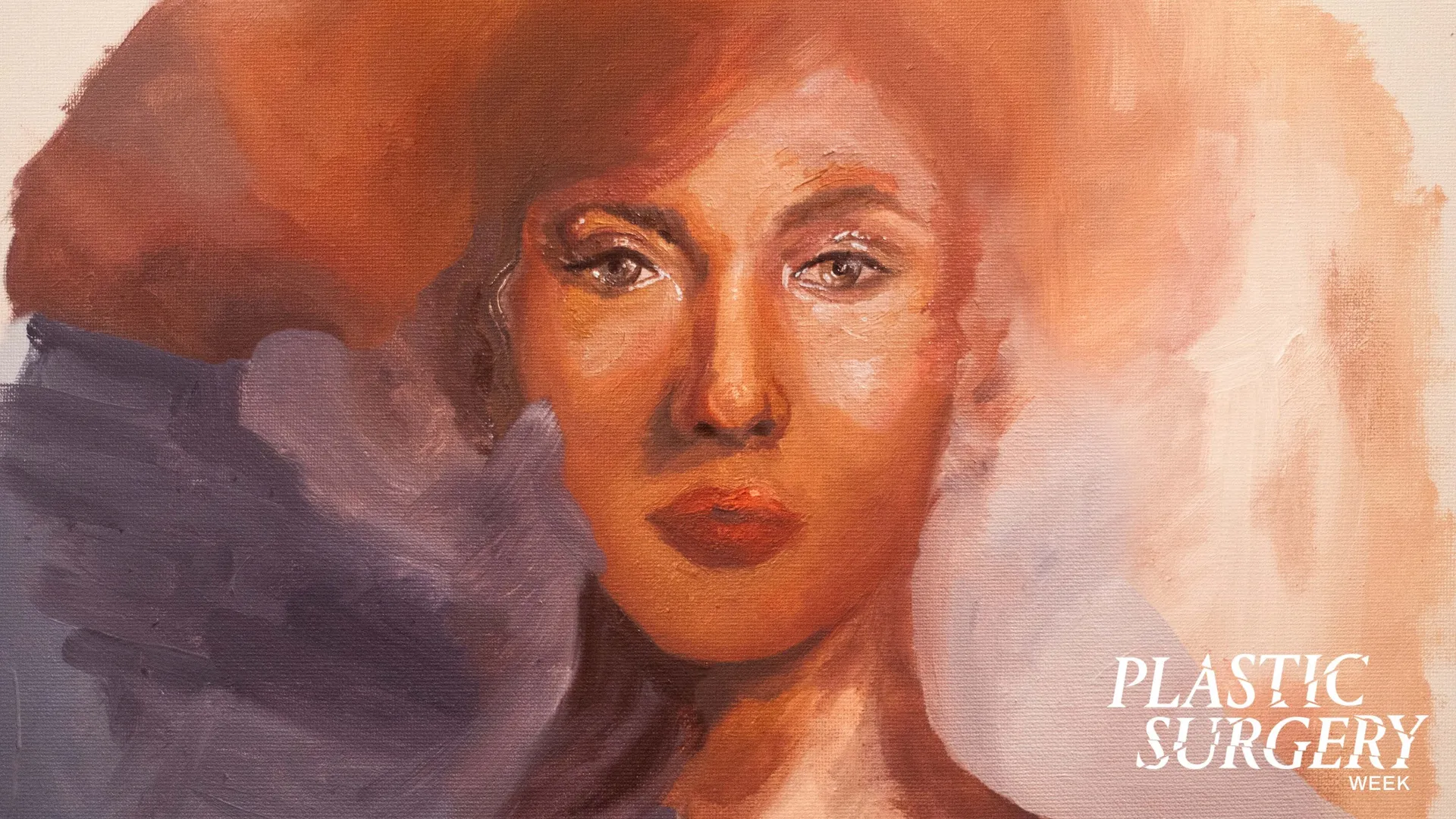
Cosmetic procedures are more available, and more popular, than ever. For Marie Claire's Plastic Surgery Week, we're going deep—even getting tweaked and augmented ourselves—to find out what really goes on behind closed doors.
Six months ago, board-certified facial plastic surgeon Ramtin Kassir, M.D., was tagged in an Instagram post by one of his followers. The video had been shared by a physician based in China. It opened with footage from an operating room before cutting to a dramatic facelift transformation. “It was my photo. My patient,” Kassir says. “But get this: He’d altered the images so she looked worse in the before photo, just to make the after seem more dramatic.”
Dr. Kassir isn’t alone. A young nurse practitioner who asked to remain anonymous says a prominent Park Avenue plastic surgeon posted one of her lip-filler cases on Instagram and presented it as his own work. Cosmetic dentist Nick Mavrostomos, D.D.S., discovered a Miami practice promoting one of his patients’ smile transformations without attribution. Board-certified plastic surgeon Robert Schwarcz, M.D., says that he’s experienced physicians using photographed slides from one of his lectures to market their own practices. These are just a few examples.
These stories start as copyright violations but end somewhere more personal: as breaches of patient trust. For decades, before-and-after photos were the closest thing aesthetic medicine had to objective evidence. Patients used them to evaluate a surgeon’s skill, set expectations, and decide whom to trust with their faces and bodies. “For me, from day one, I had a physical album,” Dr. Schwarcz says. “It was like a runway show of my best facelift patient, my best eye-lift patient. It would either resonate with the patient or it wouldn’t, but it served as a good benchmark.” Today, these images are the industry’s most powerful marketing tool—and, increasingly, its least reliable.
A scroll through Instagram, TikTok, and medical marketing websites reveals a shadow market where photos from reputable plastic surgeons are routinely stolen and reposted—and, in some cases, filtered, edited, or generated with artificial intelligence. Patients are making life-changing medical decisions based on visual proof that may not be proof at all.
The timing couldn’t be worse. According to a 2024 study published in the medical journal Cureus, 40 percent of patients say social media plays a major role in their choice of surgeon, and nearly 38 percent cite before-and-after photos as a key factor in their decision-making.
Selling a result you can’t deliver is reckless. But in today’s hypercompetitive aesthetics landscape, patients’ faces, boobs, butts, and bodies are currency for cosmetic practitioners. “Seventy-five percent of my business comes from Instagram,” says Dr. Mavrostomos, who has roughly 29,000 followers. But not every practitioner is building their feed with their own work. “It’s never been easier to pull and adapt images with AI and other tools. It’s really Pandora’s Box,” says Michele Kimball, Ph.D., who teaches communication regulations and digital media at Johns Hopkins University. “They’re making aesthetic goals not only unreachable but unreal.”
Thirty-one-year-old Stephanie learned this firsthand. She needed three dental implants and found a Colombia-based clinic with a book full of stunning smile transformations—drastic improvements, natural results. Convinced by what she saw, she scheduled her treatment. Her reality was something else entirely.
The ultimate daily digest for women of power, purpose, and style.
“I ended up looking like that guy with the two Chiclet teeth from Dennis the Menace,” she says. The experience left her devastated. “It was a hit to my self-esteem. To look in the mirror and not recognize myself was really hard. I would barely laugh. I would barely smile. I don’t know if I was depressed, but I was really, really upset.”
Over the next few months, Stephanie insisted on speaking directly with the ceramist who designed her teeth. That’s when she learned something that made the experience even harder to swallow: The before-and-after photos she’d relied on weren’t actually created by the team treating her. “I had bought plane tickets, taken weeks off of work—all these things. I’d been lied to. I freaked out.”
Patients aren’t thinking about ethics. They’re thinking about their faces, their bodies, their money. When a surgeon posts another physician’s results or presents stolen images as their own, they’re selling a lie. Patients may spend thousands of dollars, travel across borders, or undergo risky surgeries based on outcomes that were never achievable by the doctor standing in front of them. The result: more money, more risk, and more surgery. “I’m doing revision work very frequently,” Dr. Kassir says.
Patients are making life-changing medical decisions based on visual proof that may not be proof at all.
Stolen photos are the most brazen form of deception, but they’re not the only one. Filters, editing software, and AI tools can smooth skin, erase scars, and manufacture results that no procedure actually delivered. “The doctor may have done a nice job,” Dr. Kassir says. “But when the images have been filtered or AI-ed to the point where there’s not a single blemish on the skin, that’s not what the patient actually looks like.”
According to the American Society of Plastic Surgeons, using “different light, poses, or photographic techniques to misrepresent the results achieved by the individual” is a breach of the Code of Ethics. And yet, membership to this group is entirely voluntary and not necessary to be a practicing physician.
When patients choose a provider based on doctored imagery, the damage can be financial, physical, and emotional. Dr. Kimball points to agencies like the Federal Trade Commission and state attorneys general as possible avenues for recourse, but holding bad actors accountable remains difficult. “I always support FTC complaints because it helps them know what problems are coming and what needs to be focused on. They’ll do the legwork and gather the information—and they do it really, really well,” she says. “But when people are gathering and manipulating images on a global scale, it’s really hard to track and really hard to find.”
For physicians, the challenges are even steeper. Copyright complaints are notoriously hard to pursue across international platforms, and once content starts circulating, tracing its origin becomes nearly impossible. The main form of recourse across social media is the “Report” button, and Meta, which owns Instagram and Facebook, “aim[s] to protect users and businesses from being deceived out of their money, property, or personal information by removing content and combating behavior that purposefully employs deceptive means,” according to a Meta representative who spoke with Marie Claire.
But the real-world consequences function at a major lag. TikTok, for instance, has a similar policy to Meta’s on paper, but “they do nothing. I’ve made hundreds and hundreds of reports. I just give up. It’s so frustrating,” says Dr. Mavrostomos. “It took me a whole year to get one down, and then they just made another one.” (TikTok did not respond for comment by the time this article went to print.)
When people are gathering and manipulating images on a global scale, it’s really hard to track and really hard to find.
Michelle Kimball
As online evidence gets less reliable, offline trust has only become more valuable. Dr. Schwarcz has never prioritized social media; much of his practice still runs on referrals, reputation, and long- standing patient relationships. “Most of the best doctors out there aren’t pandering to Instagram to run their business,” says board-certified dermatologist Kristina Collins, M.D. “There’s absolutely no substitution for the training level, the experience level, and the professionalism.”
For decades, surgeons built credibility through consultations, professional recommendations, and word of mouth. Today, the patient journey often begins on Instagram—but, as Dr. Kassir puts it, it shouldn’t end there. “The day of your consultation, look at the other patients coming in and out. Nobody can filter or fake what’s right in front of you.”
That’s ultimately what restored Stephanie’s confidence. Earlier this year, she underwent corrective treatment with Nicolas Aguilera, D.D.S., at Apa Aesthetics—a practice she first discovered, ironically, through Instagram. But it was the staff, their patience, and the other patients in the waiting room that made her feel safe enough to go ahead. “When I got to the office and met Dr. Nicolas, he was so confident that he could do a good job for me,” she says. “I didn’t doubt him at all.”
Still, it wasn’t until she saw her new teeth in the mirror that she felt comfortable enough to smile again.
This piece originally appeared in Marie Claire's 2026 Legends issue.

Samantha Holender is the Senior Beauty Editor at Marie Claire, where she reports on the best new launches, dives into the science behind skincare, and shares the breakdown on the latest and greatest trends in the beauty space. She's studied up on every ingredient you'll find on INCI list and is constantly in search of the world's glowiest makeup products. She's constantly tracking the biggest nail and hair trends to pop up in the beauty space, going backstage during fashion weeks, tracking celebrity looks, and constantly talking to celebrity hair stylists, nail artists, and makeup artists.