I Had My Ribs Shaved to Create a More Defined Waist
After pregnancy left one woman with “rib flare,” she made the decision to undergo an uncommon surgery.


Nothing gets us more excited than talking about a not-so-little tweakment or a nip-tuck procedure. In the spirit of transparency, Marie Claire’s aesthetics column, Life in Plastic, delivers a firsthand peek into what goes on behind the doctor’s door.
Jill Einstadt is a public relations executive based in California. She underwent the RibXCar rib remodeling treatment, which involves gently shaving the lower three ribs for a more hourglass-like figure, in July 2026 with Dr. Charles Galanis. Galanis is one of 500 surgeons globally who have been trained to perform the procedure. This is Jill's story, as told to Marie Claire, edited for length and clarity.
I’m the mom of two boys—they're now 21 and 24. When I was pregnant with them, I had rib flare, which is when your ribs expand to accommodate your growing babies. As years went on, I got back to my pre-baby weight, but I would go to zip up a dress and think, what the heck happened? Nothing ever really went back into the right place. Cut to menopause: my skin got thicker, I got a little more back fat, and all of a sudden I would look in the mirror and think, who is this person? I work out. I kickbox six days a week. I lift weights. I eat right. I do all the things I’m supposed to do, but there are certain things about my body—like my waist—that I just couldn’t change.
I’d heard about a treatment called RibXCar through industry mumblings. It’s a terrible name, but in essence it’s rib remodeling, which should not be confused with rib removal. It’s a newer treatment in the United States, but Dr. Charles Galanis, the doctor I saw, trained with the procedure's creator and was among the first to offer it in the United States.
I just thought: I work this hard, and I want to feel like the best version of myself. This could bring more balance to my body and my shape in a way that no amount of diet or exercise ever could, and if it’s going to bring me more confidence and more comfort, then why not?
The Consultation
I thought I might be a good candidate for the procedure, so I made an appointment with Dr. Galanis. He told me I was the perfect candidate. He described the treatment as comparable to when you’re getting a Lucite keychain engraved. He goes in with a hot tool and scrapes away the bone, similar to engraving a piece of glass. It sounds wild, but in actuality it’s a fairly non-invasive treatment. They go in through a pinhole—there’s no cutting or stitches—and whittle away the cartilage and the upper layers of the bone just enough so that they can physically manipulate those lower ribs.
When you have a nose job, the doctor physically breaks your nose bone, scrapes it down, and then reshapes it to fit your face. This is basically a modified version, maybe even less invasive because they’re not breaking any bone. All they’re doing is creating a hairline fracture so they’re able to manipulate the ribs and place them into a structure.
The remodeling creates the new position; the compression helps maintain that position during the healing process—what I sometimes describe to patients as ‘sealing the deal.
Dr. Charles Galanis
Pre-Op
I had to do a bunch of diagnostic tests before surgery. I had to get a bone density scan, which is called the DEXA scan—everyone over 50 has to do it. I needed an ultrasound and other X-rays so that they could look at my organs and the positioning of the bones. Everyone has 24 ribs—12 rows that sit in pairs. Seeing where the lower, free-floating ribs sit helps him plan the surgery.
Says Dr. Galanis: "Jill is considerably short-waisted with very little space between her lowest rib and her hip bones, which naturally limited the waist anatomically. I set out to adjust or remodel ribs 12, 11, and 10. By bringing those lower ribs inward on both sides, we can reduce the width of the lower rib cage and create greater definition between the ribs, waist, and hips."
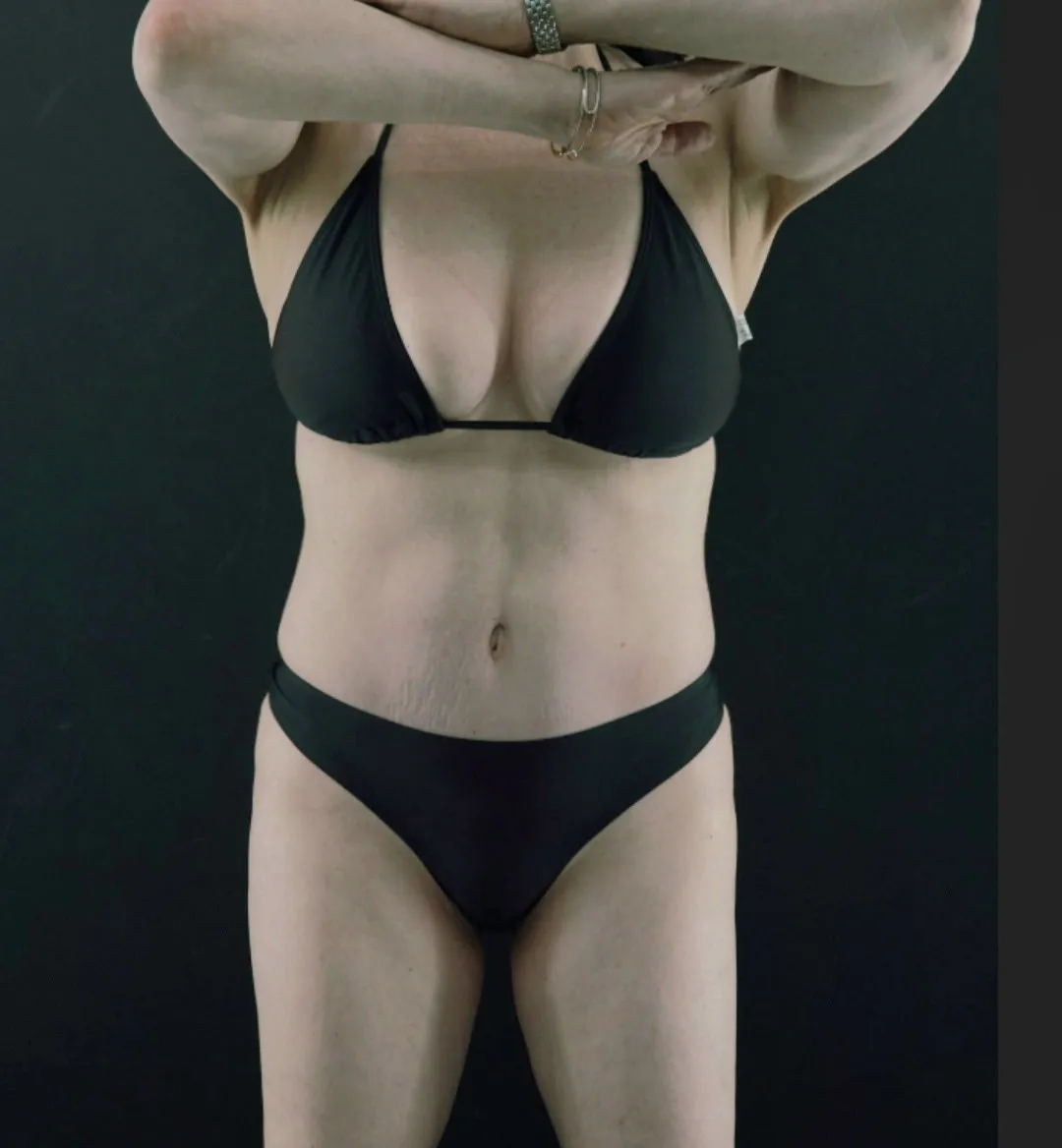


Day of Surgery
I went into the surgery center and the first thing he did was bring me to a back room and mark the ribs he was targeting with Sharpie on my back. The next thing I knew, he gave me a couple of words of wisdom, I laid down on the bed, and he said, "I'll see on the other side." The anesthesiologist gave me the countdown, and then in a blink I was waking up bound in my compression garment. “The remodeling creates the new position; the compression helps maintain that position during the healing process—what I sometimes describe to patients as ‘sealing the deal,” says Dr. Galanis.
I was definitely hazy that entire day. They put me on pain meds. I had a caregiver help out and put me into bed.
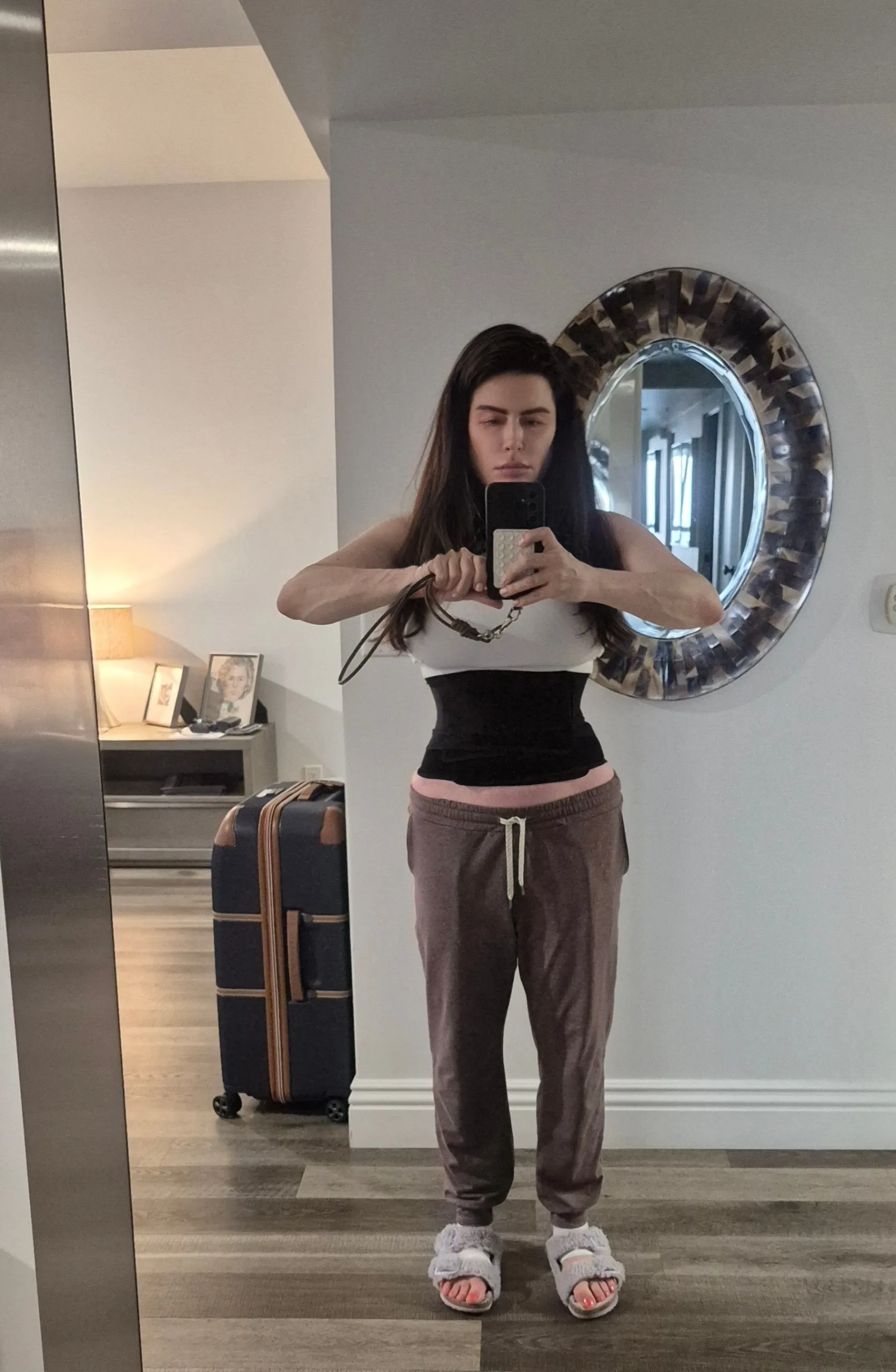
Recovery
By day two, I was pretty up and about. I'm not saying I wasn't sore. I was sore, but I was definitely up and around. I took the pain medication that they prescribed for three days. It was miserable because it made me super constipated. That was honestly the worst part of recovery. On day four, I called Galanis’s office and was like, I’m in so much pain from not going to the bathroom. My stomach is hard like a rock. I’m desperate. It’s worse than the rib pain. I ended up going off all my meds and switching to Tylenol, taking some Colace and magnesium, and had two colonics. The seas parted, and everything went back to normal.
It was much easier than I thought, but I had to move more slowly throughout my daily life. You don't realize how many actions and activities involve your midsection. Whether it's leaning over to get your car door, reaching up to get something from a higher shelf, or bending over to pick something up, it all involves your midsection and your ribs. I realized pretty quickly that I need to be a lot more careful with myself.
I had some swelling and a very little bit of bruising in the back. The swelling was more in the lower stomach than the rib area, which was probably for two reasons. Number one was my constipation. And number two was the positioning of the compression garment. It sits higher up on your rib cage and, as a result, pushes all the fluid down. The lower part of my stomach looked much more distended, but my ribs actually weren’t that swollen. It took a good couple of weeks for my stomach to go back to “flat.”
I have to wear some version of compression for three months—I’m currently 11 weeks out. The original garment was not so much a waist trainer; it’s a thick, black band with four layers of Velcro. It’s around eight inches tall and goes around my entire midsection. I wore it for 23 hours a day and only took it off to shower. Then, around eight weeks later, I changed into something that resembled Spanx or a faja-type garment. It’s still tight, but it’s much thinner, and it makes getting dressed so much easier. I was probably a size 28 in jeans before, and now I’m a 26.
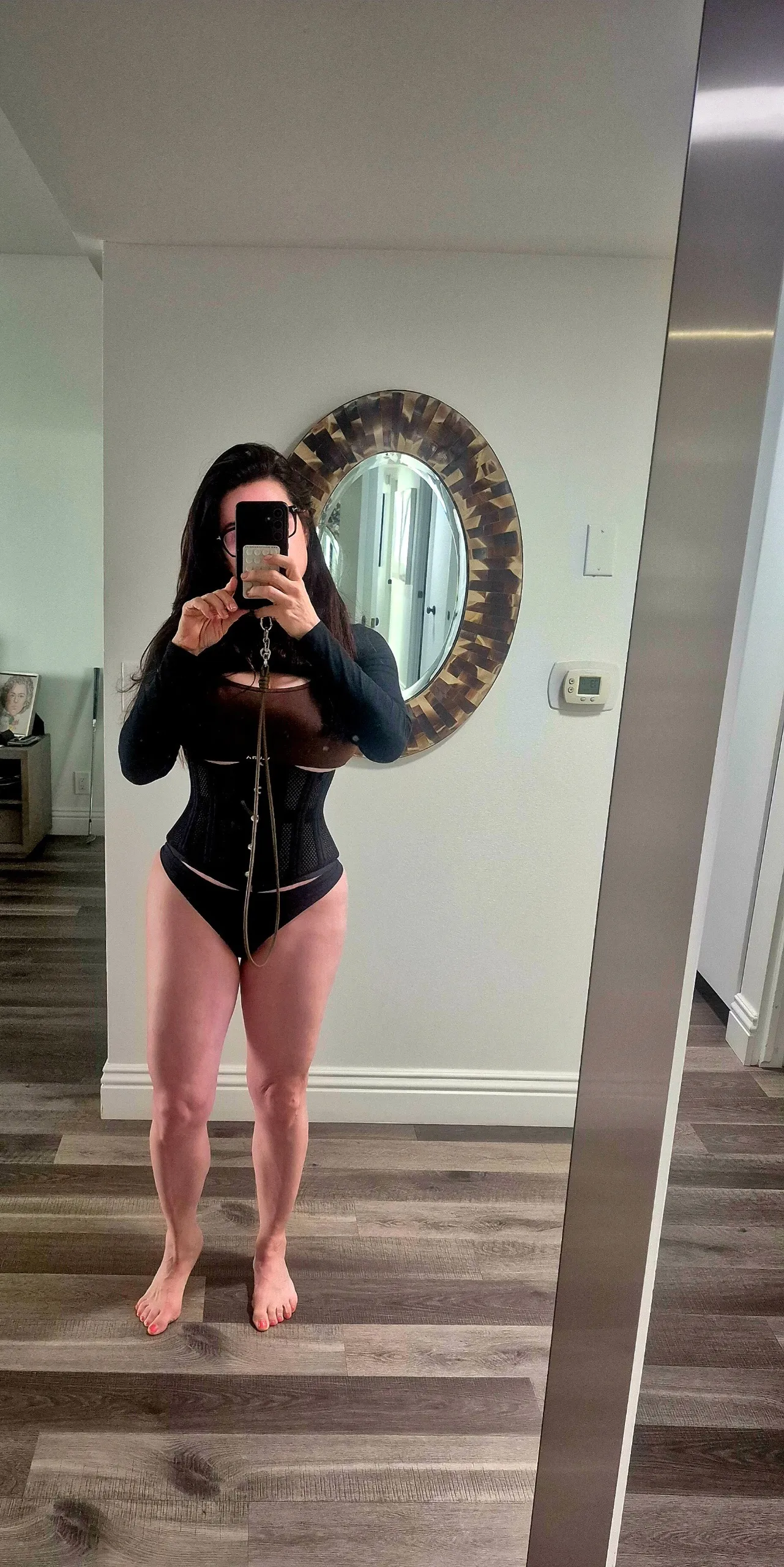


The Takeaway
All of a sudden, whether it’s a high-waisted pant or a low-waisted pant, I’m not thinking about it. I don’t need to camouflage or try to elongate my waist. I feel so good. Now that I see a balance that didn’t exist before. It feels incredibly freeing. I don’t have to think about getting dressed anymore, and there’s something really nice about that.
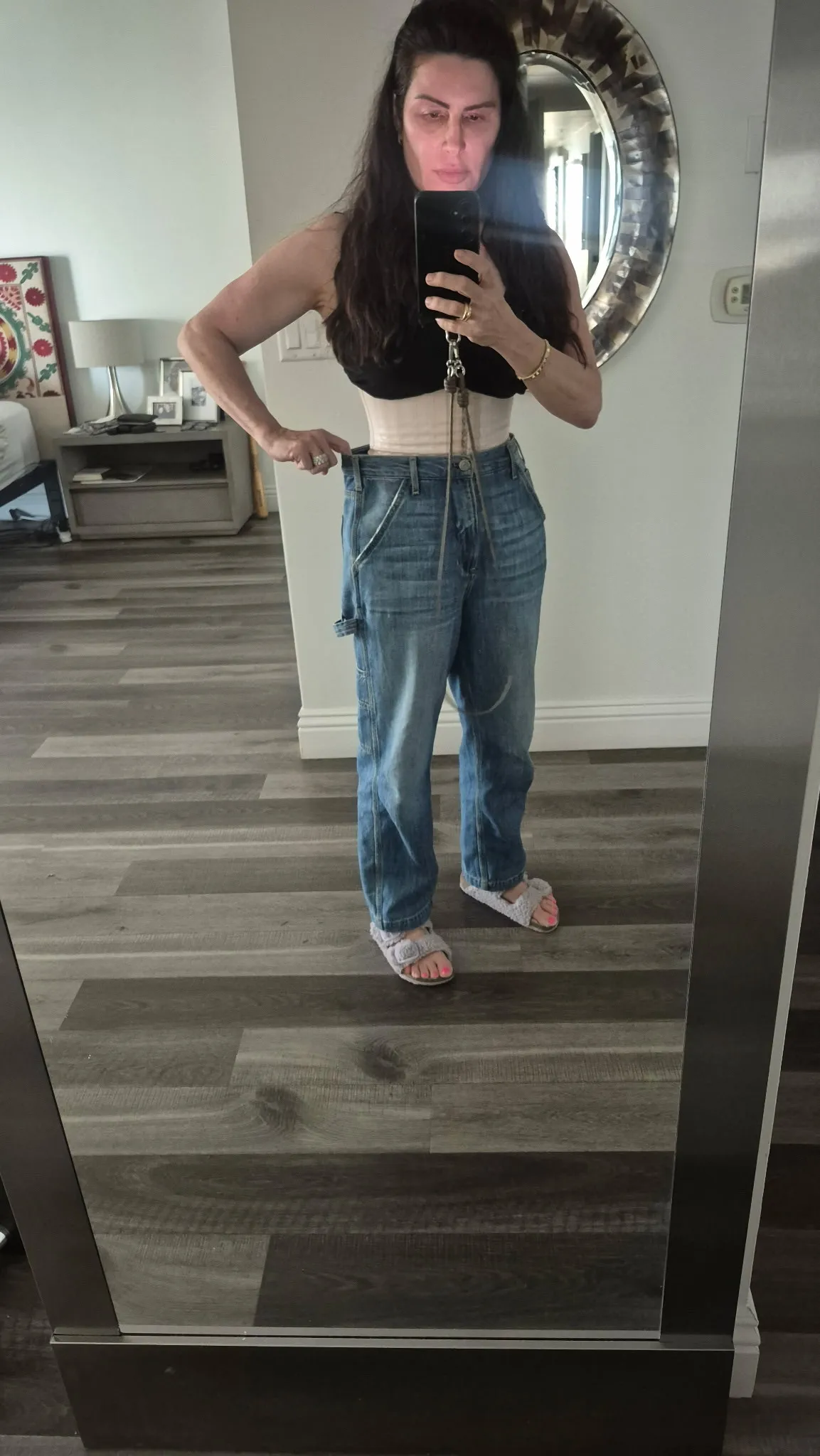
Jill almost three months after getting the RibCarX procedure.
I think the procedure will become more commonplace as time goes on. Look, it’s not for everyone, but for the right candidate it’s game-changing. It sounds so intense, but the irony is I’d actually call this procedure minimally invasive. Before, if you wanted to change the size of your waist, you had two options: liposuction or circumferential tummy tuck. That was it. If you were someone like me, who didn’t have excess fat, tissue, or skin, but just what they call an H-frame, which is basically a figure that sits in a straight line and doesn’t curve in at all at the waist, you were optionless.
It was life-changing and simultaneously the easiest thing I’ve ever done. I’d do it again in a heartbeat, and I’d recommend it to anybody who’s the right candidate. I recently took a photo of myself in leggings and a sports bra and just thought, who is that girl with the waist?! I’ve never had one—it’s the best feeling ever.
Why Trust Marie Claire
For more than 30 years, Marie Claire has been an internationally recognized destination for news, fashion and beauty trends, investigative packages, and more. When it comes to the products Marie Claire recommends, we take your faith in us seriously. Every product that we feature comes personally recommended by a Marie Claire writer or editor, or by an expert we’ve spoken to firsthand.
Meet the Expert

The Beverly Hills leader in precision, artistry, and patient-centered care. At the intersection of surgical mastery and artistic vision, Dr. Charles Galanis has built a reputation as one of Beverly Hills’ most sought-after plastic surgeons. His philosophy is simple yet profound: every patient deserves expert-level care, customized procedures, and results that enhance natural beauty to help patients feel like their best selves.
The doctor’s extensive training and experience have shaped him into a surgeon of unparalleled skill and precision. His journey began at the University of Wisconsin Medical School, where he earned his medical degree before completing his general surgery residency at the world-renowned Johns Hopkins University Hospital. His passion for transformative procedures led him to pursue advanced training in plastic and reconstructive surgery at UCLA Medical Center, followed by a fellowship in microsurgery.
Throughout his career, Dr. Galanis has remained dedicated to refining his techniques, completing international specialized training in high-definition body contouring techniques in South America by pioneers Dr. Alfredo Hoyos and Dr. Humberto Morelli. He is a board-certified plastic surgeon, a distinction that speaks to his expertise and commitment to the highest standards of patient care.