'The Body' Creator Quinn Shephard Mood-Boarded and Made a Divine TV Show For "the Tumblr Era Girls"
The showrunner unpacks every inspiration behind her must-watch Netflix teen drama.


This story contains minor spoilers for The Body.
The Body, Netflix’s Y2K-set Catholic-horror teen drama, looks a whole lot like creator Quinn Shephard’s Tumblr. Moody photos of teenage girls in school uniforms, stills from Brian De Palma’s Carrie, and witchy ephemera are all on the showrunner’s old blog, crystallized in the early 2010s, as well as the lifeblood of her new show.
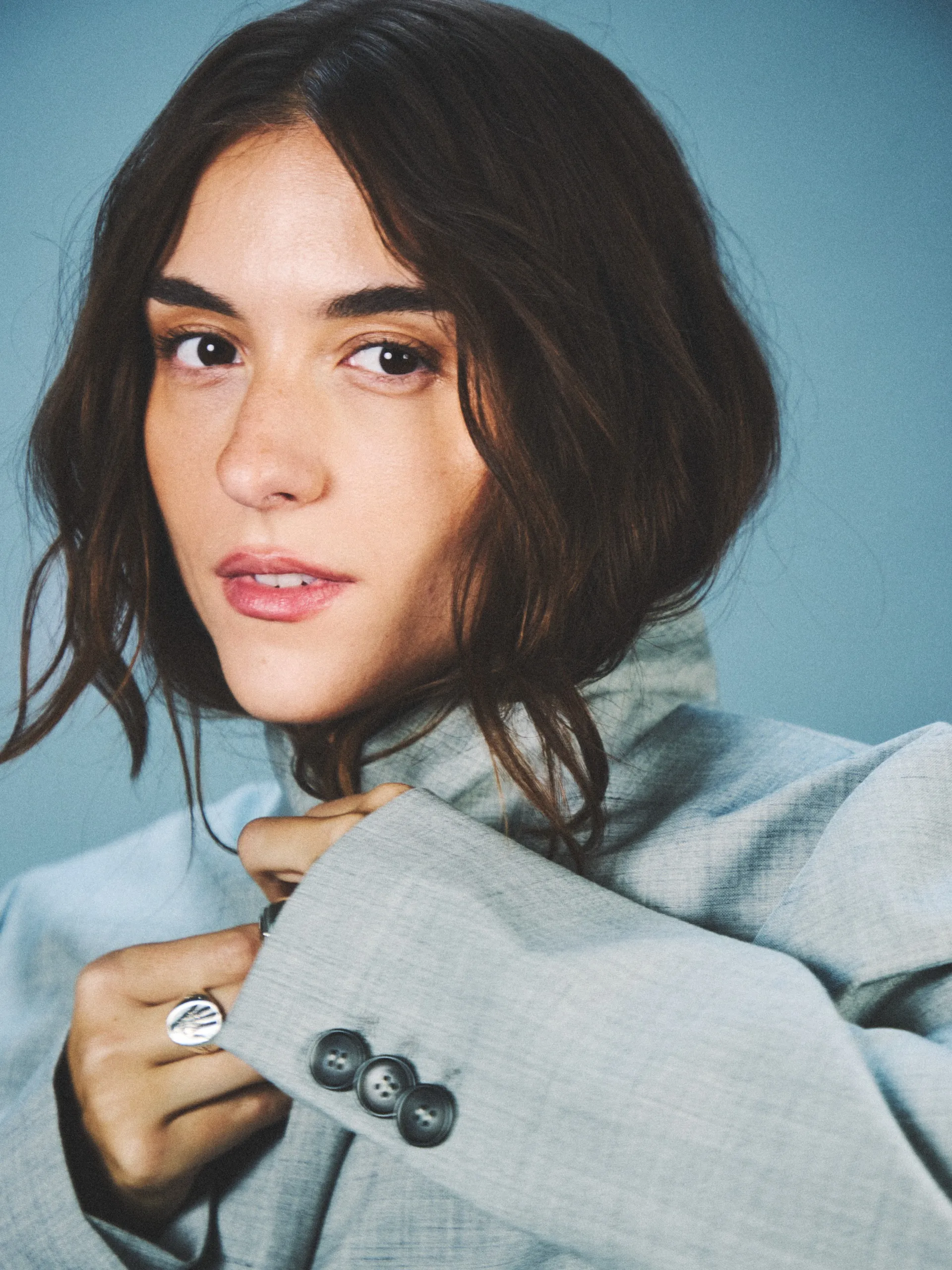
Shephard is known for writing/directing the acclaimed dark comedy Not Okay, her breakout feature Blame, and the hit Hulu series Under the Bridge.
The showrunner enthusiastically logged into Tumblr for the first time in years and shared her screen while speaking to Marie Claire over Zoom ahead of The Body’s November 11 premiere. “People who knew me as a teenager will definitely see The Body and be like, ‘She is exactly the same,’” jokes Shephard, 31. “I am making the show for the Tumblr Era girls. Rise up.”
Shephard (who helmed the dark comedy Not Okay and the true-crime series Under the Bridge) actually wrote the first iteration of The Body—which follows a Catholic school dance team raptured by mass hysteria when a ritual coincides with one girl winding up in the hospital—nine years ago. That wasn’t long before she was an artsy teenager who reblogged images that would become her reference points and was so “committed to the aesthetic” that she even wrote a rosary and thrifted school uniform daily, despite attending public school.
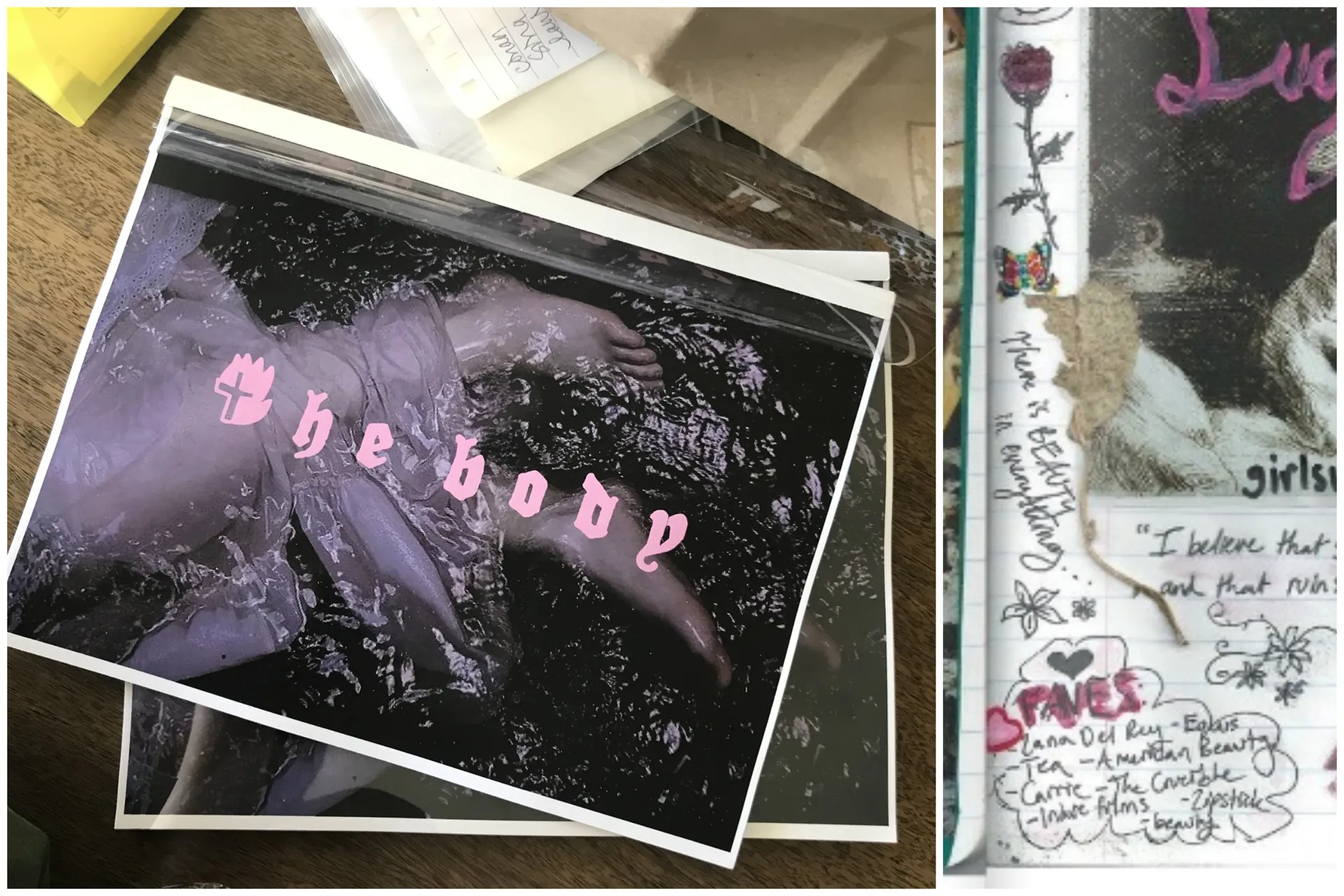
Shephard shares early concept art of The Body, as well as a list of her favorite things she wrote down as a teenager (like Carrie, The Crucible, and Equus), which would later inspire it.
Her digital and IRL curation clearly wasn’t for nothing, considering the extensive mood boarding she did for The Body. The must-watch show feels like teen divine intervention, where knotty female friendship, secrets, and shame are among the key sacraments—and because it’s set in 2004, Juicy Couture and AIM are, too. Some of Shephard’s favorite media from her own adolescence, clerical art, and more filled Pinterest pages and cork boards when she finally revisited the concept and brought it to Netflix.
But as campy as the queer coming-of-age psychological thriller is, it also explores how easily and harmfully exploited the human compulsion to believe in something can be. Shephard says, “The culture of 2004 is quite similar to now—politically and socially—the beauty standards, fashion trends, edge-lord slang, and the re-election of a president who was widely contested. We're making a show that's intended to be fun and hopefully seeds some things to make you think.”
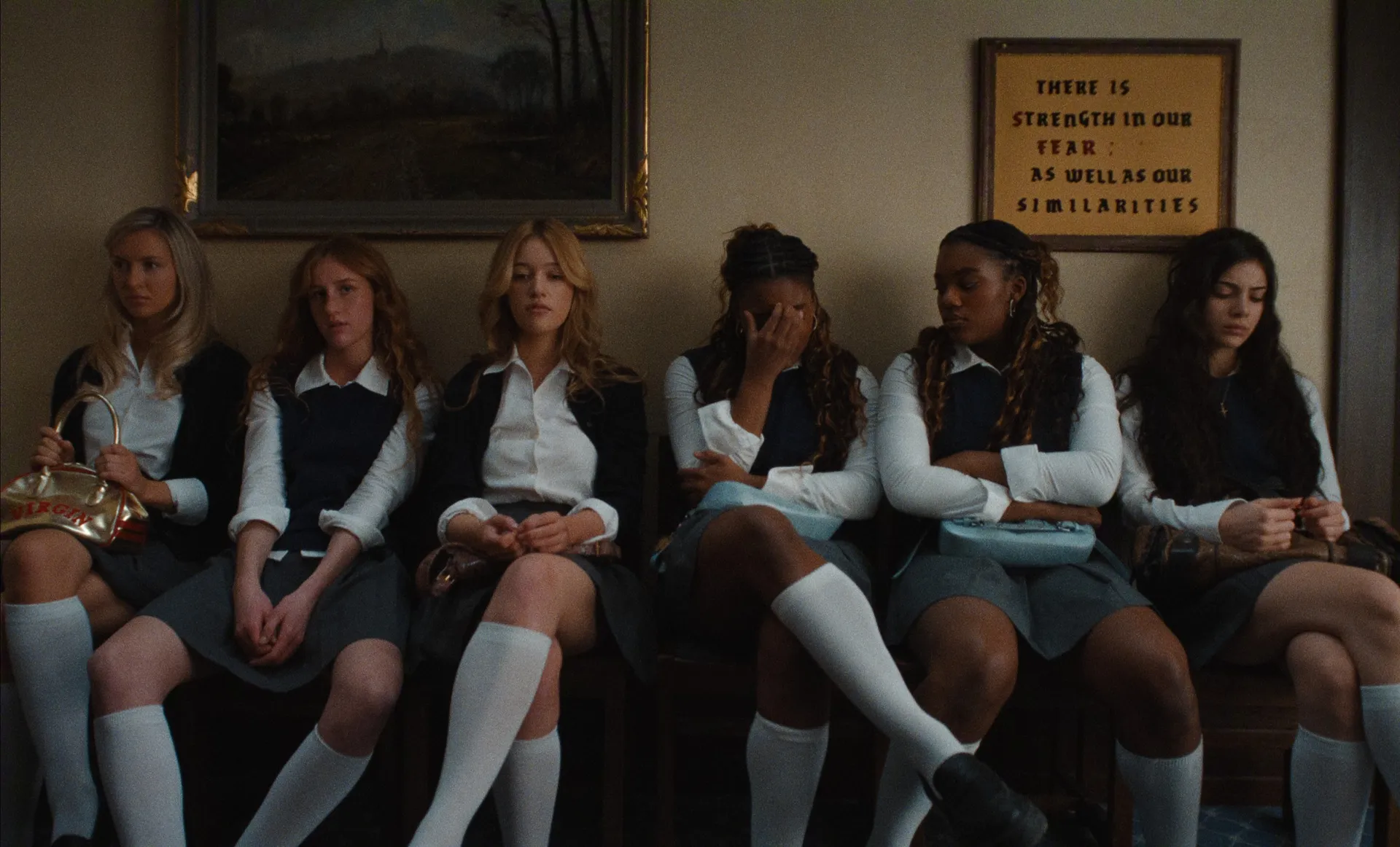
The Body premieres on Netflix on November 11.
She adds, “It's been incredibly freeing and healing to make the show; it has allowed me to laugh about so many things that used to feel so serious to me.”
Below, Shephard uncovers the references that flooded her mood boards for The Body, from the theater and erotic thrillers that spoke to her as a teen to outdated magazine advice columns.
Religious Paintings and Dance Team Photos
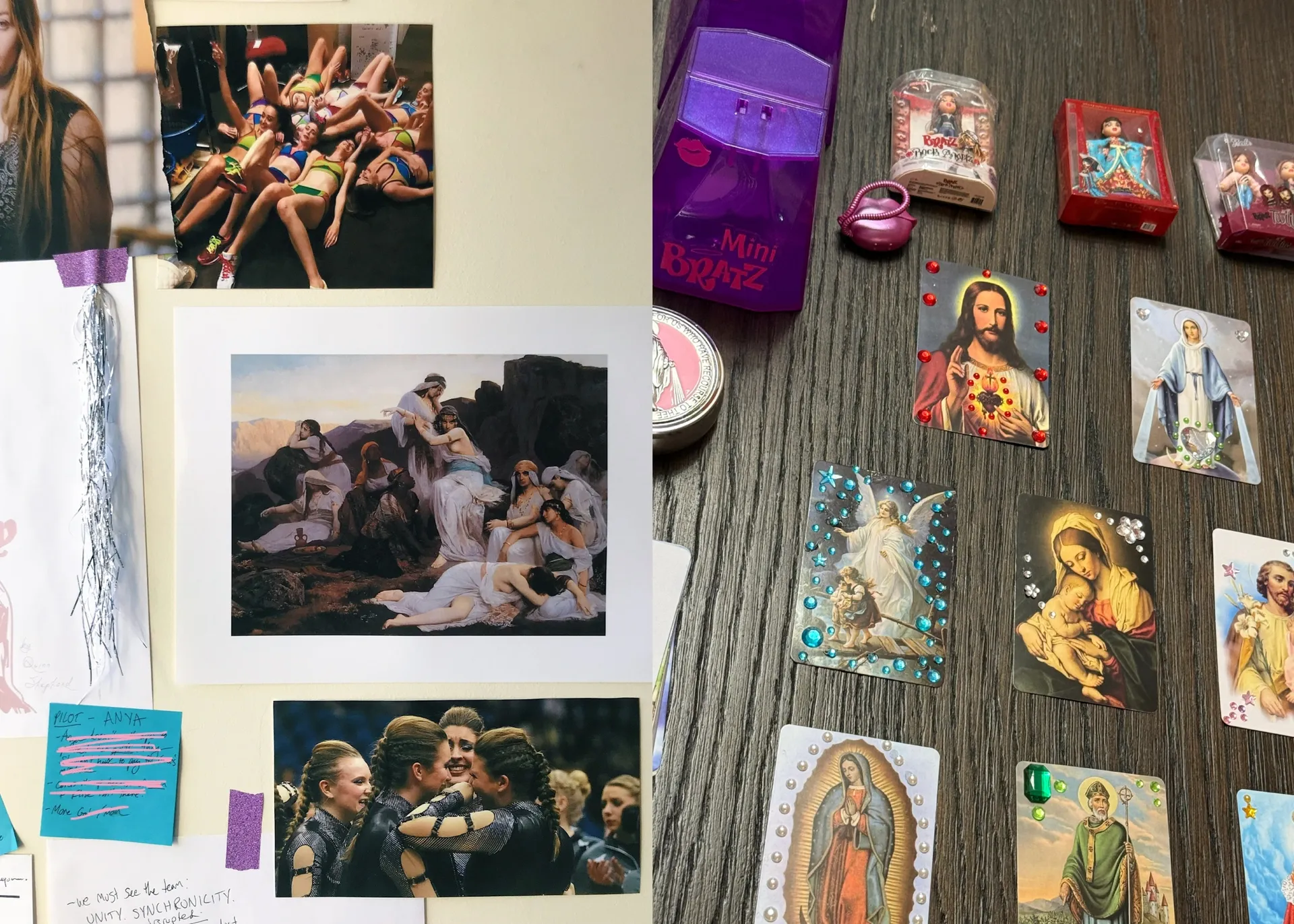
Quinn Shephard shares photos of The Body mood boards and references in the writers's room, including Édouard Debat-Ponsan's The Daughter of Jephthah and dance team photos she sourced.
"The most influential image for me that was really inspiring from the very beginning—because I used to keep this on my wall—was these paintings of biblical women all lying together, [Édouard Debat-Ponsan's The Daughter of Jephthah]. I hung it with this image of a dance team lying together. I have a lot of that in my mood boarding, where I would take Catholic or religious painting tableaux of groups of women and then juxtapose them with images of dance teams."
'The Crucible,' 'Equus,' and Other Faith-Inspired Texts
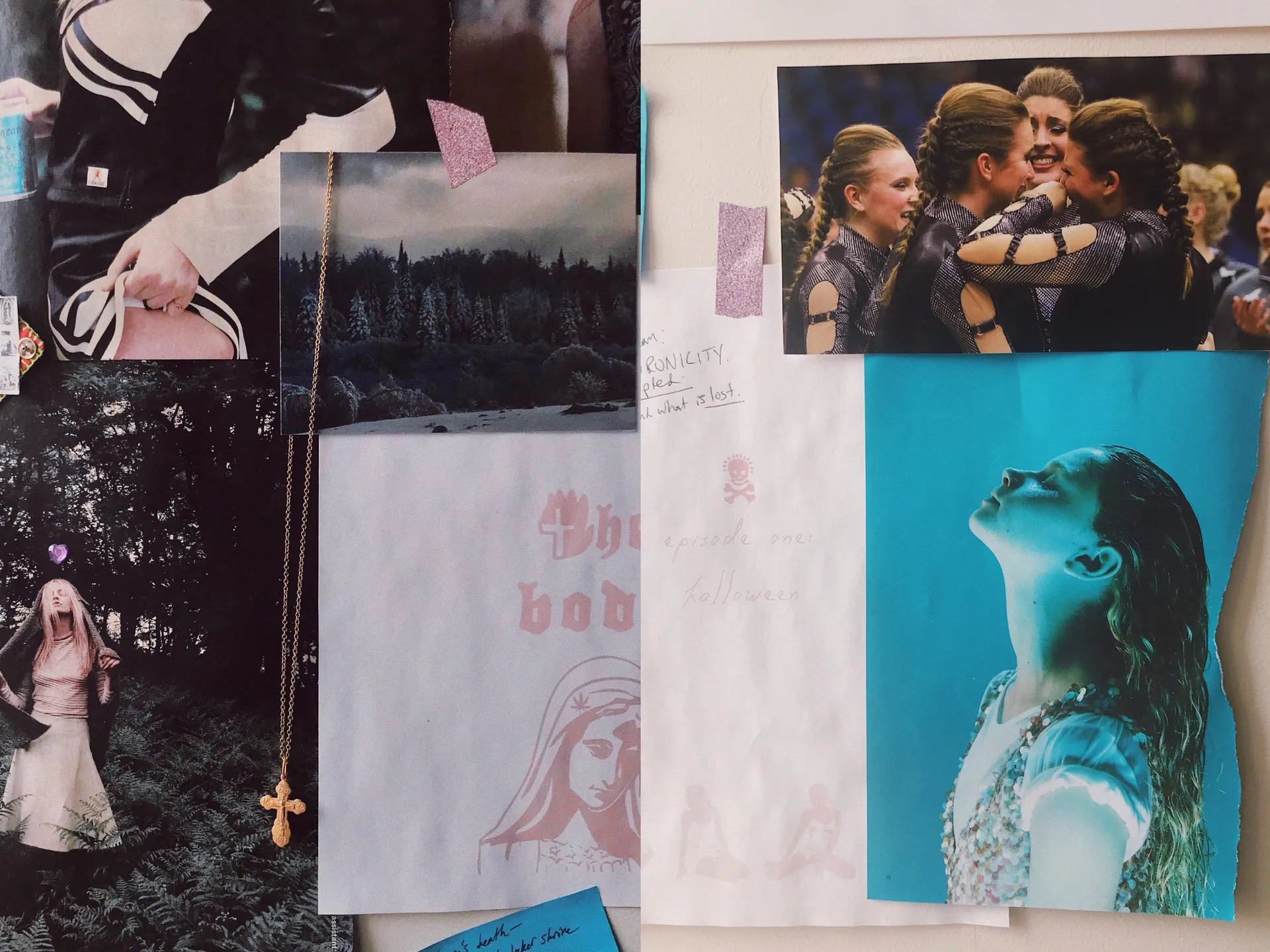
Shots of Shephard's mood boards.
"I was a theater nerd and did a production of The Crucible when I was 15, and got hyper-fixated on it. That play felt very tied to my coming of age. It was the first adult role I had ever played. That led me to a lot of self-discovery and discovery of themes that were fascinating to me.
I always had a complex relationship with religion because, growing up, one side of my family was quite religious; the other side of my family was raised Catholic, not practicing anymore. Religion was something I was involved in when I was really little, and it shifted as I got older, but I always had a curiosity around spirituality. So the discovery of literature and film not just about religion, but about religious hysteria [and] groupthink was incredibly fascinating to me as a teenager and still is.
Most of my teenagehood, religion represented a lot of shame. I associated it with the oppression of the queer community and politics that didn't align with my own. I gravitated towards stories and plays like Equus that are about somebody forming their own religion that is then incredibly frowned upon, but for this character, it means so much. To me, these stories were a perfect metaphor for the queer experience that I didn't realize yet—that the mixture of shame and ecstasy that would come out of religious experience was very much tied to themes of queerness and coming of age as a young woman."
Iconic Movie Dance Scenes
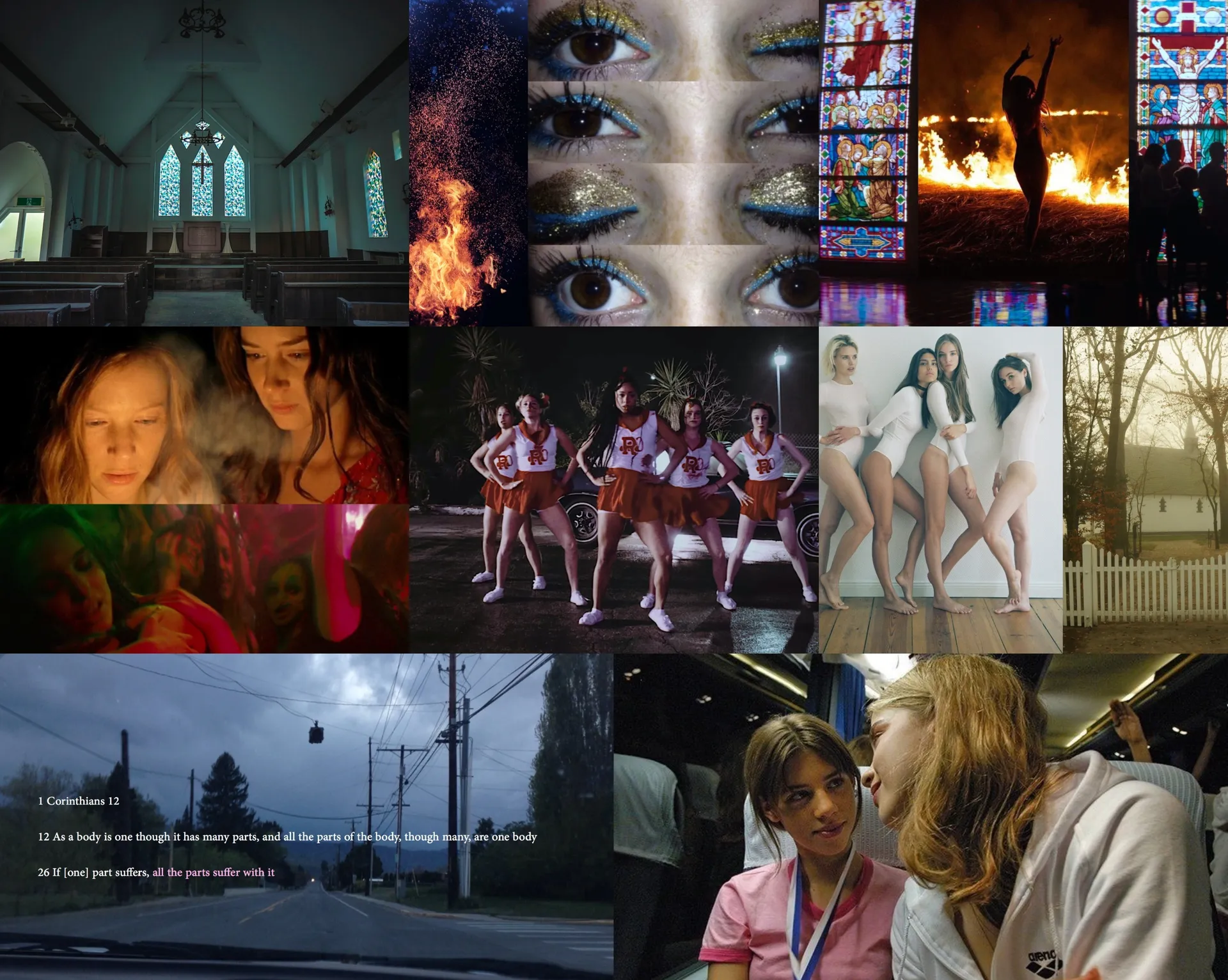
A peak into Shephard's Tumblr and some of the images that spoke to her even before she wrote The Body.
"I love dance and film, everything from Suspiria to Bring It On. The two very influential scenes for me as a filmmaker were “Sparkle Motion” in Donnie Darko and the cheerleading sequence from American Beauty. Every time I watched [the Donnie Darko] scene, I was like, “This is everything I want to be as a filmmaker." It’s absurd. It's camp. The dancing's silly, but then the scene is intercut with so much tension. [American Beauty], I can't really rewatch it now, but I loved how the dance and this realism were a bit funny, a bit sad, a bit serious, and it brought you inside the worlds of the characters.
For something that’s about groupthink, dance, and how a body is one and how everyone has to move in synchronicity was such a perfect metaphor. In a lot of ways, the show is about femininity and girlhood as religion. For me, [when I was writing] if I were to be like, If I'm Elizabeth, who's the head priest of girlhood? It's definitely the captain of the dance team."
Beloved 2000s Movies
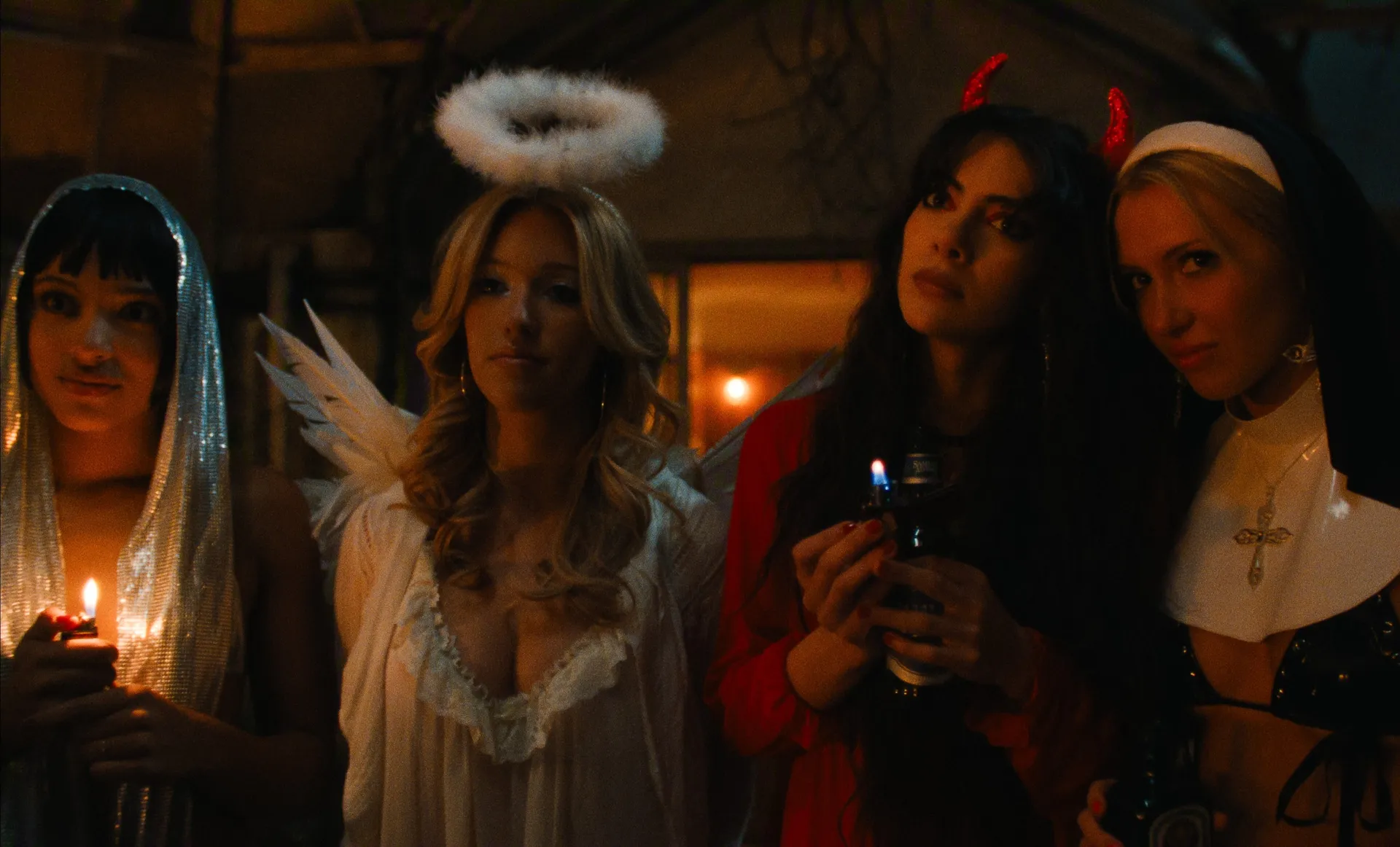
Blair (Julia Lowe), Anya (Kristina Bogic), Elise (Sara Boustany), and Claire (Emily Roman) attend a Halloween party that leads to chaos in The Body.
"Initially, I was going to set it when I was in high school [in the 2010s], and then I ended up deep-diving with my co-showrunner Gina [Gammell] on so many films and references from the early 2000s. We would watch Mean Girls or Legally Blonde and be like, ‘What if you just took an element from one of these scenes that is this playful and the actor, the cinematographer, everyone treated it like they were in a drama and incredibly high stakes?’ That was so much fun for us, and unlocked so much in the writers's room. We loved bringing in that iconic, stylized playfulness that was in—as they used to call them—chick flicks of that era. They’re not necessarily at the root of what inspired the show, but they were the icing. Bringing that fun to a dark concept was everything I wanted and more."
Erotic Thrillers
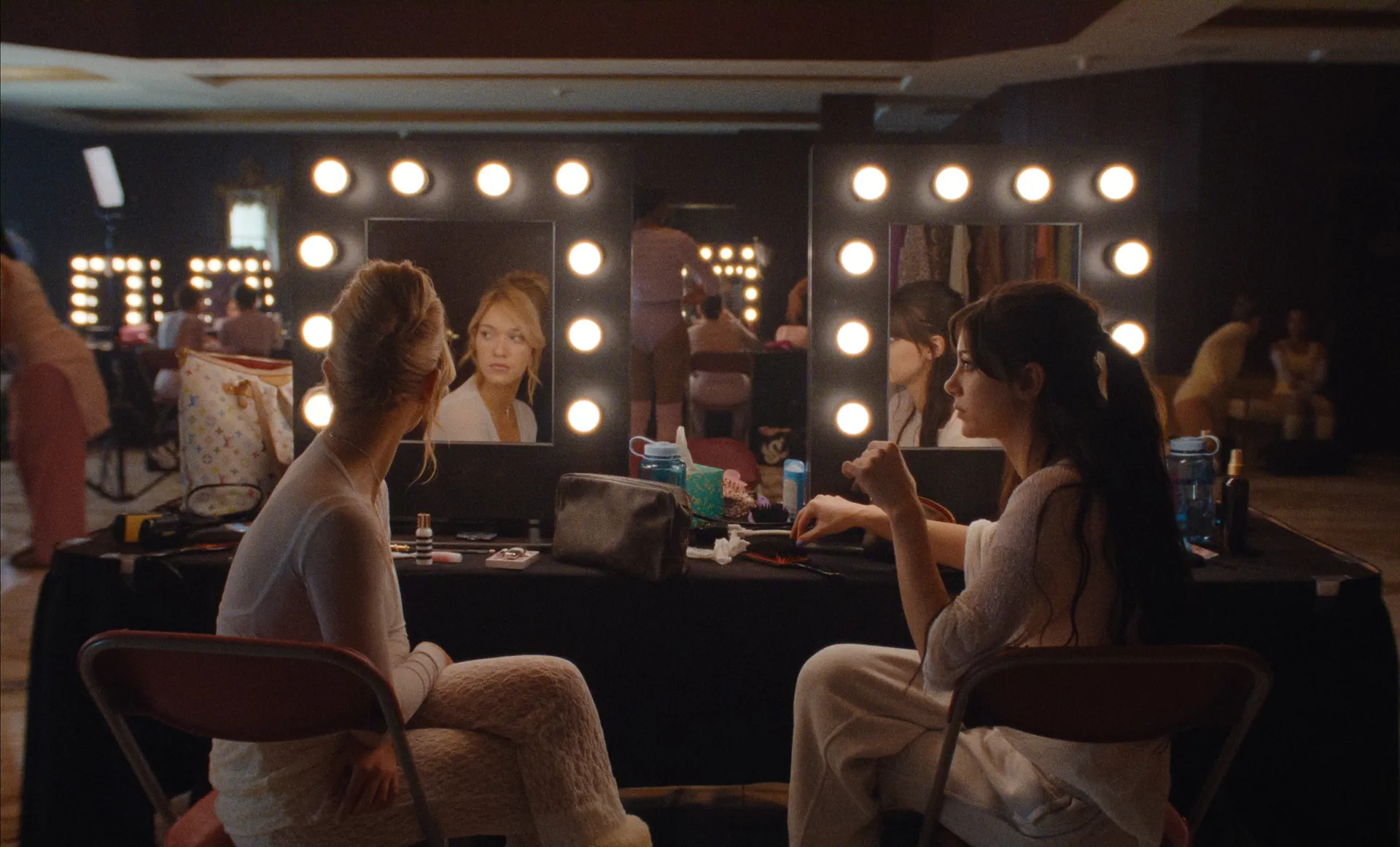
Much of The Body revolves around Anya and Elise's sexual awakenings and complicated feelings for one another.
"[The erotic thriller] was the first representation I saw of women being obsessed with other women. I was like, ‘Let them do murder. It's fine.’ In this show, something I really like doing is take a setting or trope of an erotic thriller and try to approach it from a character-driven or grounded lens to get there.
Episode 7 is a great example of, We're doing Wild Things, but I also wanted to understand the stakes and how everyone got here and the tragedy of Anya trying to justify her queerness. I loved getting to go back into scenes [from movies like Single White Female, Cruel Intentions, and Wild Things] that I watched a billion times when I was younger and then get to go, What is that from a real perspective? There's an irony to a lot of what we like to do in the show—wanting to do things that feel like you can take them quite seriously, but there's always a little wink to the audience, and a lot of the film references are a way to do that."
Vintage Y2K-Era Teen Magazines
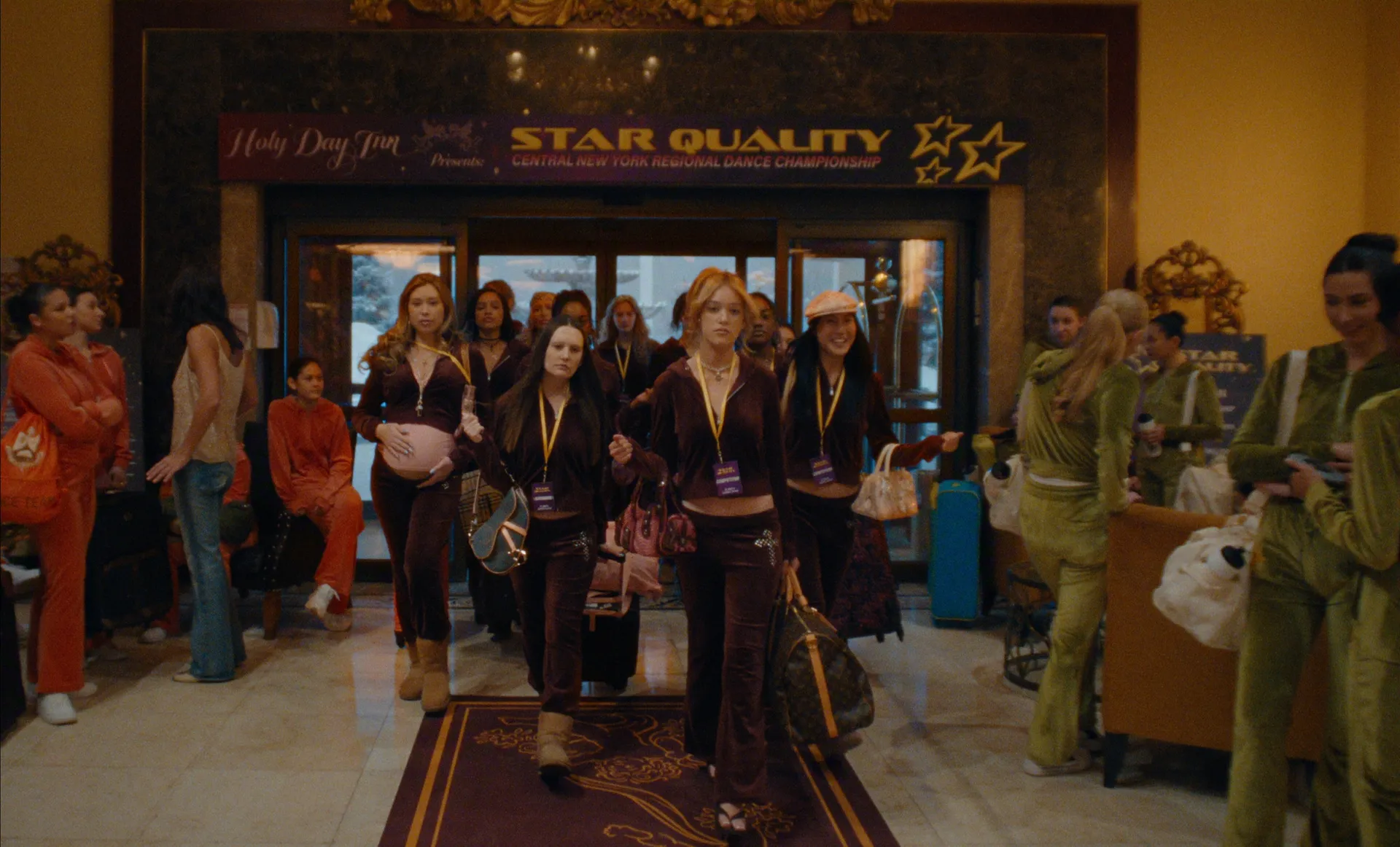
Shephard describes Mirren Gordon-Crozier as "the coolest girl in school in the 2000s" and says she put a great deal of effort into creating a wardrobe full of Juicy Couture, Uggs, and more.
"Everyone had a million vintage magazines—Cosmo Girl, Seventeen, Teen Vogue. We filled the writers's room, the art department, and wardrobe. We had a million Pinterests. Cosmo was extremely useful because there were a lot of articles like "How to Talk to Your Boyfriend About How You Really Want to Kiss Your Friends at Parties." Really good material for us. There was a great one: “Why Women Need Men.”I cut it out, put it on the wall in the writers's room. We were always trolling each other, putting the most ridiculous articles we found on the walls, but it did help."
This interview has been edited and condensed for clarity.