Mitski's "Your Best American Girl" Sparked an Indie-Rock Paradigm Shift
As the song celebrates its 10th anniversary, the director behind its music video reflects on why it still resonates.

Some songs move you. When Mitski released “Your Best American Girl” in 2016, it was the rarefied kind of track that rattles you to your core and makes your heart swell. It also felt like an indie rock paradigm shift.
When Mitski dropped “Your Best American Girl” as the lead single off her fourth album, Puberty 2, she described it at the time as one of her most personal songs to date. Lyrically, the musician (born to a Japanese mother and an American father) explores letting go of “an all-American boy” because they were simply too different to be together. But she chooses herself, and the track ultimately becomes a story about accepting one’s own identity and upbringing.
Not only did the release’s instant acclaim increase her buzz-band cachet, but its resonance held no bounds, touched many listeners in a way they hadn’t felt seen before, and even inspired conversations about representation in the scene. One can trace the boom of women-led groups, and especially more women of color fronting bands, to Mitski’s ascension, and Puberty 2—frequently cited as one of the best albums of the 2010s—and “Your Best American Girl” certainly contributed to that. Today, the song’s significance is a topic of conversation among fans on Reddit forums, in TikToks, and academic dissertations; it’s the entry point for many new Mitski fans into her discography and exemplifies the poetic yet heart-on-her-sleeve lyricism she’s beloved for.
Article continues below
The music video for “Your Best American Girl” amplified its message—and remains just as iconic. Directed by Zia Anger, the visual dropped on April 13, 2016, just over a month after the single’s release, and instantly went viral for its biting depiction of Mitski kissing her own hand, no-holds-barred, opposite a white couple sloppily making out. Tweets and comments poured in of fan interpretations—and admiration for how badass the singer-songwriter looked picking up her bass guitar, shredding in a fit of exuberance, and walking away with a smile on her face.
Although Anger (who had worked with Jenny Hval and Angel Olsen) wasn’t familiar with Mitski, upon hearing the track, she could tell she was a “once in a lifetime talent” and needed to helm the video. “It was something about her lyrics. It was something about the music. It was something about her voice. It did something to me,” the filmmaker recalls to Marie Claire over Zoom. The concept came to her after just one listen—and it’s not lost on her how much it’s touched fans who still leave their personal stories in the comments below the video, which has now raked in over 10 million views.
“[Mitski’s] running this counterculture course that I think, in the YouTube comments, is reflected. People who are deeply moved by her music and visuals, because she stands outside of whatever is popular and charts her own narrative,” says the director, who has become a frequent collaborator of the indie star. “I'm thrilled to be a part of the universe and to have helped contribute to the [music video that] felt like the first one that really broke through.”
As the music video for “Your Best American Girl” celebrates its 10th anniversary, Anger spoke to Marie Claire about how she developed the idea for the video, what it was like shooting with Mitski in a Brooklyn warehouse in February 2016, and how their working relationship has evolved.

Zia Anger directs Mitski on the set of the "Your Best American Girl" music video.
Marie Claire: How did you first get attached to direct “Your Best American Girl?” Were you previously familiar with Mitski?
Zia Anger: I was trying to get out of music videos because they're a hard medium to make money and do your own creative work in. I got an email from Eric Deines at Secretly Group, which is the umbrella of Mitski's [label] Dead Oceans. I had worked with him on a few other things, and he said, "Can you listen to this song and tell me if you want to do a music video for it?” Hearing “Your Best American Girl” in that email was the first time I heard her or heard of her.
When I made music videos, I had three criteria: You have to make money, like the artist, and like the song. At least two of those things had to be true. I heard the song, and it was undeniable. I felt so much all at once. I felt the experience of being young and feeling on the outside of things in so many kaleidoscopic ways. So, I only had one of the three criteria because there was no money to make the music video. But I was like, "This is undeniable, and I want to meet her."
MC: How was the video conceptualized?
ZA: I came up with an idea, sent it over, and was told, Yes, let's do this, by the label. I did a pitch deck, but I also sent a video where I was like, "I think she should raise her hand. I think it should come down. I think she should start making out with it.” I happened to be sitting in front of an American flag when I did it at an apartment I was in.
I heard the song, and it was undeniable. I felt so much all at once. I felt the experience of being young and feeling on the outside of things in so many kaleidoscopic ways.
MC: How did you come up with the concept of her making out with herself, opposite the very cliché Coachella-looking couple?
ZA: I think about movement first, and for some reason, I landed on this idea of her making out with her hand. But then I thought, What do you put in juxtaposition to that? I was in high school when Abercrombie & Fitch was really big. In my mind, the people I was on the outside of were the preps. So I had these references of who I thought she was supposed to be in opposition to. My production designer, Caiti Hawkins, helped with the costumes. She sent me back a collage of what she thought was more of a current-day popular person, [which was like] Coachella with crochet tops, Native American headdresses—all this stuff that when you're on the outside of it, it looks at best comedic, at worst, derogatory, and truly bad. Again, it's about America.

Actor Tyler Gardella, who played "Bro," on the music video's set.
MC: How did Mitski react to the concept? Did she have any suggestions?
ZA: [Mitski and I] talked on the phone before because we did a little bit more work on the idea. I said, "Well, what do you want to look like?" because I didn't know her, and there weren’t a lot of moving images of her, so it was hard to know what her vibe wanted to be. She said, “I want it to be this PJ Harvey video, ‘This Is Love.’” It's her against a white background, shredding. That's where that came from.
MC: What was your first impression of her when you met in person?
ZA: We met on set. She was almost stoic and professional. I was immediately drawn to this energy of somebody who felt all-knowing. She was really in the zone, but also very kind and humble. You don't know when you have never met somebody, how much they're going to go for it in front of the camera, but she went for it. And then you would push her in a respectful way, and she would go for it more. I was like, Wow, this person is really pro. She is so self-realized in a way that I felt imposter to.
When you're making something, you can feel if it's good or not. I remember watching the two people make out and the camera whip over to her shredding on this guitar. I was feeling all the stuff that I think the music video and the song make you feel. I was so crushed in that moment, but also liberated and excited. I had really never had that type of experience where I did not know who I was getting into and working with—and I was deeply, from the minute I met her, in awe of her. And still am to this day.

Puberty 2 was released on June 17, 2016 to acclaim.
MC: What else do you recall feeling on set?
ZA: I remember laughing a lot when the Coachella people were getting really into it because it was so absurd. When you're young, and you think you have a chance with someone, you build it up in your mind—like I remember looking at the guy, and he's obviously making eye contact with the camera, but it feels like he's making eye contact with me—I remember feeling like, For this moment, I got a chance. And then what happens is just so devastating. But watching Mitski really shred, and when she takes the guitar off, and she walks out, I remember thinking, This feels empowered.
This felt a lot like, Wow, I haven't seen this before. I haven't seen this tension on screen. Of course, it's been done a million times, but I really felt, This is a contemporary tension that we're speaking to, and this is the first time I'm seeing it. But great music videos come from great songs. So many emotions I was feeling on set were because I was listening to this song on repeat.
I had really never had that type of experience where I did not know who I was getting into and working with—and I was deeply, from the minute I met her, in awe of her. And still am to this day.
MC: At the time, Mitski spoke about how personal the song was. Did you two have any conversations about what it meant to her?
ZA: The music said it all. We have since, with other projects, gotten more into depth and meaning, but this was just me reacting to this incredible thing she had written that you could tell was so specific. The best art is the most personal, and it does then become the most universal. In chasing your own personal feelings, you often speak to something universal that everybody else feels, not everybody, but lots of people feel too.
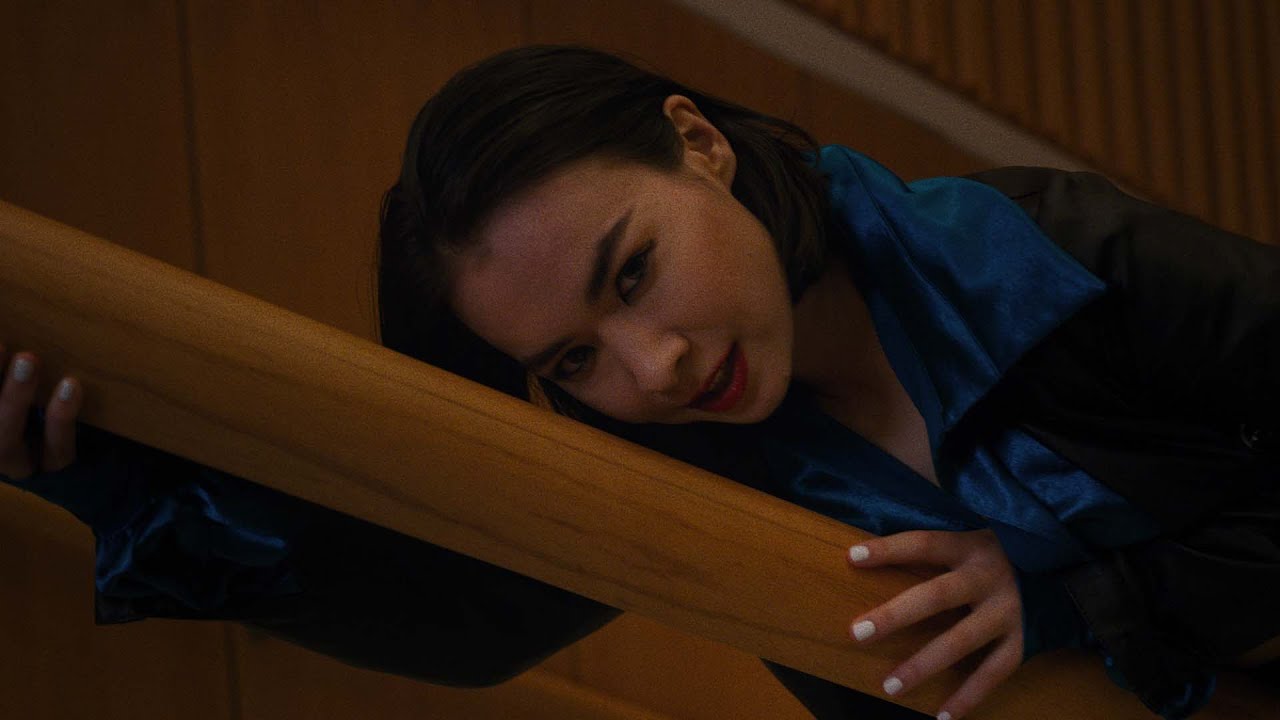
MC: You also work with cinematographer Ashley Connors a lot. She was also on the “Your Best American Girl” video. What do you think working with so many women has contributed to your projects?
ZA: What I do with Mitski, we're all moving towards the same target. We don't know what that target is, but we know we can keep pushing it and getting better, getting the idea bigger and stranger. As a director, I feel really de-centered. I feel like my job is to bring these people together and let them do their best work. So, I tend to work with the same women because I trust that they're going to push the idea in ways that I could not figure out on my own. I trust that at the end of the day, we're going to make something really true to this multitude of experiences of being a woman.
MC: Do you have a favorite video that you’ve worked on with Mitski?
ZA: “Your Best American Girl” is so amazing because it touches upon all these things that I was interested in, and Mitski was interested in, but “Working for the Knife” feels so accomplished. Me, Ashley, Monica, and other people who worked on that first video—Daniel April was a gaffer on “Your Best American Girl” and one of the producers on “Working for the Knife”—we all worked together again, but at a bigger scale with more time to rehearse. So, it just feels like the most accomplished in terms of my ethos when it comes to making something together. I love, above all else, watching my friends and collaborators flourish, and I include Mitski in that. That felt like the next level, and it really, I think, kicked off this next phase of her whole thing.