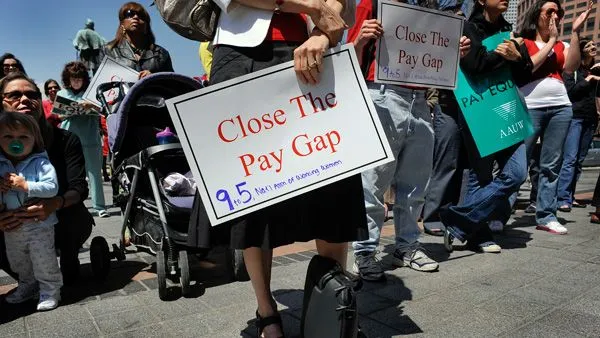
This year's Equal Pay Day was April 7, symbolizing how far into 2013 women had to work to earn what men earned the previous year. But that's not quite the same for African American women, who face wage gaps that are substantially wider than for women overall. Their Equal Pay Day is today.
Women working full time, year round typically make only 77 cents to each dollar their male counterparts make — for African-American women compared to white men, this figure is 64 cents. 9to5 — one of the largest national organizations in its 40th year of working women in the U.S. — is joining partner organizations to recognize African American Women's Equal Pay Day. The National Executive Director, Linda Meric, wrote a Huffington Post blog post calling attention to the large pay discrepency at hand.
She called out ways that our country can better recognize and value the work of African American women. We can raise the minimum wage. Congress can pass the Paycheck Fairness Act. We can build support for the Family and Medical Insurance Leave Act (FAMILY), which would allow working people to take paid time off to care for a new child, sick family member, or their own illness. Meric also said that we need to pass the Healthy Families Act, which would require more jobs to offer earned sick days. "Working moms carry the brunt of financial distress when they need time to take care of a sick child, and are often at risk of losing employment when caring for an ill family member," Meric wrote.

It's also important to note that the point of equal pay for Hispanic women won't be met until November. Hispanic women only make 54 cents to every dollar white man make — they have to work nearly a whole additional year (full time) to equal what white men made the previous year. Hopefully Meric and 9to5's points are taken seriously, because we really need to start changing this.
Photo Credit: Getty Images