Welcome to the Small-Town Plastic Surgery Boom
Great cosmetic surgeons used to be limited to major cities. That’s no longer the case.


Cosmetic procedures are more available, and more popular, than ever. For Marie Claire's Plastic Surgery Week, we're going deep—even getting tweaked and augmented ourselves—to find out what really goes on behind closed doors.
Debbie* isn’t one of the 8,300 people who reside in the historic Doylestown, Pennsylvania. In fact, she lives just a couple of train stops from Manhattan. But when the 40-something decided she was ready for breast implants, she didn’t seek out the services of a plastic surgeon in New York City, which not only was more convenient but also is indisputably one of the country’s plastic surgery capitals. She went to Doylestown.
It’s not exactly the first place that springs to mind when you picture the epicenter of aesthetic medicine. Charming tile-factories-turned-museums, sure, but not breast implants. As Debbie saw it, though, she wasn’t interested in paying more simply because a surgeon’s practice was situated in a glamorous locale. “I didn’t feel the need to go to any specific region,” she says. “My doctor’s reference pictures looked great, and I felt comfortable with his vibe.” To top it off, her new breasts would cost her a reasonable $4,800. (According to discourse online, and insider information, breast lifts in Manhattan and L.A. can easily run upwards of $30,000.)
Debbie’s decision to travel for a “small town” physician reflects a larger shift in how people doctor-hunt. For decades, you were shelling out cash for the address, the reputation, the discretion, the marble lobby, perhaps even the hotel room where you’d spend the first few nights recovering while looking out over a city skyline.
In part, because it felt like that was the only sure option. But in 2026, people have more ways than ever to evaluate a surgeon—and increasingly, little reason to assume the best ones exclusively take up residence in expensive zip codes.
“A zip code is not a credential, and price alone is not a measure of surgical quality or outcomes.”
Bob Basu
Take Eric Holender, a board-certified ENT and facial plastic surgeon practicing in Palmerton, Pennsylvania, a tiny town known for its mining industry and hiking trails. He charges anywhere between $5,000 and $10,000, all in, for a nose job. In New York City, a rhinoplasty can well exceed $35,000. “I’ve had a handful of patients from Philadelphia and New Jersey come here instead of going to some of the more well-marketed physicians in Manhattan,” he says. “My traveling patients have all found me through word-of-mouth; a lot of patients will pay premium because these doctors advertise themselves as the experts and offer all the bells and whistles—but I certainly couldn’t justify an over $30,000 price hike for the same procedure.”
The bottom line, especially for larger surgeries, can be even more startling. The ASPS puts the average surgeon fee for a facelift at about $11,400, a figure that excludes anesthesia, facility costs, medications, medical tests, and other expenses. Todd Lefkowitz, MD, a plastic surgeon in Columbia, South Carolina, says that in 2026, a well-performed deep-plane facelift and deep neck lift can run anywhere from $30,000 to upwards of $300,000, depending on the surgeon, market, and other factors.
That upper number is not some theoretical figure pulled out of a BBL’d ass. Kris Jenner’s much-discussed facelift, performed by New York City surgeon Steven Levine, is estimated to have cost $150,000 to $300,000.
The point of small-town plastic surgery tourism isn't that cheaper is better; it’s that more expensive isn't automatically better, either.
The difference in cost raises a reasonable question: When two surgeons offer comparable procedures, what exactly is the patient paying extra for? Some of it is certainly overhead. Big cities have higher real estate and staffing costs. The patient experience can also play a role. In upscale places, postoperative recovery services can include private nursing, transportation, meals, lymphatic massage, and a discreet hotel setting. None of that is inherently frivolous, but it illustrates how quickly plastic surgery can become a much larger luxury purchase—one that, when performed by a surgeon in the most highfalutin area, might come with the priceless psychological comfort of knowing you are being treated in the same rarefied air as celebrities.
But the primary factor is frankly less glamorous. “Not only is the demand for cosmetic surgery so much less in my town, but I’m also working with patients who have a different level of income than the demographic of people getting plastic surgery in a big city,” says Dr. Holender. His patients have often saved up the exact amount they need for a procedure over time and aren’t in a financial position to be paying for a Status Doctor; that doesn’t mean the work—or education required to perform the surgery—was any less. Bob Basu, MD, president of the American Society of Plastic Surgeons, puts it succinctly: “A zip code is not a credential, and price alone is not a measure of surgical quality or outcomes.”
None of this means patients should hop on a flight to the nearest—or farthest—small city because someone’s facelift comes with lower overhead costs. Nor does it mean the cheapest surgeon two towns over is suddenly the smartest choice. Plastic surgery is not the shopping category in which “great deal!” should be the first thing that comes to mind. Basu always advises prospective patients to verify that a surgeon is certified by the American Board of Plastic Surgery, investigate their experience with the specific procedure being considered, and know whether the facility is accredited or state-licensed, at a minimum.
The point of small-town plastic surgery tourism isn't that cheaper is better; it’s that more expensive isn't automatically better, either. A small-town doctor will always charge lower prices; it’s a product of their environment. The only shift is that social media has shrunk what Dr. Lefkowitz calls the geographical bias. A woman in Miami can scroll through the before-and-after photos of a plastic surgeon in a Small City just as easily as they can browse the work of a Beverly Hills celebrity surgeon. They can watch surgical videos, read reviews, and book a virtual consultation. “Patients' expectations of aesthetic results are the same no matter where they come from or where they go for their surgery,” he says.
So when word of a great surgeon and a reasonable price gain momentum, it’s only natural that the whole notion of aesthetic tourism would get turned on its head. We spent years assuming that the best aesthetic work existed almost entirely behind the most lavish doors in the most expensive regions. Now, patients can see enough of the process—and see enough amazing results from doctors in unexpected locations—to question that and go wherever more easily accessible research may move their compass.
“I’m super happy with how they [my boobs] came out,” Debbie says. Two of her friends have already traveled across state lines to have their breasts done by the same surgeon. Another just booked a consultation.
*Debbie is an alias. Her name has been changed to protect her privacy.
Why Trust Marie Claire
For more than 30 years, Marie Claire has been an internationally recognized destination for news, fashion and beauty trends, investigative packages, and more. When it comes to the products Marie Claire recommends, we take your faith in us seriously. Every product that we feature comes personally recommended by a Marie Claire writer or editor, or by an expert we’ve spoken to firsthand.
Meet the Experts
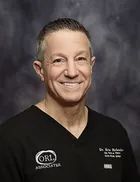
Dr. Eric Holender is a board certified ENT and facial plastic surgeon with practices in Palmerton, PA and Allentown, PA. He started his own practice, ORL Associates, in 2001. He's trained to diagnose and treat a wide range of ENT conditions—from sinus and allergy issues to voice disorders, hearing loss, and facial reconstructive procedures. Dr. Holender cares for both adults and children, offering the latest diagnostic tools and in-office procedures to ensure accurate treatment and long-lasting relief.
Dr. Todd Lefkowitz was born and raised in Columbia, South Carolina. His educational path towards becoming a physician led him to discover his true passion for the art and science of plastic surgery.
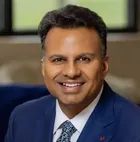
Dr. Bob Basu is a nationally acclaimed, board-certified plastic surgeon based in Houston, Texas, with more than 18,000 cosmetic and reconstructive procedures performed. As President of the American Society of Plastic Surgeons—the world’s largest organization of board-certified plastic surgeons with over 11,000 members —Dr. Basu stands at the forefront of advancing patient safety, surgical innovation, and aesthetic outcomes.
He specializes in aesthetic breast surgery, body contouring, mommy makeovers, face and neck rejuvenation, and post-weight loss plastic surgery. Dr. Basu has been recognized by Newsweek Magazine’s America’s Best Plastic Surgeons for facelift, breast augmentation, eyelid surgery, liposuction/body contouring for 5 consecutive years. Well-known for his refined surgical technique, expertise in complex revisional cases, and his compassionate approach, he offers personalized care from the first consultation through recovery and long-term follow-up.
