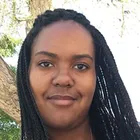
Deesha Philyaw Wrote the Black Church Satire She Needed to Read
Her debut novel, 'The True Confessions of First Lady Freeman,' follows a sex-positive pastor's wife as her life comes crashing down.


When you're looking to get lost in a book, sometimes you need your reading material to match your mood. With Marie Claire's series "Buy the Book," we do the heavy lifting for you. We're offering curated, highly specific recommendations for whatever you're looking for—whether you're in your feels or hooked on a subgenre trending on #BookTok.
In this author-curated rendition, Deesha Philyaw—the author of the National Book Award finalist The Secret Lives of Church Ladies—shares the satirical reads that inspired her debut novel.
Author Deesha Philyaw has grappled with the contradictions of the Black church her entire life. The 55-year-old spent her early years following what she thought was a preordained path for women: Attend services every Sunday, marry young, and become a stay-at-home mom. In 2006, she found herself “churchy and miserable,” and tried to write her way through ennui by crafting a story about a First Lady, or a pastor’s wife, who was ambivalent about Christianity.
She set the piece aside and wrote short stories about women balancing piety and desire, forming her award-winning debut collection. When Philyaw eventually returned to the unfinished work, she realized satire was the key to turning it into her first novel, The True Confessions of First Lady Freeman.
In the book, which hit shelves on September 29, no one would call the titular First Lady Scharisse Freeman a tradwife. Yes, she’s married to the pastor of a fictional Georgia megachurch. But she’s also built a merchandising empire that funds her luxury designer wardrobe and an ice-cream parlor on the grounds of her palatial mansion. She’s even so sex-positive that she held a Honolulu pastor couples’ retreat sponsored by a sex-toy brand.

Through the convention-defying narrator, Philyaw’s hilarious, erotic romp lampoons the impossible standards that religious women try to meet, and the hypocritical, patriarchal culture that has turned younger generations away from the institution. The author distanced herself from organized religion at age 35, the same year she got divorced. But she tells Marie Claire that First Lady Freeman is fueled by a love of the community and an aversion toward the sex-negative tradition in equal measure.
“Around 2020, I took an online satire workshop. [I learned] George Saunders’ observation about satire, that you have to really know and have some affection for what you're critiquing, otherwise it’s just sneering,” she says. “That fits my critique of the Black church vis-à-vis sex to a T. I didn’t want to sneer at the church. I wanted to skewer the unchecked misogyny, patriarchy, hypocrisy, sexual double standards, abuse, and violence in the church.”
With her novel, Philyaw joins a long and vital legacy of Black satirical writers that challenge readers to question stereotypes, subcultures, and societal norms by pushing them to maximum absurdity. “Satire requires nuance. And we are currently in a literacy crisis and a critical thinking crisis and an empathy crisis and a nuance crisis. Reading satire kills all those birds with one tome.”
To coincide with the release of her highly anticipated new book, we asked the author to share the award-winning satires that inspired The True Confessions of First Lady Freeman, from coming-of-age tales by Black female authors to genre-defying story collections.

“Published in 1974, this slept-on OG classic is possibly the first satirical novel ever written by a Black woman. The Black biracial titular character goes on a wild, weird quest to find her Jewish father. Bonus: Ross plays with form, including menus, quizzes, and math equations. Fans of quirky Black girls will love this one.”

“A hilarious collection of stories, essays, letters, and conversations by a who’s who of contemporary Black writers, including Hanif Abdurraqib, Mahogany L. Browne, Wyatt Cenac, and Kiese Laymon. My contribution is a short story about sibling rivalry, elderly parents, and a little blue pill.”

“My favorite book of 2024, hands down, satirizes race, art-making, parenting, marriage, academia, and Hollywood. It’s all through the lens of Jane, a middle-aged novelist who’s working on a mess of a second novel (‘a mulatto War and Peace’) and a TV show that promises to be ‘the Jackie Robinson of biracial comedies.’ I love a messy Black woman protagonist, and Jane had me cringing and yelling at the pages.”

“This brilliant tragicomedy about gentrification, police violence, and modern-day slavery and segregation opens with the main character appearing before the Supreme Court, high as a kite. Beatty is the blueprint; I wanted my novel’s satirical opening chapter to be just as jaw-dropping as his.”

“Brace yourself for a wild ride with Darren, an underachieving New Yorker trying to figure shit out. Like Beatty with The Sellout, Askaripour hesitates to classify his propulsive novel as satire because Darren’s experiences in the shady world of sales, startups, and Starbucks resonate as all-too-real for many Black folks.”

“This laugh-out-loud, polyphonic debut novel set in Barbados takes on race, colorism, class, gentrification, and family dysfunction. The main character, Sabre, is an artist who stumbles her way into professional acclaim as well as political activism. Come for the humor, stay for the spot-on social commentary.”

“It’s impossible to pick a favorite story among the bangers in this genre-defying collection rooted in Cameroonian-American culture, featuring cosplaying teen girls, zombies, water spirits, a delusional white transracial adoptive mother, and much more. The humor here is razor-sharp and the characters unforgettable.”

“This collection includes a novella titled ‘Special Topics in Loneliness Studies,’ which refers to the name of a course taught on campus by a fired professor, despite not appearing in the course catalog. Like all of Scott’s stories, this one manages to be whip-smart, original, unsettling, and funny, all at once.”