17 Years Ago, Nina Jacobson Fought to Produce 'The Hunger Games.' She Knows It Feels More Relevant Than Ever
The woman who helped turn Suzanne Collins's dystopian YA books into a global phenomenon unpacks the politics of the prequel 'Sunrise on the Reaping.'


A week before The Hunger Games: Sunrise on the Reaping arrived in theaters on November 20, series author Suzanne Collins shared a rare statement. She published a letter detailing her excitement for fans to see the story of beloved character Haymitch Abernathy, set 24 years before the original trilogy. She thanked all the creative forces involved in adapting her 2025 novel—but first, she expressed her gratitude for producer Nina Jacobson.
Collins wrote that Jacobson and her Color Force production banner secured the rights to the original series in 2009 because of her “deep understanding and passion for the material.” Now, six films later and the cultural phenomenon that The Hunger Games has become, it’s clear Jacobson isn’t just an ardent fan, but grasps its potential as anti-fascist art.
Speaking with Marie Claire over Zoom, Jacobson—who has a long history of producing YA entertainment at both Color Force and as a former Disney executive—explains that what compelled her to fight to adapt Collins’s first book is what she still loves about bringing her stories to life. “Suzanne doesn't ever sugarcoat what it means to resist and what the cost of those decisions is,” she says. “They have been an endless source of emotion and inspiration in a very wholehearted, nerdy, earnest way.”
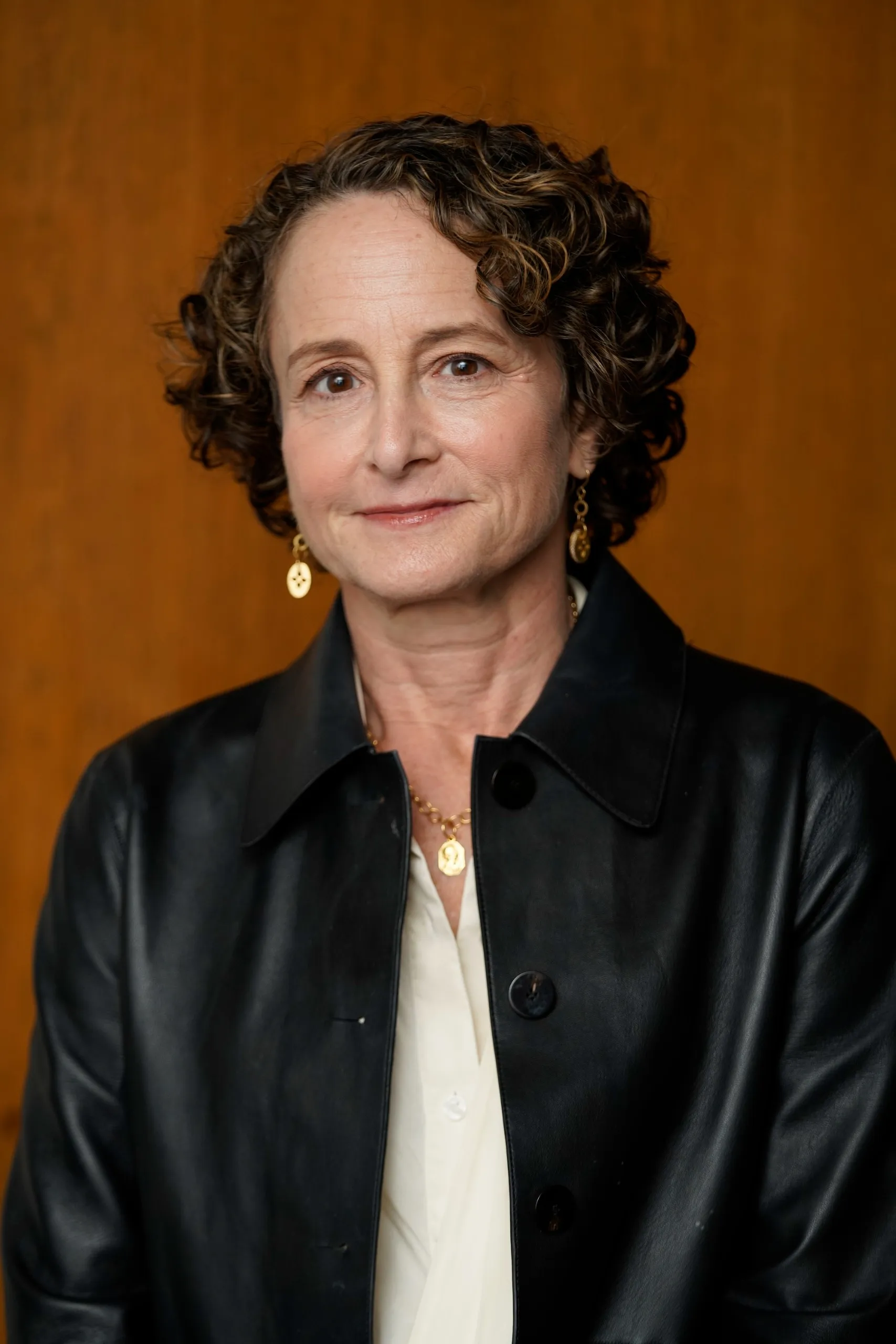
Nina Jacobson's additional producing credits include the Diary of a Wimpy Kid movies, Crazy Rich Asians, TV hits like American Crime Story, and more.
Sunrise on the Reaping unveils why Katniss and Peeta’s mentor became known as “the worst victor in history” and resorted to self-isolation. It reveals he was the first tribute (played in the prequel by Joseph Zada) who dissenters in the dystopian Panem attempted to revolutionize and turn into a symbol, years before their plan to do so came to fruition with the character played by Jennifer Lawrence.
The story’s exploration of wilful submission, and what it takes to see progress, left Jacobson stunned and energized to pick back up the cameras as soon as she got the call that another manuscript was ready. “I loved the idea that all machines can be broken,” Jacobson says of her initial reaction to the dystopian YA text. “I loved that [Collins] wanted to explore how propaganda helps to keep us on our knees, helps to keep us believing that the way things are now is the way they always will be, and even the idea that that is faulty logic.”
Jacobson adds, “I just sent Suzanne a nonfiction book about a group of citizens in Syria who broke with Assad and tried to build a democracy. My read is completely informed by my relationship with Suzanne and the things I've learned by working on her books—and being the protector of her themes.”
With Sunrise on the Reaping out now, the producer tells Marie Claire about what she advocated for during production, how her feelings about the franchise’s politics have evolved over the years, and the sparks she thinks it's ignited in reality.
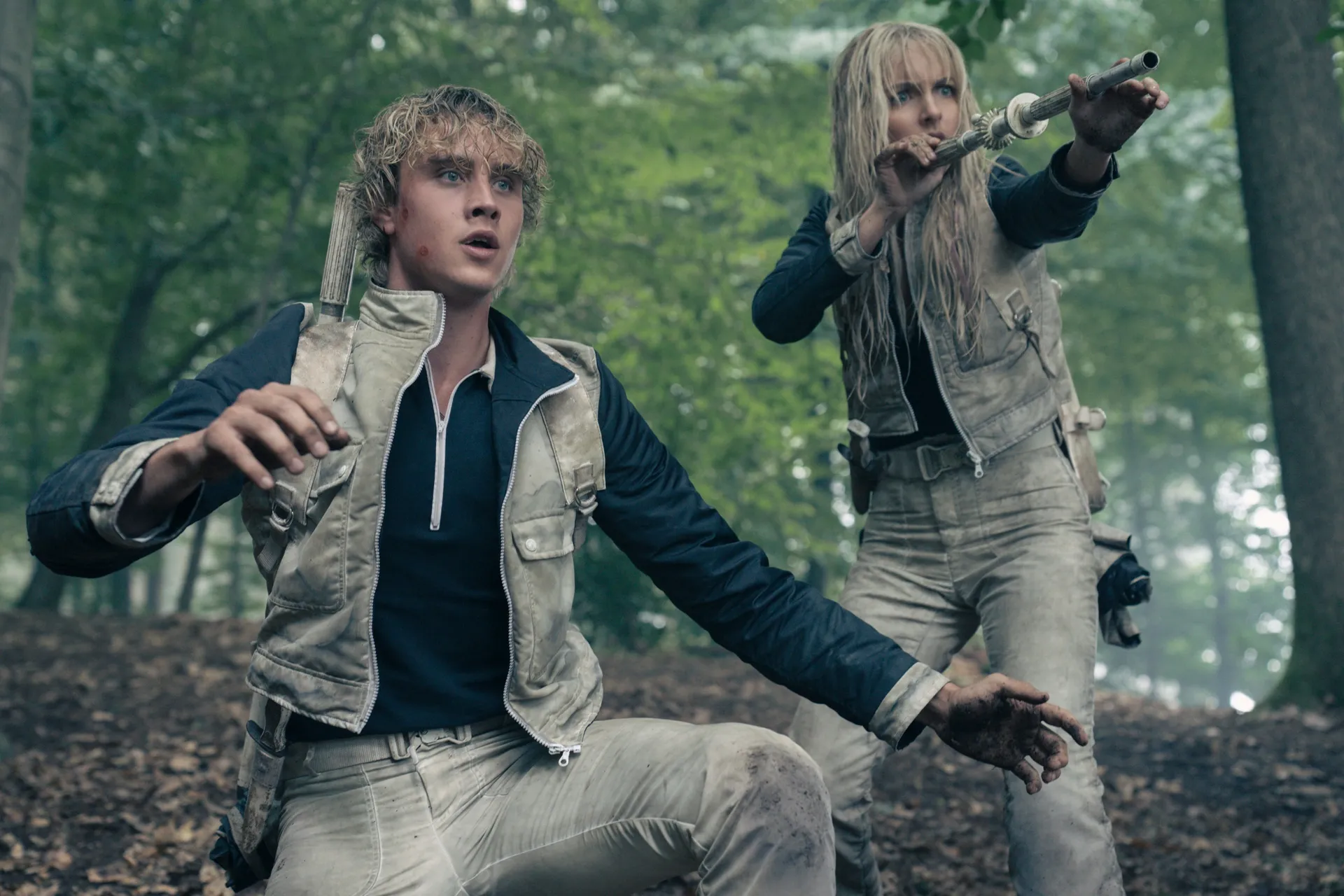
Haymitch Abernathy (Joseph Zada) and Maysilee Donner (Mckenna Grace) are among the District 12 tributes in The Hunger Games: Sunrise on the Reaping.
Marie Claire: You’ve said that if another producer got the rights to The Hunger Games, it would’ve been like seeing your spouse married to someone else. Thinking back to when you read the first book, what made you feel so strongly you had to be involved?
Nina Jacobson: I love to read, and every time you read, you're always hoping that, once you start, you fall into it and you don't want anybody to bother you. That doesn't happen that often. You chase that feeling. I had that feeling: I've been taken hostage by this book. I was so emotionally engaged with Katniss as a protagonist. The first time that I read the book, I was like, How is she going to pull this off? Once she has to kill people, how am I going to be okay? The fact that [Suzanne Collins] was able to ride this razor's edge of exploring the consequences of violence, the idea of violence as entertainment without herself being guilty of using violence as entertainment, was a miraculous writing achievement to me.
Her ideas really lit me up. They still do. And, obviously, the fact that it was about a young woman and her concentric circles of concern keeps expanding from I care about my family to I care about my community to I care about my district to ultimately the sacrifices she makes for her country.

Lenore Dove (Whitney Peak) plants the seed in Haymitch that change in Panem is possible.
MC: Sunrise on the Reaping is largely about an apolitical teenager who is thrust into the resistance and becomes politicized himself. When you got the call that it was time to dive into the manuscript, what conversations did you have with Collins about this being the right story to tell now?
NJ: I found the realization that the people you meet in Catching Fire who are part of this resistance have been resisting and failing for 25 years—that it can take generations to see change, and yet you might still make enormous sacrifices in service of your beliefs—that felt so timely. If you're growing up now looking at things like climate change, it seems too big. It’s like Haymitch says, "Who am I? The Capitol's too big for me." How could you hope to get to feel as a young person now that you will have a chance to affect some of the things that ail us? That felt like an incredible message embodied in characters you know, and the realization that you haven't seen how long they have tried to bring down the Capitol.
I loved the idea that all machines can be broken. And I loved that [Collins] wanted to explore how propaganda helps to keep us on our knees, helps to keep us believing that the way things are now is the way they always will be, and even the idea that that is faulty logic. The defiance of this book felt so resonant—also the loss and grief that we've collectively felt as our world struggles, and the hope that there are people who, under the greatest of obstacles, still stand up and throw their version of the three-finger salute.
I cried my eyes out watching that orchestra of young people who gathered in Paris during the protest to play “The Hanging Tree.” I think her messages are very resonant for people, and not just young people. I find them resonant because it's easy for any of us to feel like, What can I do? Who am I?
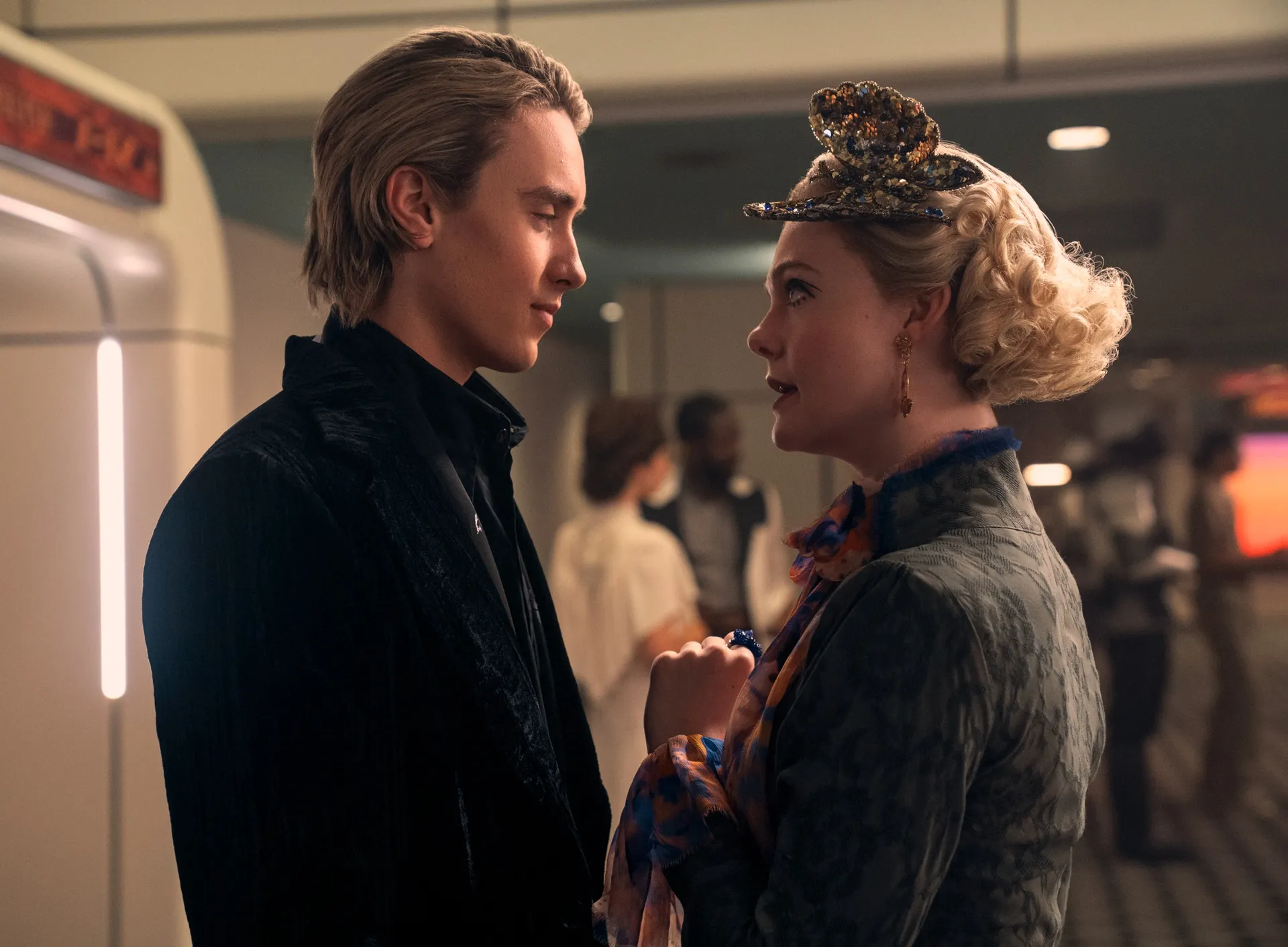
Jacobson says her and filmmaker's casting hopes are always aligned with the fans, like in the case of Elle Fanning as Effie Trinket.
MC: The importance of igniting a spark is so relevant to Sunrise on the Reaping. Are there any other moments, besides the recent one in Paris, that you’ve felt the franchise had the power to do that while working on it?
NJ: In the very beginning, even just having a female protagonist who wasn't defined by her romantic choices felt, at the time, like something. When I was a studio executive, I was told, "Men won't see women in an action role. Women will see men in an action role, but men won't see women in an action role." That was just conventional wisdom that was largely believed based on, You can keep proving your comps by doing the same thing over and over again and saying it proves your point. But it only proves your point because you keep doing the same thing over and over again. Even on a micro level, seeing what Katniss meant to a lot of young actors—what it meant to McKenna [Grace], Elle [Fanning], Whitney [Peak], Maya Hawke—there is a generational passing of the baton.
I also feel lucky that we get to make these movies that—I love the characters, I love the story—but people want to be able to have a conversation about the things they’re seeing and why they move them. Whether that’s Obsession or Backrooms or You Can See Everything, people want to have a provocation, a conversation, a communal debate about the things we see and not be anesthetized by their entertainment.
The defiance of this book felt so resonant.
MC: So many YA movies go straight to streaming now. Why do you think it’s important that teen media also gets theatrical releases and big, tentpole moments?
NJ: I believe it to the very core of my being that we have this deep wish to experience stories together and to make sense of our world through stories. Streaming has felt at times like the triumph of the consumer at the expense of the communal, because, especially with a bingeing model, everybody's watching at a different pace. More things for more audiences is a good thing, and there are things that are hard to thread the needle theatrically with because of what it takes to get that big domestic, international footprint. But I've always hoped with the things that we’ve made that, even if they’re appropriate for kids, they’re actually really geared for adults. The goal for any story is to reach as many people as you can. Sometimes the best route is a streaming route. But I think to have something communal about young people making decisions that affect their world is also a really important thing to see on the big screen in the dark with strangers.
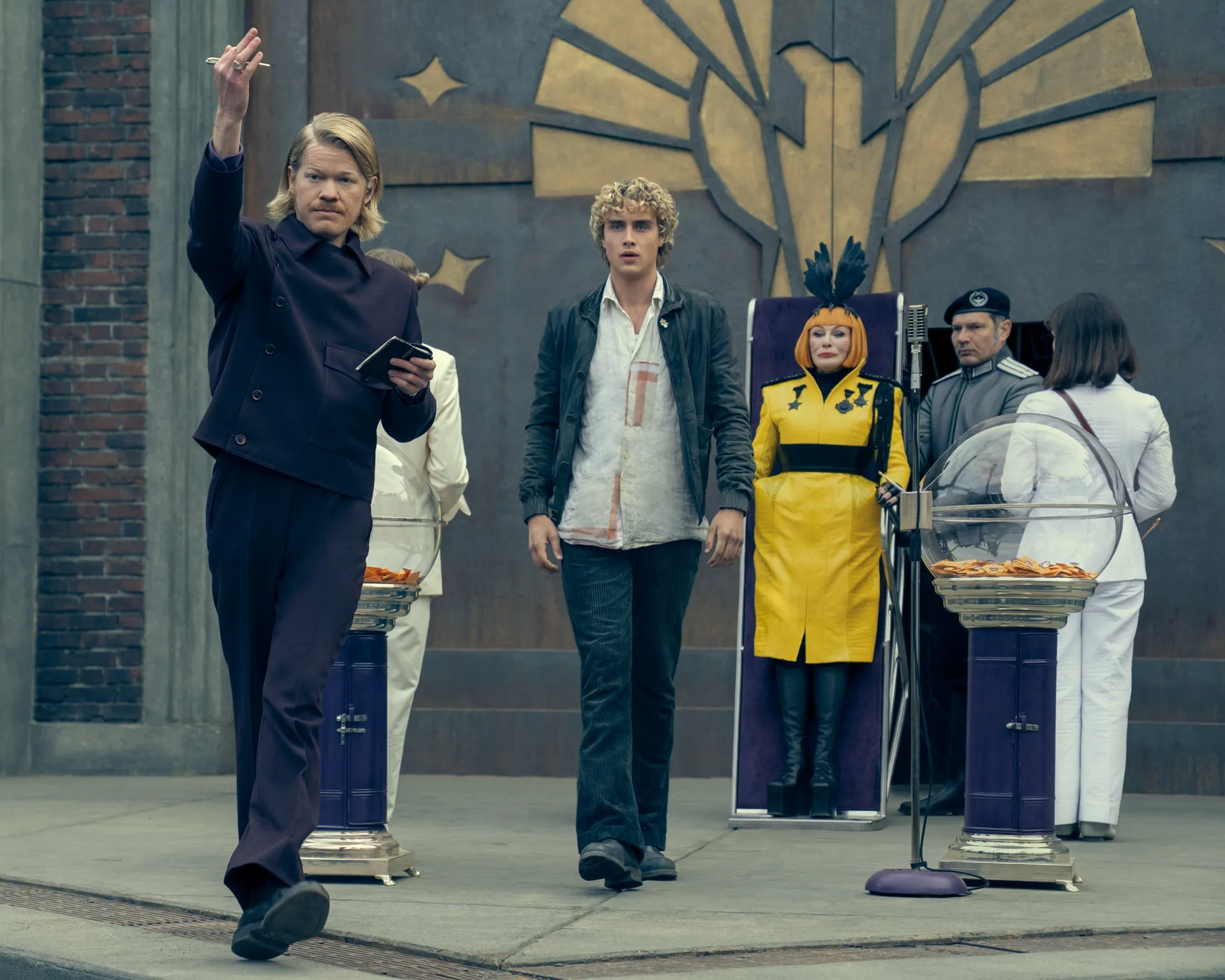
Sunrise on the Reaping explores how characters from the original trilogy like Plutarch Heavensbee (Jesse Plemons) have been working on the inside for decades.
MC: This franchise doesn’t simplify its themes for younger viewers either. And if this is the first time a younger viewer is exposed to, say, what propaganda is, that’s a powerful thing.
NJ: I also think young people are really savvy about the fact that they consume manipulated media, and in some ways are more savvy about it than a lot of older people. It's part of why I loved [Collins’s] focus on Plutarch in this one—that even though you're seeing things that you've seen, like a Reaping, what you haven't seen is that the Reaping on television, the way in which it was constructed for a purpose by the Capitol, and that one of the big characters, Plutarch, is the manipulator in chief. I love that in this one you're seeing behind the curtain in a way you haven't, and it makes things that are familiar from the other movies feel new because you're seeing this other side of it that is often meant to stay hidden.
People want to have a provocation, a conversation, a communal debate about the things we see and not be anesthetized by their entertainment.
MC: What is something, as a producer, that was important for you to advocate for during the production of Sunrise on the Reaping?
NJ: One of the things that we talked about a lot was, in a lot of stories in the third act, the hero goes up against the villain, and they win. That is not what happens to Haymitch. He does not break the machine when he sets out to. [Something important to me] was making sure that, for new audiences, the heroism of resistance, endurance, survival through adversity, that we found a way to express that in the movie as effectively as she does in the book. That was something we went back to a bunch of times. Working on the script, we went back and did pickups afterwards to make sure that part of Haymitch’s story—whether you know anything about the series or not—you could understand this other form of heroism, which is the heroism of resistance without results until you finally see them.

Jacobson explains that, although fans know what becomes of Haymitch, it was essential to convey his "heroism of resistance without results."
MC: When these movies first came out, you described them as “a PMA,” or a Perfect Moment Alert, because of how they spoke to the lasting effects of war and income inequality. But they feel even more resonant now. How have your views surrounding the series’s politics changed as our world has?
NJ: It's interesting because Suzanne, obviously, is inspired by the things that happen around her, but she also is drawing from history and philosophy. Honestly, I get educated by her about some of the writers and Enlightenment thinkers who inspire her. So, to me, it's actually an incredible testament to how these ideas—about the foundations of democracy, the choices we make about how we are governed and choose to be governed, our role as citizens—are still so alive in her work. It's very hard to see how brutal the world feels, and, from the beginning, these books have never shied away from that. That’s part of why [Collins and I] went to Lionsgate with it: so we could adapt the books that she’s written and not make you feel better about some of the things that should really hurt. But they are still very hopeful—but hopeful in a defiant, sometimes angry and insistent way. I think that often echoes how we feel about our world, as well.
This interview has been edited and condensed for clarity.