EJAE's "Golden" Year Is Only Just Beginning
The 34-year-old behind the biggest 'KPop Demon Hunters' hits has brought Korean pop to the global stage. But as a solo artist, she aims to be undefinable.
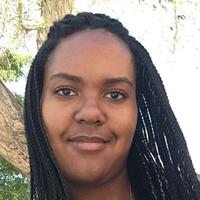

Just about anyone who has logged into Netflix or turned on the radio in the past year has heard EJAE’s voice. Whether K-pop stans, animation enthusiasts, or every kindergartener on the planet and their unsuspecting parents know her name or not, they're certainly familiar with the 34-year-old songwriter's performance as Rumi, the leader of the titular KPop Demon Hunters. But beyond playing HUNTR/X's charismatic leader, EJAE was also instrumental in turning the musical into a full-blown phenomenon, serving as a co-writer on three of the Billboard-topping songs from the soundtrack.
In the months since KPDH became Netflix’s most-watched movie of all time, EJAE has gone from working behind the scenes in studios to gracing the world’s biggest stages and red carpets. Her anthem "Golden," which she co-wrote with Mark Sonnenblick, 24, Ido, and Teddy, is up for four Grammys, including Song of the Year. And it's already started to rake in awards and break records: In early January, she became the first Korean-American woman to win Best Original Song at the Golden Globes. With "Golden" nominated for Best Original Song at the Oscars, she also made history, as the track marks the first K-pop song recognized.
Even as "Golden" started exploding, EJAE couldn't fathom just how much her life was about to change. "My publicist was like, 'You’re going to have no life for six months,' but I was like, Whatever," she recalls, speaking to Marie Claire over Zoom in early December. "I genuinely have no life right now," she adds with a laugh.
Article continues below 
EJAE went from being a behind-the-scenes songwriter to performing on late-night shows and in the Macy's Thanksgiving Day Parade.
Long before KPop Demon Hunters, EJAE, born Kim Eun-jae, had accepted that fame wouldn’t be coming her way. Growing up between Seoul and Fort Lee, New Jersey, the aspiring singer joined K-pop juggernaut SM Entertainment’s training program in 2003, at age 11. She spent 12 years putting in “literal blood, sweat, and tears” in hopes of being chosen to debut as a solo artist. But when other trainees were chosen for groups like Girls' Generation, the singer-songwriter turned her attention to her education—fast-tracking her degree in music and psychology at New York University, expecting to make her debut after graduation. Instead, SM dropped her in 2015, and she faced an uncertain future.
But—just as EJAE put it herself while accepting her first-ever Golden Globe—she turned her rejection into redirection. The would-be music therapist pivoted to music production; two years after she was dropped, she returned to SM for a songwriting camp and penned the topline melody that would become Red Velvet’s platinum hit “Psycho.” She went on to write for artists like TWICE, aespa, LE SSERAFIM, NMIXX, and Billlie, and was also tapped to work on early demos for an in-the-works animated film about otherworldly idols.
“When you don't use that muscle of making decisions on your own, and suddenly you have to do it, it's scary,” she says of her early songwriting days. “Moving to the States, not wanting to live with my parents, and figuring it out on my own really did help me find the beauty in my voice.” It's safe to say that leaning into her unique voice as an artist is exactly why EJAE became "the heart and soul of HUNTR/X," as director Maggie Kang has called her.
Below, EJAE chats with Marie Claire about establishing herself outside of the trainee system, bridging K-pop songwriting with musical theater, and the importance of exploring every side of your artistry.

EJAE released the music video for her first single, "In Another World," in October 2025.
MC: During your trainee years, you got the opportunity to join a ballad group at 18, but you chose to go to college instead. What informed that decision?
EJAE: Honestly, that decision wasn't that hard because I took my studies very, very seriously at a young age. I feel like I was more mature then than now. I knew that K-pop idol life wasn't forever. Also, being in the industry, I've noticed that a lot of my friends around me were depressed, and seeing that, music therapy was something I really wanted to do and pursue.
On top of that, I had sacrificed so much of my youth—essentially my childhood. I am not kidding when I say I practiced my ass off: “Blood, sweat, and tears” is quite literal blood, sweat, and tears. I wanted to be a solo artist, and that's always been my main goal. I didn't want to be in a girl group. So I think those two combined gave me the confidence to be like, “No.”
MC: Even as a K-pop fan, I had to watch a couple of documentaries to really understand how intense training is.
EJAE: I really went above and beyond as a kid. When everyone was leaving after class, I stayed and kept practicing. I would book studios and stay there for six hours, for eight hours, just dancing by myself. It was brutal, and the fact that there's a lot of critiquing and certain ways you have to eat or look or be. We couldn't chew gum because that would make our jaws bigger. We couldn't do a kimchi squat 'cause that would ruin the knees. It's very difficult to get used to, and obviously, there's a lot of showcases and competition. It was quite rigorous in what we had to learn, but I did work my butt off for it all.

"EJAE is a platform for these songs that've just been gathering dust, that have potential, that I love," the musician says.
MC: Looking back on your trainee days, did you ever feel like you struggled to fit your natural vocal tone into the kind of sound K-pop companies tend to make?
EJAE: Well, I'm not going to lie. At that time, I wasn't that good at singing. Finding your voice on your own terms and finding your voice because someone's telling you what you need to sound like are two very different things. I think you find more strength and confidence, and you become a better singer when you find your voice on your own.
During that time, SM had a very specific brand or sound. I was definitely told to push my voice to sound cleaner, even though, naturally, I have a low-toned singing voice. I was trying to sound like Ariana Grande—she has a very clean, beautiful voice—but my voice is a little bit husky, kind of Alicia Keys, Adele vibes. Confidence is an important part in singing, and in selling the lyrics and story. When you're confused about your voice, it's really hard to do. So I think that's where I was at that time.
MC: How would you describe K-pop/idol-music songwriting to someone only familiar with Western pop?
EJAE: Being a K-pop idol is about a whole package and a whole experience. When I write for K-pop, it's a very different strategy than for pop. I'm thinking about whether the creative director would have more inspiration from this song concept. Choreography, music video ideas, makeup ideas, those things are very important when writing for K-pop.
I actually got better at singing because of songwriting for K-pop, because it challenges you to do different genres. Sometimes I would do rock. Sometimes I would have to do diva vocals. Sometimes I have to do the prettier NewJeans or TWICE-style vocals, or Rihanna girl crush vocals. I would rap. It made me realize, Oh, I actually like my voice when I do this. Oh, I like it when I do that. Experimenting with my voice is what helped me get to where I am right now, so I don’t regret any of the whole experience I had.

“Moving to the States, not wanting to live with my parents, and figuring it out on my own really did help me find the beauty in my voice," EJAE says of attending college in N.Y.C.
MC: You and your KPDH co-songwriter Mark Sonnenblick have said you had to bridge the worlds of theater and pop to make songs that could be storytelling devices, but also hits. What was that like?
EJAE: It was so, so hard. I remember talking to Mark, like, “Damn, if we figure this out, we're freaking geniuses.” I've never worked on a song for K-pop where it's not just me and the producers or other co-writers. For KPop Demon Hunters, it's me, co-writer, producers, studio execs, music director. We had to fit Maggie [Kang]'s specific vision of the storyline and her taste, but also the studio's taste, Sony's taste, Netflix's taste. It's a lot of layers that we have to go through. Thank goodness Mark is the nicest person in the world. We had no ego. It was all about the song that was really important, the collaborative energy.
And on top of that, it's a movie, but it also has to be a pop song. We really worked hard in making it commercially acceptable and catchy, have the melody still be enough where we can put in lyrical words that fit the storyline of the characters. I love musicals, but they can get very wordy. A lot of people can say it sounds corny because it's quite literal. Whereas with pop music, simplicity is the thing. It was really important to me as a pop writer that the concept not only works for the movie, but works for everyone. If a random person heard it, they can relate to it too.
MC: “Golden” is obviously the biggest hit, but “How It’s Done” is probably my favorite song of the movie. How did you approach HUNTR/X’s take on the girl-crush sound?
EJAE: “How It's Done” was the hardest song I worked on. There were so many different passes, trying to find a hook that’s hook-y. We were given this massive track, and we needed a melody that's good enough that can pierce through it. If a melody was too busy, then it wouldn’t work. When we got that dun-dun-dun, we were like, “Yes! But what do we say?” [One day], I think I was watching a TikTok, I said, “That's how it's done.” I was like, “Wait, ‘done, done, done…How it's done, done, done.’ Oh shit. That works really well.” I think that was an inspiration too: trying to find sentences that people use every day that can work as a pop song, but also, it works in the film. HUNTR/X shows how it's done.
The raps were where we took full advantage of K-pop writing, which worked really well with theater. All the verses had rap, so we could put all the storyline in there, and the chorus could be as simple as possible. So everything was just really strategic. It was a hard song, but super fun.
The beauty of 'KPop Demon Hunters' is loving all sides of yourself. That's what makes you grow as a person, not when you're boxed in.
MC: You released your debut solo single, “In Another World,” in October, as “Golden” was starting to gain awards-season buzz. Why did you choose an emotional ballad for your first release?
EJAE: “In Another World” was just exactly how I felt at the time. Everything happening right now is so weird. I thought this would all happen in another world, so I wanted to talk about that. I’m sure a lot of people are going through times when things don't happen the exact way they want it to happen. I don't know what life is going to give me, especially right now when there's so much attention and spotlight on me. So “In Another World” helps me deal with that pressure. Being like, You know what? If it doesn't work, okay. Maybe in another world, it would be fine, but right now it's not meant to be in this lifetime.
“Golden” and all these K-pop songs were very high energy, very performative melodies. “In Another World” is a different side of me, a little chill. I wanted to show that personal side.
MC: You’ve mentioned that you’re glad fame came at this stage in your life. As you craft your solo music, what do you want to explore? What does the music that EJAE makes in her 30s sound like?
EJAE: My core is a songwriter, so my core is always working with artists and writing great music. Taking whatever we're feeling, trying to find a universal emotion that we can express in a different, creative way, that's songwriting. I want to continue that and transition into the pop world as well. I mean, pop has always been my thing. It's just that K-pop was so near me. I was living in Korea, and I'm clearly Korean. But I want to be able to show that K-pop is more than just Korean pop. It can go everywhere. With KPop Demon Hunters, I wasn't thinking, Oh, it has to be K-pop sound. I was using a hybrid of everything. So I’m very interested in bringing some K-pop elements into the pop world and constantly growing as a songwriter.
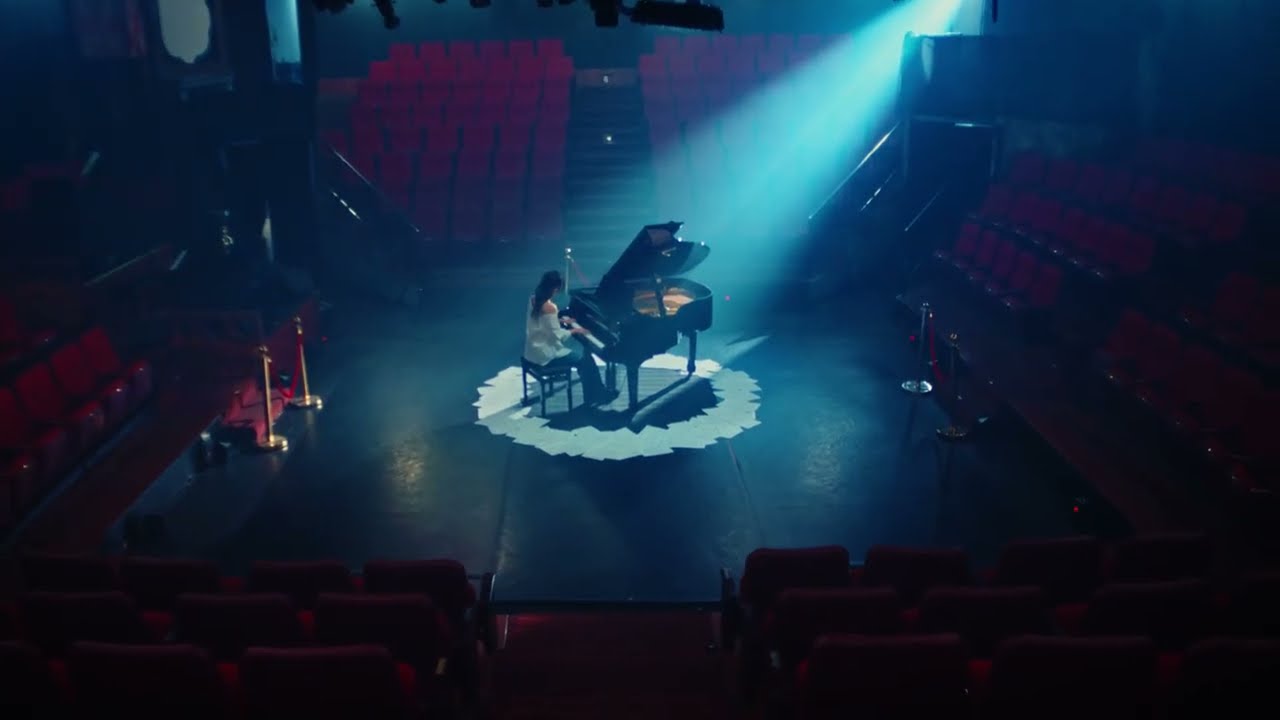
I think that being me as an artist, for me, is finding honest concepts. I love that “Golden” helped unite people and heal a wound that people sometimes didn't know they had needed to heal. I want to continue being that kind of vessel for the songs to be famous, not really me. That's where my headspace is at. EJAE is a platform for these songs that've just been gathering dust, that have potential, that I love. I want to release them and continue to keep writing great songs.
MC: Why is the freedom to work in different genres important to you as an artist?
EJAE: Because I feel like that's how everyone is. We're not this or that. I'm Korean American; I'm not just Korean or just American. I'm a hybrid of both. I don't like it when people are like, “Oh my God, she's so Korean here. Oh, she chooses when she's Korean, when she's American.” No, that's just who I am. I'm not just always feminine; I also have a masculine side to me. I don't always just sing low notes; I can also sing high notes. It just comes in different ways. I could be silly and goofy, but also hella sensitive. You're not just one thing.
The beauty of KPop Demon Hunters is loving all sides of yourself. That's what makes you grow as a person, not when you're boxed in. I mean, fish literally cannot grow bigger if they're in a fish tank. I think it’s very important for people to understand that binary thinking can sometimes be very limiting. Having the freedom to do a lot of things in different ways really helps you to grow, and also not just for yourself. It will also inspire others to open up and to explore and do things. And that's KPop Demon Hunters in a nutshell, right?
This interview has been edited and condensed for clarity.