
Hulu’s The Secret Lives of Mormon Wives (which dropped its fourth season on March 12th) is many things. A reality show about women in Salt Lake City estates who built six-figure influencer empires via choreographed TikTok dances? Yes. But it’s also a kind of social experiment, a religious unfettering, a plastic surgery PSA, and the reason “soft swinging” has become part of our cultural lexicon. This is a show that began with a cheating scandal and a dream: to proselytize so hard that the temple garment industry would be forced to churn out more modern (read: sleeveless) designs. Since its premiere in 2024, The Secret Lives of Mormon Wives was a bless-this-mess mix of artificially-manufactured chaos, sincere feminist awakening, and clout chasing dressed in bronde extensions and wildly puffy peasant dresses.
But here’s what The Secret Lives of Mormon Wives has, unfortunately, also become about: the husbands.
Now, nobody asked for this. Not one person turned on this show and mused, “I wonder what the men think.” And yet here we are, four seasons deep, watching Temu Scott Disick (cough Jordan Ngatikaura) and friends attempt to monetize their wives reality TV fame while also being upset that they have achieved reality TV fame. They are selling merch on Instagram that gives new meaning to the phrase “ugly as sin.” And, worst of all, they have opinions.

Mayci Neeley, Layla Taylor, Mason McWhorter, Taylor Frankie Paul, Miranda McWhorter, and Chase McWhorter at a costume party in The Secret Lives of Mormon Wives season 4.
The betrayal stings for two reasons. First, while The Secret Lives of Mormon Wives, like nearly every reality show of its ilk, has always operated under a set of heavily ring-lit rules—staged catfights in coffee shops, relationship-ending calls conveniently caught on dashcams, confessionals edited with a machete to perfectly narrate the IRL drama—it also felt different. Think about what these women are technically supposed to be: modest, submissive, defined entirely by the gendered stereotypes of wives and mothers. Instead, they weaponized the influencer economy to rail against a centuries-old religion, using TikTok of all places as a backdoor to build a following, an income, and their own autonomy. The Mormon Church had not yet issued guidance on whether a sponsored post for a sex toy brand constituted a threat to its divine institution, and in that regulatory gap, these women created entire careers.
Maybe Taylor Frankie Paul was a walking disaster haunted by an energy-draining vampire known as her baby daddy, Dakota Mortensen. Maybe Whitney Leavitt’s theater-kid energy derailed many a birthday and baby shower. Maybe Jen Affleck really did hallucinate familial ties to the Dunkin' Donuts-loving half of Bennifer. Maybe we did confuse Jessi Ngatikaura with Demi Engemann anytime the former was in her natural habitat and not her warehouse-sized hair salon. Or Mayci Neeley and Mikayla Matthews did judge their fellow moms so harshly, we’d imagine an excommunication was preferable to being on the receiving end of their shit-talking. And, yeah, maybe we did forget Layla Taylor and Miranda McWhorter were there half the time. But in season 4, they’ve all evolved into producers, Dancing With the Stars contestants, authors, entrepreneurs, and ABC-endorsed Bachelorettes. That’s a trajectory no one—certainly not the men in their orbit—saw coming, so distracting from this girlboss glow-up just feels wrong.

#DadTok comes even more into the fold in season 4.
The second reason the betrayal stings is simpler, and somehow worse: the show handed the camera to the husbands. And those husbands? They’re aggressively mediocre and terminally uninteresting.
That’s all well and good. Background furniture, after all, has its place. Except these particular pieces of furniture are now getting trips to Vanderpump Villa, hoodies with logos, and, perhaps most horrifying, unlimited time on-camera to share their feelings. Look, if we wanted to hear a group of emotionally stunted manbabies think tank the word “emasculating,” we’d turn on one of the thousands of podcasts already available. But here we are.
And what these men do with their screen time is, frankly, enlightening. They gather. Around fire pits, in living rooms, at parties they're hosting in their wives's backyards, all to do one thing: remind each other that they are, in fact, the most important people on this show. Season 3 was monopolized by these discount group therapy sessions, usually led by the self-appointed founder of #DadTok, Jordan, as he tried to wrestle with wife Jessi’s infidelity. But season 4 has taken an even wilder leap, imagining #DadTok is its own separate entity worth caring about. It’s why Jordan interrupts a Sip & See butterfly ceremony in the premiere to pull focus from the women and the miracle of birth they’ve just performed to congratulate himself and his bros on negotiating a free trip to Europe. It’s why Zac Affleck—#MomTok’s most devout hater in seasons past—has decided to drop out of med school, follow his wife to L.A., and live on her dime while posting the same dumb little TikTok videos he once openly mocked her for. It’s why Jacob (Mayci’s husband) gives his post-partum wife the ick when he prioritizes a #DadTok pact to keep the naughtier details of his boys’s trip under lock and key.

Season 4's focus on the men feels both like a distraction from the core cast's glow-up.
Individually, each of these moments is just bad television. Collectively, they're something else.
What’s always been true about The Secret Lives of Mormon Wives is now impossible to ignore: This is a show about women living inside a framework that was specifically designed to keep them small. The faith, the culture, the very specific aesthetic demands of Utah County; all of it exists to remind these women of their place. For three seasons, watching them transcend that place was the whole point.
But signal-boost the men enough, and the subtext becomes the text. Suddenly, the show isn't about women finding loopholes in a restrictive system; it's about the system asserting itself, regaining control of the status quo. Jordan's fire pit summits aren't just annoying filler. They're a deacon's quorum with a production budget, dressed up in therapy-speak and delivered on a streaming platform.
Suddenly the show isn't about women finding loopholes in a restrictive system, it's about the system asserting itself, regaining control of the status quo.
It would be easy to leave this at annoying. To file #DadTok under "unfortunate creative decision" and move on. Except the consequences of centering these men end up being more than just entire scenes we collectively fast-forward our way through. They're a pretty accurate map of what happens when male discomfort gets treated as something to cater to. (Sure, male loneliness may be an epidemic, but why is that something we’re being asked to care about in this, our holiest of shared feminine spaces?)
Take Jen Affleck, for instance. A woman who spent the better part of season 2 in a perinatal depression so debilitating that production stopped filming her mid-season. Her husband Zac uses her crisis to start "hard conversations" that reliably end in the same place: his wife being at fault. The camera follows him through all of it, never issuing a correction. Taylor Frankie Paul gets slut-shamed by her own family in the same season Dakota cheats on her with one of her mother's friends. And Jessi, who spent years absorbing emotional abuse from Jordan before any cameras were pointed at them, gets to report as a season four milestone that he has recently started putting the kids to bed. The bar for these and all men is truly below sea level.
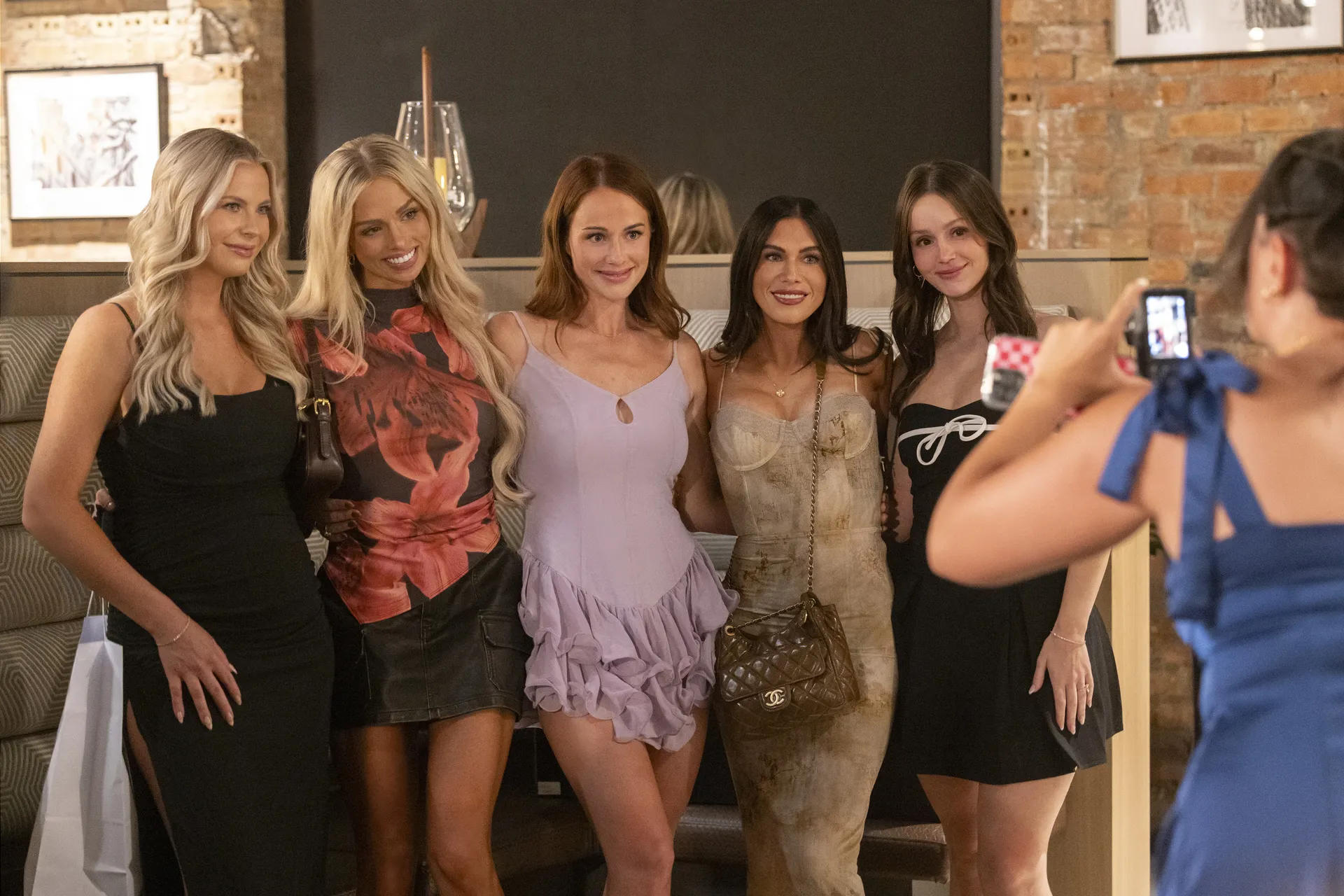
The Secret Lives of Mormon Wives season 4 hit streaming on March 12.
Giving the husbands the camera makes watching paint dry more preferable, but it also reframes everything we thought this show was about. The moment the series starts treating Jordan's wounded ego as a storyline with equal weight to Jessi's, the moment Zac's feelings about #MomTok get their own confessional, that’s the moment the women's choices stop being the point and start being the context for the men's reaction to them. Which is, to be clear, a much older story, one these women's faith has been telling about them for two hundred years.
At the end of the day, though, the moms are still producing, competing, publishing, and franchising themselves into something the Mormon Church definitely did not see coming. The husbands, meanwhile, are selling hoodies on Instagram to an audience of each other. No amount of extra screen time can rewrite those facts. Let #DadTok make like its members's receding hairlines and drift back into obscurity. The wives have actual work to do.